Choosing a dependable China-based Ceric Nitrate supplier requires more than comparing prices. Global buyers need stable quality, clear documentation, and responsive technical support. Ceric Nitrate is commonly evaluated for purity, cerium content, oxidation-state consistency, moisture control, and application performance. Small variations can affect laboratory results, catalyst preparation, and advanced material processing.
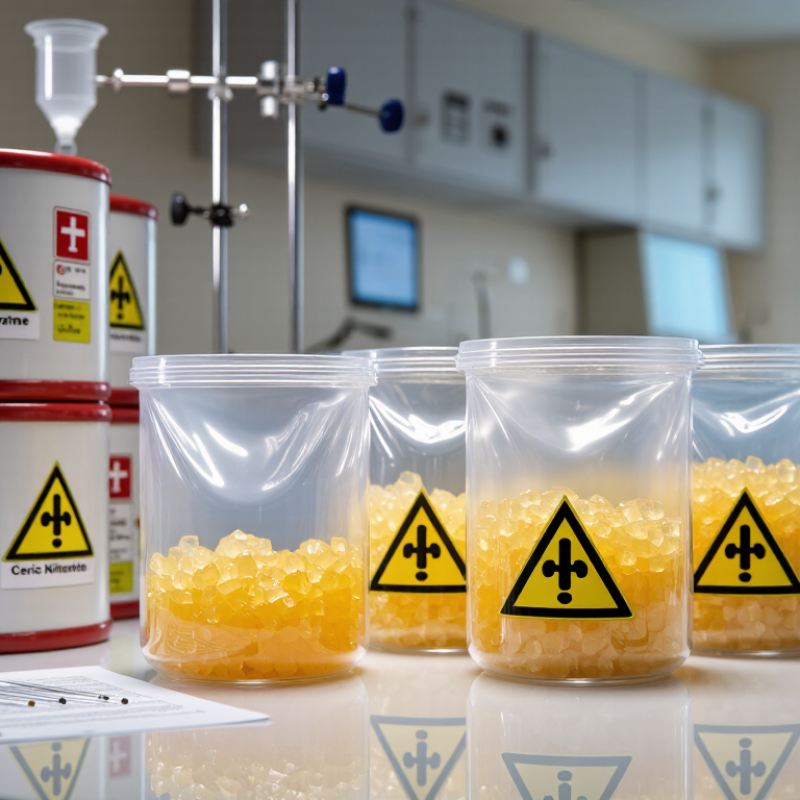
Professor Lester R. Morss, a recognized lanthanide chemist, offers a useful principle: “Oxidation state controls chemical behavior.” This statement is highly relevant to Ceric Nitrate procurement. A professional supplier should provide a current certificate of analysis, batch identification, safety data, and traceable production records. Packaging also matters. Moisture-resistant inner bags, sealed drums, and visible hazard labels help protect product integrity during international transport.
Reliable sourcing is practical, not decorative. Buyers should review production capability, quality-control procedures, export experience, and communication speed. Ask for representative test data. Check whether specifications match the intended process.
No supplier is perfect. Documentation may be incomplete, response times may vary, and one specification can be interpreted differently by two teams. That reality deserves attention. A careful purchasing process should include technical confirmation before any large order. It should also consider compliant storage, trained handling, and applicable transport requirements in the destination country.
This guide examines how to identify a China Ceric Nitrate supplier for global buyers. It focuses on evidence, not promises. Product consistency matters. So does honest communication.
Ceric nitrate is a cerium(IV) salt with the formula Ce(NO3)4. The cerium ion has a +4 oxidation state, which gives this compound strong oxidizing behavior. In commercial supply, buyers may also encounter ammonium ceric nitrate, written as (NH4)2Ce(NO3)6. These materials are related, but they are not interchangeable. Check the exact formula, hydrate status, assay, and oxidation state before ordering.
Ceric nitrate typically appears as a yellow to orange crystalline material or solution. It can react with reducing agents and may hydrolyze when exposed to moisture or unsuitable pH conditions. Nitrate content, water content, insoluble matter, and trace metals can affect laboratory results. The USGS Mineral Commodity Summaries 2024 reported global rare-earth mine production of about 350,000 metric tons in 2023, measured as rare-earth-oxide equivalent. This figure reflects broad market supply, not ceric nitrate alone. That distinction matters. A supplier’s certificate should identify the test method, batch number, and storage conditions.
Tips: Request a recent certificate of analysis and SDS. Confirm whether the product is anhydrous, hydrated, or ammonium-based. Use clean, compatible containers, avoid contact with reducing materials, and store it in a cool, dry, well-ventilated area. NIST and PubChem data should be checked alongside supplier documentation. Published databases can differ in naming, and that is an easy detail to overlook.
Ceric nitrate is a strong oxidizing salt used in controlled chemical processes. Its most established role is in analytical laboratories. Technicians use cerium(IV) solutions for redox titrations and oxidation measurements. These tests support quality control in chemical manufacturing and research facilities. Ceric nitrate also assists organic synthesis, especially when selective oxidation is required. Reaction temperature, acidity, and concentration need careful control. Small changes can affect yield and product purity. It is not a universal oxidizer.
In industrial research, ceric nitrate serves as a precursor for cerium-based materials and process chemicals. These materials may support catalyst development, surface treatment studies, and advanced ceramic research. Some laboratories also examine its use in polymer modification and oxidation systems. However, application results depend strongly on formulation and equipment. Buyers should review assay, moisture content, acidity, particle form, and packaging before placing an order. A reliable supplier should provide batch-specific certificates, safety documentation, and clear storage guidance. In practice, logistics can be overlooked. Yet temperature, moisture, and container integrity may influence product performance during international transport.
China Best Ceric Nitrate Supplier for Global Buyers
Quality Standards for Global Ceric Nitrate Buyers
Ceric nitrate buyers need more than a stated purity percentage. Confirm the chemical form, cerium oxidation state, assay method, and impurity limits. A reliable certificate of analysis should show batch number, test date, results, and laboratory method. Check chloride, sulfate, iron, lead, and insoluble residue. These details affect catalyst preparation, optical materials, and laboratory reproducibility. The 2024 USGS Mineral Commodity Summaries estimated global rare-earth mine production at about 350,000 metric tons of rare-earth oxide equivalent in 2023. This scale supports supply, but it does not guarantee consistent nitrate quality.
In practical receiving inspections, compare the sealed container with the CoA. Inspect color, crystallization, moisture damage, and label legibility. Ask for a current safety data sheet and transport classification. ISO 9001-based quality systems can improve traceability, yet certification alone cannot prove every batch meets your specification. That point is often missed. A supplier should also explain sampling frequency and retain reference samples. One weakness remains: buyers may accept an attractive price before checking test uncertainty or packaging performance.
Tips: Request a pre-shipment sample. Define acceptance limits in writing. Prefer moisture-resistant inner packaging and tamper-evident seals. Record the lot number before opening. If results conflict, use an independent laboratory and review the sampling process, not only the supplier’s paperwork.
| Quality Dimension | Buyer Requirement or Reference Value | Recommended Verification Method | Global Buyer Acceptance Checkpoint |
|---|---|---|---|
| Product identity | Confirm whether the material is cerium(IV) nitrate or ceric ammonium nitrate. These are different compounds and must not be treated as interchangeable. | Chemical formula, CAS number, certificate of analysis, and laboratory identity testing | The purchase order, label, SDS, and certificate of analysis show the same chemical identity. |
| Typical reference identity for ceric ammonium nitrate | Ceric ammonium nitrate; formula: (NH4)2Ce(NO3)6; molecular weight: approximately 548.22 g/mol; CAS RN: 16774-21-3. | Supplier documentation and independent laboratory confirmation | Use only when the buyer’s specification calls for ceric ammonium nitrate. |
| Appearance | Uniform orange to red-orange crystalline solid, free from visible foreign matter and excessive caking. | Visual inspection under suitable lighting | Color and physical form match the approved reference sample or agreed specification. |
| Assay | A common high-purity commercial target for ceric ammonium nitrate is ≥98.0% by mass; the final limit should be fixed in the purchase specification. | Validated titrimetric or instrumental assay method | Each lot meets the agreed minimum assay and includes a lot-specific result. |
| Cerium content | For ceric ammonium nitrate, the theoretical cerium content is approximately 25.5% by mass. | ICP-OES, ICP-MS, or another validated elemental analysis method | Measured cerium content is consistent with the declared compound and assay. |
| Chloride | Typical high-purity buyer limit: ≤0.02% by mass, unless the application requires a tighter limit. | Ion chromatography or validated wet-chemical method | Result is reported in the same units as the agreed specification. |
| Sulfate | Typical high-purity buyer limit: ≤0.02% by mass, subject to end-use requirements. | Ion chromatography, turbidimetry, or validated gravimetric method | No unexplained increase compared with the approved quality specification. |
| Iron and other metallic impurities | Set individual limits according to the application; a representative high-purity target for iron is ≤0.005% by mass. | ICP-OES or ICP-MS | The certificate lists test results for specified trace metals rather than only stating “pass.” |
| Water or moisture | Use a buyer-defined limit; ≤1.0% may be used as a practical reference for a controlled solid product, but the correct value depends on the specified hydrate or formulation. | Karl Fischer titration or validated loss-on-drying method | The test method and reporting basis are stated clearly, especially for hydrated materials. |
| Insoluble matter | Typical buyer target: ≤0.01% by mass for high-purity applications. | Dissolution and filtration with gravimetric measurement | The material dissolves as expected in the agreed solvent and leaves no unusual residue. |
| Particle size | Specify the required powder or crystal size by sieve range; do not use a generic particle-size value for every application. | Sieve analysis or laser diffraction | Particle-size distribution matches the agreed range and does not show excessive fines or agglomeration. |
| Oxidizing properties | Ceric ammonium nitrate is an oxidizing compound and must be kept away from combustible materials, reducing agents, and incompatible chemicals. | Current SDS and applicable transport classification review | Packaging, storage, labeling, and transport controls follow the current SDS and destination-country rules. |
| Packaging | Moisture-resistant, securely sealed inner packaging with robust outer packaging suitable for oxidizing solids. | Packaging inspection before dispatch and on receipt | No leakage, torn liners, contamination, severe caking, or damaged hazard labels. |
| Lot traceability | Every container should carry product name, lot number, net weight, manufacturing date, retest or review date, and storage instructions. | Document-to-label reconciliation | The lot number on the packaging matches the certificate of analysis and shipping documents. |
| Documentation package | Certificate of analysis, current SDS, commercial invoice, packing list, certificate of origin when required, and transport documents. | Pre-shipment document review | Documents use consistent product identity, quantity, lot number, hazard information, and consignee details. |
| Storage and shelf-life control | Store tightly closed in a cool, dry, well-ventilated area, protected from heat, direct sunlight, moisture, combustibles, and incompatible substances. | Warehouse inspection and periodic quality review | Apply first-in, first-out control and confirm any retest period before use. |
| Regulatory and transport review | The applicable UN entry, hazard class, packing group, labeling, and import requirements depend on the exact product identity, concentration, packaging, and transport mode. | Current SDS, dangerous-goods declaration, and destination-country regulatory review | The classification is confirmed before shipment rather than copied from a generic chemical listing. |
Choosing the best ceric nitrate supplier requires more than comparing prices. A reliable supplier should clearly identify the product form, purity, concentration, and hydration state. These details affect storage, weighing, and laboratory performance. Ask for a recent certificate of analysis with batch numbers, assay results, moisture data, and key impurity limits. A vague certificate is a warning sign.
Tips: Check production traceability, packaging quality, and response speed. Request a current safety data sheet and transport classification. Confirm whether independent testing is available. Review the supplier’s quality system, audit records, and experience with export documentation. Packaging should protect the material from contamination and unsuitable humidity. The supplier should also explain recommended storage conditions, shelf life, and handling requirements. Local import rules still matter, even when the supplier provides complete documents.
In practical sourcing, small communication gaps often become costly delays. I would test a sample before approving a large order. A polished website proves very little. Technical staff should answer questions about specifications without avoiding uncertainty. Some suppliers may quote “high purity” without defining the testing method. That wording is not enough. Even experienced buyers can overlook the difference between a standard grade and a research-grade material. Clear specifications, consistent batches, and honest limitations provide stronger evidence of reliability. One improvement remains important: buyers should record every agreed requirement before payment, because memory is an unreliable quality-control tool.
It should identify the chemical form, oxidation state, assay method, batch number, and test date. Include moisture data and impurity limits. Check chloride, sulfate, iron, lead, and insoluble residue. A vague certificate is not enough.
Compare the sealed container with the certificate of analysis. Inspect color, crystal condition, moisture damage, and label clarity. Record the lot number before opening. Small errors hurt.
No. It can improve traceability, but it cannot prove every batch meets your specification. Ask about sampling frequency and retained reference samples. Review actual test results, not only certificates. That distinction matters.
Confirm the product form, purity, concentration, and hydration state. Request a recent sample before approving a large order. Ask technical staff about test uncertainty and limitations. A polished website proves very little.
Use moisture-resistant inner packaging and tamper-evident seals. Keep containers sealed, dry, and protected from contamination. Select outer packaging according to the safety documentation and transport classification. Do not guess.
Prepare the safety data sheet, certificate of analysis, commercial invoice, packing list, and origin certificate. Confirm the correct classification, customs code, and destination requirements. Air and ocean shipments may follow different transport rules. Documents need review.
Confirm storage temperature, humidity limits, shelf life, and handling requirements with the supplier. Keep the container closed until use. Protect it from moisture, heat, and incompatible materials. Conditions vary.
Review the sampling process before blaming the supplier or laboratory. Use an independent laboratory when necessary. Compare sample labels, batch numbers, methods, and test uncertainty. I might still miss a sampling error, so written records are essential.
Ceric Nitrate is an important inorganic compound valued for its strong oxidation capability, chemical stability, and adaptability in controlled industrial processes. This article explains its definition, chemical formula, appearance, solubility, and key properties, while also examining its applications in analytical chemistry, catalyst preparation, materials processing, laboratory research, and other legitimate industrial fields. Understanding these characteristics helps buyers select a product that matches their technical and operational requirements.
For global purchasers, product quality should be assessed through purity specifications, consistency between batches, moisture control, test documentation, and traceability. The article also outlines how to evaluate a reliable Ceric Nitrate supplier by reviewing production capability, quality management, communication, and export experience. In addition, it discusses suitable packaging, safe handling, shipping coordination, labeling, documentation, and compliance with applicable import, transport, and environmental regulations. These considerations support responsible procurement and dependable international supply.

Yanxatech