Reliable global supply chains for advanced battery compounds, catalysts, polymers, and raw technical materials.
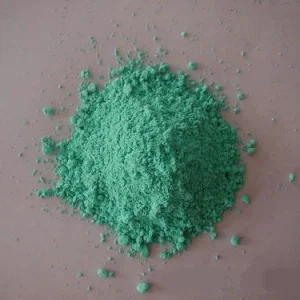
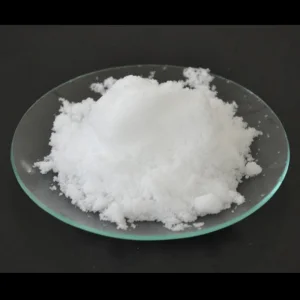
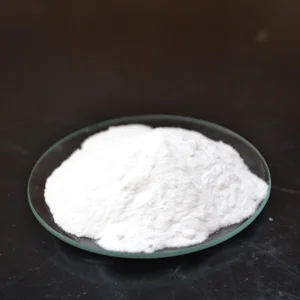
Nitrates constitute a foundational class of inorganic chemical compounds indispensable to global technological systems and modern heavy industries. As crucial precursors in advanced manufacturing, energy storage, semiconductor fabrication, and catalytic oxidation, the demand for high-purity nitrate materials has surged globally. Enterprises sourcing these compounds require not just volume capacity, but stringent crystal morphology controls, precise chemical assay ratios, and certified low-impurity profiles to prevent downstream processing errors.
From lithium-ion batteries to custom aerospace metallurgy, industrial nitrates like Lithium Nitrate, Aluminum Nitrate, and Basic Cupric Nitrate serve as vital components. High-purity Lithium Nitrate, for instance, has transitioned from a specialized reagent to a high-demand compound used as an additive in organic electrolytes for solid-state batteries and lithium-sulfur cells. It forms a stable solid electrolyte interphase (SEI) on lithium metal anodes, improving cycling performance and minimizing safety hazards.
Simultaneously, Basic Cupric Nitrate is widely implemented in catalytic processes, gas generators, and surface-finishing formulations. Aluminum Nitrate serves as an essential precursor in the production of high-grade catalysts, ultra-pure alumina, and insulating papers for power transformers. Global sourcing teams must partner with manufacturers capable of producing high-purity salts consistently to ensure the chemical properties of their final formulations remain uncompromised.
The manufacturing of commercial and high-purity nitrates requires rigorous raw material access, reliable energy infrastructure, and complex chemical refinement processes. China has emerged as the premier manufacturing hub for these chemical classes due to integrated industrial chains, domestic resource accessibility, and rapid logistics channels. The efficiency of China's chemical parks enables rapid scaling of custom chemical grades, matching exact specifications for particle size distributions and impurities.
At YANXA (Yanxatech System Industries Limited), we leverage this robust ecosystem. Established in 2008 as a focused specialty chemicals unit, YANXA has developed extensive manufacturing relationships and strict chemical quality control mechanisms. We cooperate with leading domestic production facilities and prominent Chinese chemical research centers to ensure our nitrate chemicals, liquid rubbers, and atomized metal powders meet global compliance standards. Our supply infrastructure ensures competitive pricing, swift dispatch times, and compliant export procedures for hazardous materials.
Unlocking the potential of nitrates across heavy metallurgy, aerospace materials, and clean energy storage.
Lithium Nitrate plays a pivotal role in the energy transition. In lithium-sulfur battery prototypes, it is added to the electrolyte to mitigate polysulfide dissolution and promote solid interphase formation. Additionally, eutectic nitrate salt mixtures function as thermal storage media in concentrated solar power (CSP) facilities, offering thermal stability up to 550°C.
Aluminum Nitrate and Basic Cupric Nitrate serve as precursors to active catalysts in organic dehydrogenation and polymer synthesis. They are critical for creating micro-engineered silica-alumina catalyst supports, used globally in refinery systems, fertilizer production, and automotive emission control systems.
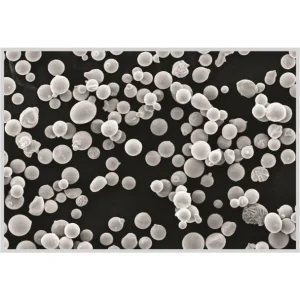
Nitrates are utilized alongside advanced metal powders (such as atomized spherical aluminum-magnesium alloys and zinc-aluminum flakes) to formulate propellants, gas generators, and heat-resistant thermal coatings. Strict control of particle size and metal oxide impurities is required to maintain reaction stability.
The procurement of industrial nitrates has become highly regulated. Because many compounds (like Aluminum Nitrate and Lithium Nitrate) act as strong oxidizers, transport is governed by international maritime regulations (IMDG Code). Global enterprises must balance logistics costs against compliance risks.
To ensure supply chain integrity, procurement managers should evaluate chemical suppliers against the following operational criteria:
The chemical industry is shifting towards reducing greenhouse gas emissions during nitric acid synthesis—the primary step in nitrate production. Advanced manufacturing facilities are adopting catalyst systems that reduce nitrous oxide (N2O) emissions and utilizing solar-powered electrolysis for ammonia synthesis. Sourcing from technologically advanced partners allows global buyers to lower their Scope 3 emissions and meet corporate sustainability targets.
Technical guidance and commercial policies for international buyers and engineers.
Browse our selection of specialized compounds, high-purity gases, and custom metal powders.
 Yanxatech