What Is Oxide Nitrate and How Is It Used?

Time:2026-10-20 Author:Henry
0%

Oxide Nitrate is not always the name of one single chemical substance. In technical writing, it may describe an oxy-nitrate compound containing oxygen, nitrate groups, and a metal element. The exact meaning depends on the formula, preparation method, and industry using the term. Some references also confuse it with nitric oxide, but these substances are chemically different.

A reliable explanation begins with identification. Check the compound’s full name, molecular formula, CAS number, and safety data sheet before discussing its use. Metal oxy-nitrates can form during the controlled hydrolysis or thermal treatment of metal nitrate solutions. Their particles may appear as pale powders, crystals, or finely processed ceramic materials. These physical details affect storage, handling, and performance.

Researchers may use Oxide Nitrate compounds as precursors for ceramic powders, catalyst materials, pigments, coatings, or laboratory studies. Heating can remove water and nitrate components, leaving a metal oxide product. This process requires temperature control and suitable ventilation. It should never be treated as an informal experiment.

The terminology is not perfectly consistent. I should not assume that every supplier uses “Oxide Nitrate” in the same way. A product labeled with this phrase may require closer review of its technical specification. Industrial users usually compare purity, particle size, decomposition temperature, and compatibility with other materials. Safe use also depends on exposure controls and local chemical regulations. This article introduces the chemistry, practical applications, identification methods, and safety considerations surrounding Oxide Nitrate.
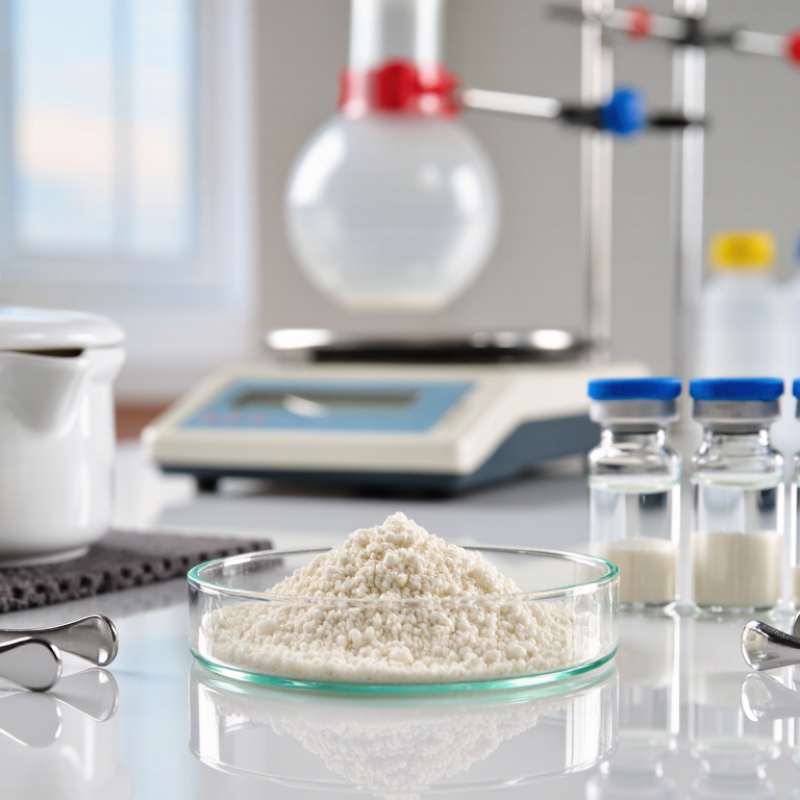
What Is Oxide Nitrate and How Is It Used?

Oxide Nitrate Defined: BiONO₃, NO₃⁻ at 62.00 g/mol, and Oxidation States

Oxide nitrate is not one universal compound name. In many technical contexts, it refers to bismuth oxynitrate, written as BiONO₃. Its formula combines a bismuth–oxygen unit with a nitrate group. The nitrate ion is NO₃⁻ and has a molar mass of 62.00 g/mol, more precisely about 62.01 g/mol. That small rounding difference matters during careful laboratory calculations.

BiONO₃ is commonly described using the ions BiO⁺ and NO₃⁻. In this model, bismuth has a +3 oxidation state, while oxygen has −2. Nitrogen in nitrate has a +5 oxidation state, and each nitrate oxygen remains at −2. These values balance the overall neutral formula. Oxidation state is a bookkeeping tool, not always a complete picture of bonding.

Its practical use depends on purity, particle size, and crystal form. Bismuth oxynitrate can appear in pearlescent powders, coatings, pigments, and selected laboratory preparations. Fine particles may scatter light and create a soft, reflective appearance. Handle it carefully.

The terminology can still confuse readers. “Oxide nitrate” may describe a broader chemical idea rather than one exact material. Formula checks are worth repeating, especially when converting nitrate mass into compound mass. I would not treat every online definition as equally reliable. Structural data and a current safety sheet provide better evidence.

What Is Oxide Nitrate and How Is It Used? - Oxide Nitrate Defined: BiONO3, NO3− at 62.00 g/mol, and Oxidation States

Data dimension Oxide nitrate / bismuth oxynitrate Nitrate ion
Chemical formula BiONO3 (also written as BiNO4) NO3−
Chemical class Inorganic bismuth oxynitrate salt Polyatomic oxyanion
Constituent elements Bismuth, nitrogen, and oxygen Nitrogen and oxygen
Relative formula mass Approximately 286.99 g/mol 62.00 g/mol
Oxidation states Bi: +3; N: +5; O: −2 N: +5; O: −2
Charge balance Neutral compound: (+3) + (−2) + (−1) = 0 Overall ionic charge: −1
Molar-mass calculation 208.98 + 14.01 + (4 × 16.00) ≈ 286.99 g/mol 14.01 + (3 × 16.00) = 62.01 g/mol, commonly rounded to 62.00 g/mol
Appearance Typically a white to pale-yellow powder Colorless ion in solution; it is not normally isolated as a free solid
Water behavior Generally described as sparingly soluble or insoluble in water; behavior depends on composition and pH Readily present in aqueous solutions as a dissolved ion when supplied by soluble nitrate salts
Commonly discussed uses Used in some cosmetic and personal-care formulations as a white pigment or opacifying ingredient; also used as an inorganic bismuth source in laboratory and materials work Acts as a counterion in nitrate salts and is important in analytical chemistry, environmental testing, fertilizers, and laboratory reagents
Chemical behavior An ionic bismuth compound that can react with acids and may form other bismuth-containing species A conjugate base of nitric acid and an oxidized nitrogen species; nitrate is not the same substance as nitric acid
Handling note Avoid inhaling dust and follow the applicable safety data sheet and laboratory handling procedures Nitrate-containing materials should be handled according to their specific counterion, concentration, and safety classification

Note: “Oxide nitrate” is a broad descriptive term. BiONO3 is commonly identified as bismuth oxynitrate, while the nitrate ion is specifically NO3−.

Composition and Structure: O²⁻, N⁵⁺, Crystal Phases, and Solubility Data

Oxide nitrate usually describes a mixed-anion solid containing oxide ions and nitrate groups. It is not one universal chemical. In a simple charge model, O2− provides strong lattice bonding, while nitrate contains nitrogen in the +5 oxidation state. For bismuth oxynitrate, BiONO3, Bi3+ balances O2− and NO3−. The formula mass is approximately 287.0 g/mol. That calculation helps, but real structures can include water, hydroxyl groups, or layered defects.

Crystal phase matters more than the name suggests.

Powder-diffraction records in the ICDD Powder Diffraction File identify different reflections for anhydrous, hydrated, and thermally transformed phases. Heating can remove water and nitrate, producing oxide-rich residues. NIST thermochemical data also shows why temperature changes affect stability and decomposition pathways. Solubility is similarly phase-dependent. Reference data in PubChem and the CRC Handbook commonly describe bismuth oxynitrate as insoluble or sparingly soluble in water, rather than giving one universal molar value. This wording is important. Particle size, pH, aging, and hydration can change measured results.

Tips: Confirm the exact formula before comparing solubility. Use powder X-ray diffraction for phase identification, then verify nitrate content by ion chromatography or spectroscopy. Do not infer structure from elemental percentages alone. That shortcut is tempting, but imperfect. Cite the test temperature, solution pH, and equilibration time when reporting data.

Industrial Production: Precipitation, Calcination, Purity, and Particle-Size Control

Oxide nitrate is commonly made by precipitating a dissolved metal nitrate under controlled pH, temperature, and agitation. The precipitate is filtered, washed, dried, and calcined. Calcination removes volatile components and develops the required oxide or oxynitrate phase. Excessive heat can create hard agglomerates and reduce reactivity.

Purity control needs more than an attractive white powder. ICP-OES can measure metallic impurities, while X-ray diffraction confirms phase composition. Ion chromatography can identify residual nitrate after washing. The USGS Mineral Commodity Summaries 2024 reported global rare-earth mine production of about 350,000 metric tons in 2023. It does not report oxynitrate separately, but the figure shows the scale of precursor demand. Particle size should be verified using laser diffraction under ISO 13320, supported by microscopy. A clean assay can still hide poor dispersion. That is a frequent process blind spot.

Tips: Record pH and addition rate continuously. Test the filter cake, not only the final powder. Use BET surface-area data when reactivity matters. Calcination temperature should be optimized through small trials, because higher heat is not automatically better. In practice, operators often focus on purity first and overlook particle-size distribution. That choice may need reconsideration.

Sector Applications: Pigments, Catalysts, Ceramics, and Electronic Materials

What Is Oxide Nitrate and How Is It Used?

Oxide nitrate is a practical term for materials containing oxide and nitrate groups. It does not describe one universal chemical compound. Composition, crystal structure, and stability vary with the selected metal. That caution matters. Moisture, heating rate, and particle size can change the final material. Reliable evaluation requires phase analysis, thermal testing, and controlled preparation. In practice, researchers often treat oxide nitrate as both a material and a useful chemical precursor.

In pigments, oxide nitrate compounds can help produce metal oxides with controlled color, opacity, and particle size. The nitrate portion usually decomposes during heating, while the oxide framework develops. Color is only one clue. Catalysts may benefit from porous oxide powders formed through nitrate decomposition. Their surface area and defect structure can influence reaction performance. Ceramics use similar precursor routes to improve powder mixing and lower crystallization temperatures. This can support dense components with more uniform microstructures.

Electronic materials require tighter control. Oxide nitrate routes can prepare dielectric layers, sensing films, and other oxide-based components. Film thickness, residual nitrogen, and heat treatment must be measured carefully. A small processing error can affect leakage, conductivity, or signal stability. The term remains somewhat inconsistent across technical fields, so specifications should identify the exact formula and processing history. That detail is essential for reproducibility.

What Is Oxide Nitrate and How Is It Used?

Oxide nitrates are mixed-anion materials containing both oxide and nitrate groups. Their practical importance depends on the metal cation, crystal structure, particle size, and thermal stability. The chart shows a qualitative relevance index based on commonly reported application roles, not market share or sales volume.

Pigment applications are associated with optical brightness and light-scattering effects, while catalyst applications use surface activity and visible-light response. Ceramic and electronic-material applications generally focus on controlled decomposition, dielectric behavior, thermal stability, or oxide precursor chemistry.

Safety and Compliance: SDS Data, Thermal Decomposition, and Exposure Limits

What Is Oxide Nitrate and How Is It Used?

Safety and Compliance: SDS Data, Thermal Decomposition, and Exposure Limits

“Oxide nitrate” is not one universal chemical name. It may describe nitrate-containing compounds with metal oxides. Therefore, safety decisions must begin with the exact chemical identity, concentration, and CAS number. The SDS Section 10 should state decomposition products and incompatible materials. Heating can release nitrogen oxides, including nitrogen dioxide, especially near poorly controlled furnaces or drying equipment.

Exposure limits apply to the released gas, not automatically to every oxide nitrate compound. OSHA lists a 5 ppm ceiling for nitrogen dioxide. NIOSH identifies 13 ppm as the immediately dangerous to life or health concentration. These figures show why odor is an unreliable warning. A worker may notice brown fumes after exposure has already become serious. ECHA guidance also emphasizes substance-specific hazard classification and exposure assessment. Local ventilation, closed transfer, and continuous monitoring remain more reliable than assumptions based on appearance.

Tips: Read Sections 2, 8, and 10.

Keep the original SDS accessible at the work area. Confirm whether the document reflects the current formulation. This step is often overlooked. Thermal testing should use small, controlled samples, because decomposition temperatures can shift with moisture, impurities, and container geometry. A careful review may reveal that a simple label does not provide enough protection.

FAQS

What is an oxide nitrate?

An oxide nitrate is a solid containing oxide ions and nitrate groups. It is not one universal chemical. Its structure may also include water, hydroxyl groups, or layered defects.

How is bismuth oxynitrate represented chemically?

Bismuth oxynitrate is commonly written as BiONO₃. A simple charge model uses Bi³⁺, O²⁻, and NO₃⁻. Its approximate formula mass is 287.0 g/mol.

Why does crystal phase matter?

Different phases can show different diffraction patterns. Hydrated, anhydrous, and heated materials may not behave alike. Phase matters.

Is bismuth oxynitrate soluble in water?

It is generally described as insoluble or sparingly soluble in water. No single value applies to every sample. Particle size, pH, hydration, and aging can change measurements.

How can the phase be identified reliably?

Use powder X-ray diffraction to identify crystal phases. Check nitrate content with ion chromatography or spectroscopy. Elemental percentages alone are not enough.

How is oxide nitrate commonly produced?

A dissolved metal nitrate is precipitated under controlled pH, temperature, and agitation. The solid is filtered, washed, dried, and calcined. Small trials help.

What does calcination change?

Heating can remove water and nitrate components. It may create an oxide-rich residue or another oxynitrate phase. Excessive heat can produce hard agglomerates and lower reactivity.

How should powder quality be evaluated?

Use elemental analysis for metallic impurities and diffraction for phase composition. Test residual nitrate after washing. Measure particle size with laser diffraction and confirm it by microscopy.

What process details should be recorded?

Record pH, addition rate, temperature, and agitation continuously. Test the filter cake, not only the final powder. Include surface-area data when reactivity matters.

What common assumption needs reconsideration?

High purity does not guarantee good dispersion or performance. Larger particles may hide process problems. I would not trust a clean assay alone.

Conclusion

Oxide Nitrate, commonly represented by BiONO₃, is an inorganic compound that combines oxide and nitrate ions within a crystalline structure. The nitrate ion, NO₃⁻, has a molar mass of approximately 62.00 g/mol, while the compound’s oxidation-state balance reflects oxide oxygen, nitrogen in the +5 state, and the relevant metal cation. Its crystal phases, hydration behavior, and limited solubility can vary with preparation conditions, making structural control important for consistent performance.

Industrial production generally uses controlled precipitation, followed by washing, drying, and, when required, calcination. Purity, moisture content, crystal phase, and particle size are adjusted to meet the needs of different applications. Oxide Nitrate may serve as a functional precursor or additive in pigments, catalysts, ceramics, and electronic materials. Safe handling requires reviewing SDS information, controlling dust exposure, providing suitable ventilation and protective equipment, and understanding thermal decomposition products. Storage and processing should follow applicable exposure limits and local chemical-safety requirements.


Henry

Henry

Henry is a dedicated marketing professional with a profound expertise in the company's offerings. With years of experience in the industry, he possesses an impressive understanding of the market dynamics and consumer behaviors that drive success. Henry is committed to sharing his insights through......