What Is Iron Nitrate Used For?

Time:2026-09-20 Author:Aria
0%

What Is Iron Nitrate Used For? Iron Nitrate is a versatile inorganic compound used in laboratories, surface treatment, pigment production, and selected industrial processes. Its reddish-brown appearance hints at its iron content, but appearance alone cannot confirm purity or concentration. Professional testing remains essential.

Iron Nitrate is commonly used as a precursor for iron oxide materials, catalysts, magnetic compounds, and specialized coatings. Researchers may dissolve it in water before controlled synthesis. In material science, small changes in temperature, pH, or drying time can affect the final product. The results are not always perfectly predictable. That is an important limitation.

Antoine Lavoisier, a foundational chemistry authority, stated, “Nothing is lost, nothing is created, everything is transformed.” This principle helps explain Iron Nitrate’s practical value. During heating or chemical reactions, its components can form new iron-based materials with different properties. However, Lavoisier was not an Iron Nitrate industry specialist, so this quotation should not be treated as a modern technical endorsement.

Safe handling requires suitable gloves, eye protection, ventilation, and accurate labeling. Iron Nitrate can irritate skin and eyes, while contaminated solutions may damage surfaces or alter nearby chemical systems. Industrial users should follow current safety data sheets and local requirements. The compound is useful, but it is not automatically suitable for every application. Its performance depends on grade, concentration, storage conditions, and process design. Careful validation prevents attractive laboratory results from becoming unreliable production outcomes.
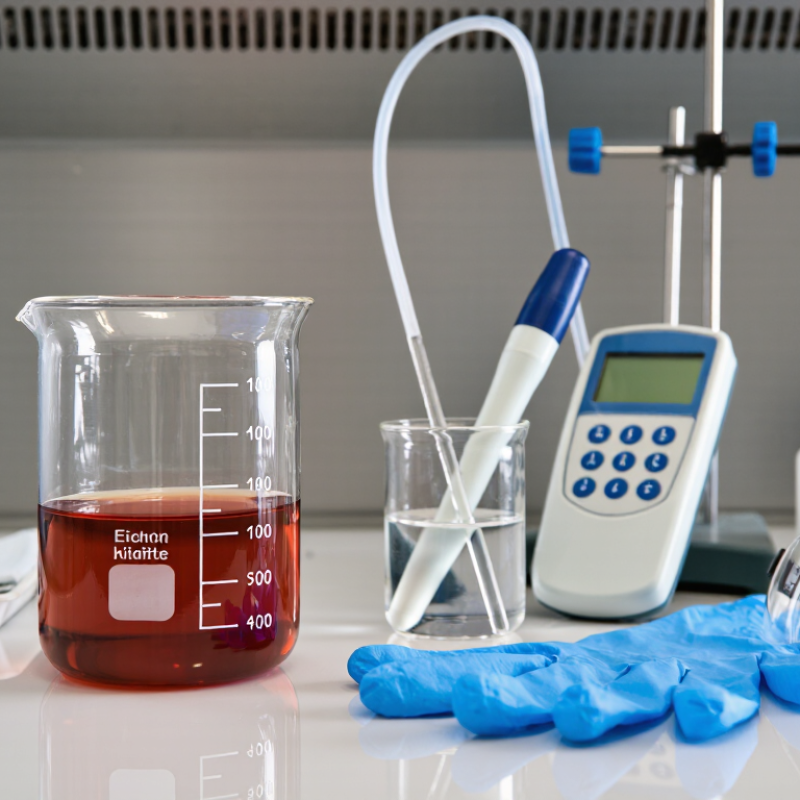
What Is Iron Nitrate Used For?

Chemical Identity: Fe(NO₃)₃·9H₂O, CAS 7782-61-8, 404.00 g/mol

What Is Iron Nitrate Used For?

Chemical Identity: Fe(NO₃)₃·9H₂O, CAS 7782-61-8, 404.00 g/mol

Iron nitrate nonahydrate is a hydrated ferric salt used mainly in laboratories and industrial research. Its formula is Fe(NO₃)₃·9H₂O, and its CAS number is 7782-61-8. The stated molar mass is 404.00 g/mol, including nine water molecules. That detail matters during weighing. Using the anhydrous mass by mistake can distort solution concentration.

In analytical work, this compound provides ferric ions for reactions, reference solutions, and synthesis studies. Researchers also use it to prepare iron-containing oxides, catalysts, coatings, and other functional materials.

Its aqueous solutions can support surface-treatment and etching experiments under controlled conditions. Results depend strongly on acidity, temperature, concentration, and the material being treated. Small changes can produce surprisingly different colors or deposits.

The crystals can absorb moisture from air. Keep the container tightly closed. Laboratory users should verify the current safety data sheet before handling it. Appropriate gloves, eye protection, ventilation, and compatible storage are essential.

Iron nitrate is not a universal iron source for every process. Its nitrate content may interfere with sensitive reactions, and its hydrated form complicates precise calculations. That limitation is easy to overlook. Practical work should record lot condition, solution age, and preparation temperature for reliable results.

Commercial Forms: Anhydrous 241.86 g/mol Versus Nonahydrate 404.00 g/mol

What Is Iron Nitrate Used For?

Commercial Forms: Anhydrous 241.86 g/mol Versus Nonahydrate 404.00 g/mol

Iron nitrate is used in laboratory chemistry, analytical testing, surface treatment, and selected material research. It can provide iron ions during solution preparation or support controlled oxidation reactions. Commercial supply usually appears as anhydrous iron nitrate or iron nitrate nonahydrate. Their different molar masses are not a minor detail.

The anhydrous form has a molar mass of 241.86 g/mol.

The nonahydrate contains nine water molecules and has a molar mass of 404.00 g/mol.

Therefore, equal masses do not contain equal amounts of iron nitrate. For one millimole, a technician weighs 0.24186 grams of the anhydrous form, or 0.40400 grams of the nonahydrate. The calculation is simple. The mistake is common.

The hydrate may be easier to handle in routine laboratory work, but moisture exposure can affect its measured composition. Anhydrous material can also change during storage if it absorbs water. I would check the certificate of analysis before preparing a precise solution. Product naming alone may not reveal enough. Grade, purity, and actual hydration state matter.

Iron nitrate is an oxidizing and corrosive chemical, so suitable gloves, eye protection, ventilation, and a current safety data sheet are essential. Waste handling should follow institutional and local requirements.

Laboratory Uses: Soluble Fe³⁺ Reagent for Analytical and Qualitative Chemistry

Iron nitrate is a useful laboratory source of soluble Fe³⁺ ions. Its clear aqueous solutions support analytical and qualitative chemistry experiments. Highly soluble in water.

In practical work, analysts use iron nitrate solutions to prepare controlled iron(III) concentrations. These solutions can help investigate precipitation, complex formation, and reaction behavior. Iron(III) reacts with thiocyanate ions to produce a deep red complex. This visible change can indicate Fe³⁺ in a sample. It also reacts with some phenolic compounds, often producing violet or blue-green colors. Such tests are useful for teaching and preliminary identification.

However, color tests are not automatically conclusive. Other ions, sample acidity, and reagent concentration can change the result. I have found that a strong color may look convincing, yet still require a blank sample and a comparison standard. Careful analysts record the solution’s color, timing, temperature, and approximate concentration. Instrumental methods can provide stronger confirmation when accuracy matters.

Iron nitrate also serves as a precursor in preparing iron-containing solutions for controlled laboratory studies. Hydrated forms may differ in water content, so calculations should use the stated formula and purity. The material should be handled with suitable eye protection and gloves. Its acidic or oxidizing behavior can create hazards when mixed carelessly. Store it securely, label every solution, and collect waste according to institutional procedures. Small procedural details matter.

What Is Iron Nitrate Used For?

Laboratory Uses: Soluble Fe³⁺ Reagent for Analytical and Qualitative Chemistry

This chart shows the mass of iron(III) nitrate nonahydrate, Fe(NO₃)₃·9H₂O, required to prepare one litre of Fe³⁺ solutions at selected analytical concentrations. The calculations use its molar mass of approximately 403.99 g/mol and a 1:1 molar relationship between the compound and Fe³⁺ ions. Such solutions are used as soluble Fe³⁺ reagents in qualitative tests, precipitation reactions, and analytical chemistry.

Materials Manufacturing: Iron Oxide Precursors with 13.82% Theoretical Fe Content

What Is Iron Nitrate Used For?

Iron nitrate is widely used as a soluble precursor for iron oxide materials. In materials manufacturing, ferric nitrate nonahydrate is especially important. It contains 13.82% theoretical iron by mass. This value comes from its chemical formula and molecular weight, not from a guaranteed production assay. Manufacturers use it to calculate batch quantities accurately. A small weighing error can change the final oxide composition.

During controlled heating, iron nitrate decomposes and forms iron oxide. The selected temperature influences particle size, crystallinity, and oxide phase. These factors affect performance in pigments, ceramic bodies, catalysts, magnetic materials, and sensing components. Its high water solubility also supports solution coating, impregnation, and wet-chemical synthesis. Uniform mixing is possible before thermal treatment. That is a practical advantage.

Quality control remains essential. Operators should verify hydration state, purity, moisture, and iron concentration before processing. Storage conditions matter because the material can absorb moisture and affect dosing. Heating also requires suitable ventilation and process controls. Theoretical iron content alone cannot predict final product quality. Residual nitrate, uneven drying, or excessive heating may create defects. This is where production assumptions need review. A simple formula is useful, but real materials often behave less simply.

Water Treatment and Processing: Ferric-Ion Dosing for Phosphate Removal

What Is Iron Nitrate Used For?

Water Treatment and Processing: Ferric-Ion Dosing for Phosphate Removal

Iron nitrate supplies ferric ions for removing phosphate from wastewater. When added to water, ferric ions react with dissolved phosphate and form insoluble particles. These particles can settle in a clarifier or become trapped during filtration. The process helps protect rivers and lakes from nutrient enrichment, which can encourage excessive algae growth. Operators should measure phosphate before and after treatment. Guesswork can waste chemicals and increase sludge production.

Tips: Start with a jar test. Check pH, mixing time, and settling behavior. Use calibrated dosing pumps and review laboratory results regularly. Ferric-ion dosing can also affect alkalinity and may change the final water quality. Iron-rich sludge needs careful handling and an approved disposal route.

Actual performance depends on temperature, wastewater composition, and competing reactions. A dose that works during dry weather may perform poorly after heavy rain. Ferric nitrate also introduces nitrate, so nitrogen levels deserve attention in sensitive systems. Experienced operators often adjust dosing gradually rather than chasing every hourly fluctuation. That approach is not perfect. It can delay correction. Still, stable control is usually safer than constant overcorrection. Treatment teams should document chemical demand, residual phosphate, iron carryover, and sludge characteristics. Independent laboratory testing can confirm whether the process meets local discharge requirements.

What Is Iron Nitrate Used For? - Water Treatment and Processing: Ferric-Ion Dosing for Phosphate Removal

Data Dimension Typical Value or Description Water-Treatment Relevance
Primary chemical Ferric nitrate, Fe(NO3)3 Dissolves in water and supplies ferric ions, Fe3+, for chemical phosphorus removal and coagulation.
Common hydrated form Ferric nitrate nonahydrate, Fe(NO3)3·9H2O The hydrated form has a molar mass of approximately 404.00 g/mol and must be considered when calculating chemical dosage.
Anhydrous molar mass 241.86 g/mol Useful for converting between ferric nitrate mass and the amount of Fe3+ supplied.
Ferric-ion content 55.845 g Fe per mole of Fe(NO3)3 Anhydrous ferric nitrate contains approximately 23.09% elemental iron by mass; commercial solutions vary by formulation.
Main phosphorus target Orthophosphate, PO43−, usually reported as phosphorus, P The distinction between mg/L as P and mg/L as PO4 is essential for dose calculations.
Precipitation reaction Fe3+ + PO43− → FePO4(s) Ferric phosphate is a sparingly soluble solid that can be separated with suspended solids during clarification or filtration.
Minimum theoretical Fe:P ratio 1:1 molar ratio This is a stoichiometric minimum for FePO4 formation and does not account for competing reactions or incomplete mixing.
Typical operating Fe:P ratio Approximately 1.5:1 to 3:1 mol/mol An excess of ferric ions is often required because alkalinity, organic matter, suspended solids, and other ligands consume part of the coagulant.
Approximate Fe dose conversion 1 mg/L as P requires about 1.80 mg/L Fe at a 1:1 molar ratio At a 2:1 molar ratio, the theoretical ferric dose is approximately 3.60 mg/L as Fe per mg/L as P removed.
Indicative ferric dose range Often approximately 5–30 mg/L as Fe in municipal or industrial applications Actual dosage depends on influent phosphorus, target effluent concentration, alkalinity, solids concentration, and jar-test results.
Preferred pH range Commonly about pH 5.5–8.0 for ferric coagulation Ferric hydroxide formation and phosphate capture are pH-dependent; process-specific testing is required for optimization.
Alkalinity effect Ferric-ion hydrolysis consumes alkalinity and can lower pH Alkalinity monitoring may be necessary, with supplemental alkalinity added where pH depression affects treatment performance.
Secondary removal mechanism Adsorption and co-precipitation with ferric hydroxide flocs Ferric hydroxide flocs can capture phosphate species beyond the amount removed by direct FePO4 precipitation.
Typical process locations Primary clarification, secondary treatment, tertiary polishing, or filtration The injection point is selected according to phosphorus form, available mixing energy, solids separation capacity, and effluent limits.
Sludge impact Increased chemical sludge production The additional iron- and phosphorus-containing solids require consideration in thickening, dewatering, handling, and disposal systems.
Best-practice verification Jar testing and full-scale monitoring Measure influent and effluent phosphorus, pH, alkalinity, turbidity, suspended solids, and residual iron before finalizing the dosing strategy.
Note: Dose ranges are indicative engineering values rather than universal operating requirements. Final ferric nitrate dosing should be established through site-specific testing and applicable discharge limits.

FAQS

What is iron nitrate mainly used for in laboratory work?

It provides soluble iron(III) ions for analytical and qualitative chemistry experiments. Its clear water solutions support controlled testing.

How can iron(III) ions be detected visually?

Iron(III) can react with thiocyanate ions, producing a deep red complex. This color suggests iron(III) may be present.

Are color tests conclusive?

No. Other ions, acidity, concentration, and timing can alter the result. Use blank samples and comparison standards.

What details should analysts record during a color test?

Record color, reaction time, temperature, and approximate concentration. A strong color can still mislead.

Why do hydrated forms require careful calculations?

Hydrated materials contain different amounts of water. Use the stated formula, purity, and actual product information.

How does ferric-ion dosing remove phosphate from wastewater?

Ferric ions react with dissolved phosphate and form insoluble particles. These particles settle in clarifiers or remain in filters.

What should operators check before adjusting treatment dosage?

Run a jar test. Check pH, mixing time, settling, residual phosphate, and sludge production.

Can treatment conditions change the required dose?

Yes. Temperature, rainfall, wastewater composition, and competing reactions affect performance. Constant overcorrection is not always better.

What additional water-quality issue can ferric nitrate create?

It introduces nitrate into the treated water. Sensitive systems should monitor nitrogen levels and final water quality.

How should these materials and their waste be handled?

Wear gloves and eye protection. Label every solution, store it securely, and follow approved waste procedures. Small details matter.

Conclusion

Iron Nitrate is an inorganic ferric salt commonly supplied as the nonahydrate, Fe(NO₃)₃·9H₂O, with CAS number 7782-61-8 and a molecular weight of 404.00 g/mol. Its anhydrous form has a molecular weight of 241.86 g/mol, so distinguishing between these commercial forms is important for accurate weighing, formulation, and concentration calculations.

Because it dissolves readily in water and provides Fe³⁺ ions, Iron Nitrate is useful as a reagent in analytical and qualitative chemistry. It is also used as a precursor for producing iron oxide materials and related compounds. The nonahydrate contains a theoretical iron content of approximately 13.82%, which can help determine material yields and process requirements. In water treatment and processing, ferric-ion dosing supports phosphate removal by promoting the formation of insoluble iron-phosphate compounds, helping reduce phosphate levels in treated water.


Aria

Aria

Aria is a dedicated marketing professional with a deep passion for innovative strategies and a keen understanding of our company's product offerings. With a wealth of experience in the industry, Aria excels at crafting engaging content that highlights the unique features and benefits of our......