Premium specialty chemicals and materials manufactured under rigorous ISO standards for global supply chains.
Understanding the critical role of particle morphology and high-purity chemistry in advanced industrial applications.
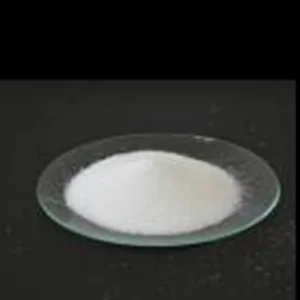
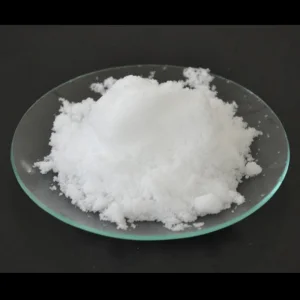
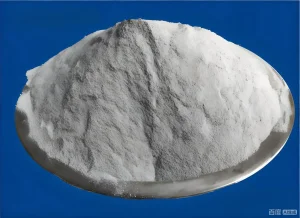
Ammonium Oxalate Superfine (formula: $(NH_4)_2C_2O_4 \cdot H_2O$, CAS No. 6009-70-7) is a crucial dicarboxylic acid ammonium salt. Unlike standard crystalline grids of industrial-grade ammonium oxalate, the Superfine classification demands an advanced processing paradigm. Through specialized fluid-bed air-jet milling and controlled recrystallization processes, the particle size distribution (PSD) is reduced to a sub-micron or micro-milled scale (typically $D_{50} \le 10 \mu m$ or custom sizes depending on application requirements).
Decreasing the particle size yields an exponential surge in specific surface area. This physical optimization radically alters dissolution kinetics, catalytic efficiency, and reaction uniformity in solid-phase matrices. In high-precision manufacturing, standard grade ammonium oxalate often leaves undesirable residues or fails to react completely due to localized concentration gradients. Superfine grades solve this, providing flawless dispersion and chemical reactivity.
In thermal decomposition and metallurgic precipitation, coarse particles cause uneven gaseous release and inhomogeneous crystal nucleation. Superfine Ammonium Oxalate guarantees a rapid, uniform reaction rate, preventing local structural defects in downstream end-products such as rare earth oxides and advanced ceramic precursors.
| Typical Technical Parameters | Industrial Standard Grade | Superfine Electronic Grade |
|---|---|---|
| Assay ($ (NH_4)_2C_2O_4 \cdot H_2O $) | ≥ 99.0% | ≥ 99.8% |
| Particle Size ($D_{50}$) | 100 - 300 μm | ≤ 10 μm (Customized down to 2 μm) |
| Insoluble Matter in Water | ≤ 0.02% | ≤ 0.005% |
| Chloride (Cl) | ≤ 0.002% | ≤ 0.0005% |
| Sulfate ($SO_4$) | ≤ 0.01% | ≤ 0.002% |
| Iron (Fe) | ≤ 0.001% | ≤ 0.0001% |
| Heavy Metals (as Pb) | ≤ 0.001% | ≤ 0.0002% |
Harnessing unparalleled manufacturing integration, processing technologies, and rigorous quality assurance.
China is home to the world's most integrated upstream raw chemical networks. From synthesis gas to nitric acid and oxalic acid intermediates, factories enjoy continuous, secure access to reactants. This translates directly to price stability and supply guarantee for global high-volume buyers.
Processing superfine particles requires advanced temperature-controlled fluid-bed air jet mills. Because ammonium oxalate decomposes at elevated temperatures, standard mechanical grinding causes thermal degradation. Chinese factories employ cryogenic nitrogen-loop air-jet technology to ensure zero thermal damage.
With massive green initiatives in China, modern chemical manufacturers must adhere to stringent national safety and environmental protocols. Partnering with ISO9001:2008 and ISO14001 certified suppliers guarantees batch-to-batch consistency, minimizing the hazard profile and offering full REACH/MSDS documentation.
How Superfine Ammonium Oxalate is utilized across diverse industrial hubs worldwide.
The unique properties of Ammonium Oxalate Superfine satisfy a highly specific set of application conditions across major global industrial corridors:
Staying ahead in a rapidly transforming global chemical economy.
As sustainability requirements and technological boundaries shift, the chemical manufacturing landscape faces several critical transitions:
1. Carbon-Neutral Manufacturing & Green Chemistry: Downstream buyers are increasingly demanding evidence of reduced Scope 1 and Scope 2 emissions. Raw chemical manufacturers are switching to clean energy sources for dry-milling and recrystallization equipment. The optimization of gas loops in jet mills lowers electrical consumption, matching global decarbonization goals.
2. Intelligent Particle Morphology (Customized PSDs): Advanced analytical software and laser diffraction systems allow manufacturers to supply highly customized Particle Size Distributions (PSD). We see an increasing request for monodisperse powders where particle diameter deviation is kept within ±1μm, minimizing structural variation in high-tech ceramics.
3. Enhanced Safety & Non-Caking Packaging Solutions: A major challenge with superfine powders is their tendency to cake (agglomerate) under high humidity and static pressure. Macro solutions involve climate-controlled vacuum packaging using multi-layer aluminum-foil bags with built-in desiccants and anti-static liners to ensure product integrity remains intact upon arrival.
Mitigating supply risks with clear chemical compliance pipelines.
Procuring raw chemicals globally requires meticulous attention to international safety protocols and logistics regulations. Ammonium oxalate is classified as a hazardous chemical due to its toxicity if swallowed or in contact with skin. Hence, proper logistics handling is paramount:
Answering crucial technical, commercial, and logistical queries from chemical procurement managers.
Our prices fluctuate based on raw material costs (specifically Oxalic Acid and Liquid Ammonia), energy tariff rates for cryogenic milling operations, and global shipping fees. For the latest, highly accurate rates, please contact our export sales desk with your quantity and purity specifications.
Yes, all global export orders require an ongoing minimum order quantity. This helps distribute fixed custom handling, inland logistics, and laboratory test documentation expenses efficiently. Small trial quantities can be arranged for initial R&D validations.
Yes, we provide comprehensive technical and export paperwork. This includes formal Certificates of Analysis (COA) for each batch, Certificates of Conformance (COC), detailed hazard declarations, cargo insurance, and verified Certificates of Origin (Form E, Form F, etc.).
For custom milling jobs or specialized superfine particle distributions (e.g. D50 < 5μm), sample validation takes approximately 7 days. Large-scale production is completed within 20 to 30 days of advance deposit receipt. Final delivery schedules depend heavily on current sea freight routes.
Standard payment terms are a 30% deposit in advance via T/T (Telegraphic Transfer), with the remaining 70% balance paid against the copy of the Bill of Lading (B/L) or via an irrevocable Letter of Credit (L/C) at sight.
Superfine chemicals are prone to moisture absorption. We utilize specialized vacuum sealing with moisture-proof, double-layer aluminum barrier bags inside robust, impact-resistant external drums. Desiccants are included in all overseas shipments.
 Yanxatech