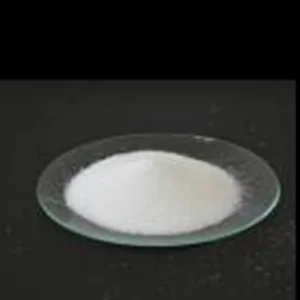
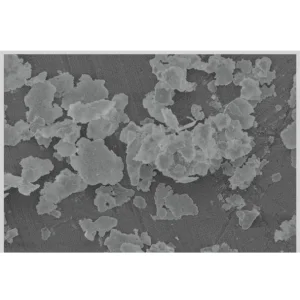
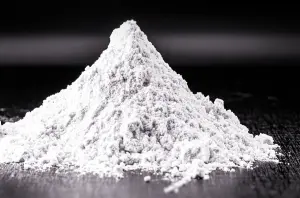
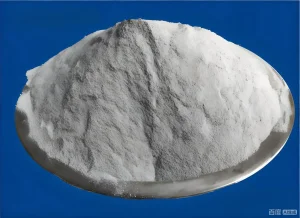
Aluminum Oxide ($Al_2O_3$), commonly known as alumina, stands as one of the most critical structural and functional ceramics in modern engineering. From the refractory linings of metallurgical furnaces to the nanoscale chemical-mechanical planarization (CMP) slurries in semiconductor fabs, its chemical stability, extreme hardness, high thermal conductivity, and electrical resistance render it irreplaceable.
The global industrial landscape relies heavily on two primary phases of aluminum oxide powder: Alpha-phase Alumina ($\alpha-Al_2O_3$) and Gamma-phase Alumina ($\gamma-Al_2O_3$). Alpha alumina, the thermodynamically stable form at high temperatures, boasts extreme density and wear resistance, making it the ideal base for high-performance cutting tools, heavy-duty abrasives, and refractory bricks. In contrast, gamma alumina is a transitional phase characterized by high specific surface area and structural porosity. It is highly valued as a catalyst support in petrochemical refining and a primary raw material for advanced desiccants and coatings.
For wholesale purchasers and strategic procurement managers, sourcing the correct specification of aluminum oxide powder requires an in-depth understanding of the underlying chemistry. The transformation from raw gibbsite or bauxite via the Bayer process yields calcined alumina. Undergoing precise thermal calcination protocols controls the growth of primary crystallites, determining the final grain size, shape, and distribution.
Key quality metrics such as the d50 particle size distribution, specific surface area (BET value), and soda ($Na_2O$) content dictate the performance threshold in engineering applications. For electronic ceramic substrates and spark plug insulators, minimizing soda content to less than 0.1% is paramount to eliminate free sodium ions that compromise electrical insulation properties.
| Alumina Type | Phase Structure | Primary Crystal Size (µm) | Typical Purity ($Al_2O_3$) | Principal Application Scenarios |
|---|---|---|---|---|
| Calcined Alumina | Alpha ($\alpha$) | 1.5 – 5.0 | 99.2% – 99.6% | Technical ceramics, wear-resistant linings, refractories |
| Reactive Alumina | Alpha ($\alpha$) | < 1.0 (Sub-micron) | 99.7% – 99.9% | Precision engineering ceramics, high-strength castables |
| Tabular Alumina | Alpha ($\alpha$) | 50 – 400 (Agglomerated) | 99.5% – 99.8% | Iron and steel metallurgy refractories, kiln furniture |
| White Fused Alumina | Alpha ($\alpha$) | Variable (Grit classified) | 99.5% – 99.9% | Precision sandblasting, high-performance grinding wheels |
| Activated Alumina | Gamma ($\gamma$) / Chi | Amorphous transition | > 94.0% | Desiccants, catalyst carriers, fluoride removal agents |
China's manufacturing infrastructure offers unprecedented operational advantages for the production of advanced inorganic powders and specialized materials. High energy efficiency, seamless access to high-grade bauxite reserves, and vertically integrated industrial clusters allow Chinese factories to maintain highly competitive wholesale pricing structures while complying with strict quality baselines.
Equipped with automated rotary and fluid-bed calcining furnaces running on advanced thermal profiling, ensuring absolute phase consistency and crystalline structural integrity.
Employing state-of-the-art jet milling and continuous ball milling systems coupled with air classifiers to guarantee tightly controlled particle size distributions with zero oversize contamination.
Strategic proximity to leading logistics hubs in Qingdao, Shanghai, and Tianjin ensures rapid dispatch times and lower inland transportation overheads for bulk dry cargos.
Established in 2008, Yanxatech System Industries Limited (YANXA) has grown from a specialized technical trading unit into a leading developer and supplier of high-performance specialty chemicals and industrial metal powders. Powered by a commitment to absolute consistency, safety, and rigorous ISO 9001 quality management, YANXA provides international businesses with high-purity materials designed for extreme engineering applications. Our collaborative approach with top-tier research institutes and leading manufacturers positions us as an authoritative partner in the global supply of specialty dry powders, liquid rubbers, and chemical formulations.
The deployment of specialized aluminum oxide powders spans dozens of high-tech sectors, where small adjustments to crystal structure yield major performance improvements:
High-purity alumina is widely used to manufacture wear-resistant components like mechanical seals, valve guides, plungers, and ceramic rollers. By sintering sub-micron reactive alumina powder at temperatures ranging from 1550°C to 1700°C, components achieve near-theoretical densities with excellent flexural strength and chemical resistance.
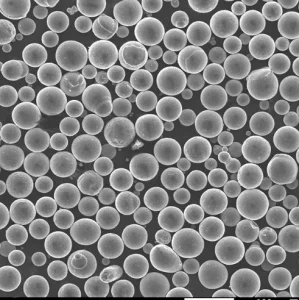
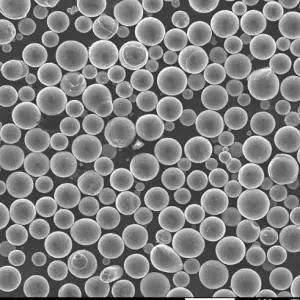
As modern electronics shrink and power densities increase, dissipating heat becomes a major engineering challenge. Spherical aluminum oxide powder is used as a thermally conductive filler in silicon pads, epoxies, and greases. Its spherical geometry allows for high volume loading with minimal viscosity penalties, providing the thermal paths needed for electric vehicle batteries and high-power microprocessors.
In the optics and semiconductor industries, white fused alumina is used to lap and polish glass, sapphire substrates, and silicon wafers. Accurate size control is critical: a single oversize particle can ruin a workpiece, while undersize particles reduce production rates. High-purity, tightly classified powders ensure consistent material removal rates.
Coating polymer separator membranes with sub-micron high-purity alumina powder improves the thermal stability of lithium-ion cells. The ceramic layer prevents electrical shorting even if the polymer shrink temperature is reached, drastically reducing the risk of thermal runaway.
The shift toward ultra-high-purity (5N > 99.999%) alumina is accelerating, driven by the demand for sapphire glass used in smartwatches, cameras, and micro-LED displays. At the same time, manufacturers are focusing on eco-friendly processing. High-temperature calcining is shifting toward clean energy sources, such as hydrogen and electric kilns, to lower carbon footprints. Processing is also moving toward custom particle shapes and surface coatings (silane/titanate coupling agents) to optimize compatibility with organic resin matrices.
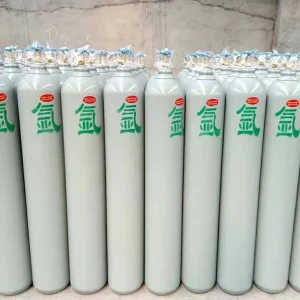
Beyond aluminum oxide, our manufacturing network produces a comprehensive selection of metal powders, liquid rubbers, and specialty gas formulations. These materials are engineered to meet strict international standards, ensuring reliability and performance in demanding applications.
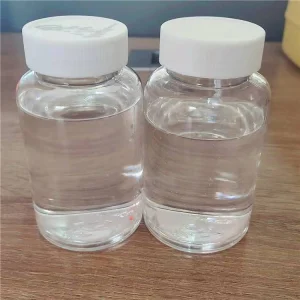
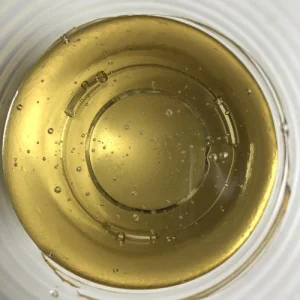
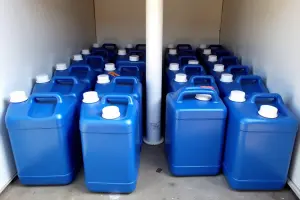
A colorless, highly volatile liquid that readily polymerizes. Supplied as a stable formalin solution (37-50% concentration) with methanol added as an inhibitor. Key raw material for phenolic, urea, and melamine resins.
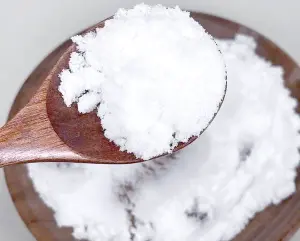
White crystalline organic powder (CAS No. 100-97-0, C₆H₁₂N₄). Widely utilized as a curing agent in phenolic resins, an accelerator in rubber vulcanization, and a key precursor in chemical synthesis.
A solid, flammable polymer of formaldehyde with a characteristic pungent odor. Contains ≥96% active formaldehyde, offering quick dissolution times, low formic acid content (≤0.05%), and a controlled pH range (5-7).
Produced via advanced inert gas atomization. Features high sphericity, smooth surfaces, low moisture absorption, and precise particle size distributions. Ideal for military, pyrotechnic, and aerospace applications.
Industrial procurement of fine powders requires clear logistics planning and quality verification. Because many chemical powders are hygroscopic, they must be protected from humidity during transport. YANXA uses multi-layer moisture-proof packaging, including specialized FIBC bulk bags with vapor-barrier inner liners, to protect material properties.
Every shipment is backed by detailed documentation, including Certificates of Analysis (COA), grain size distribution reports, and XRD phase analyses. When shipping hazardous or regulated chemical goods, we follow all relevant IMDG and IATA regulations to guarantee safe transit from Chinese ports to international destinations.
 Yanxatech