 Yanxatech
1 / 1
| Item | Technical Property | ||
|---|---|---|---|
| High purity krypton GB/T5829-2006 |
Ultrapure krypton | ||
| Kr purity (volume fraction)/10-2 ≥ | 99.999 | 99.9995 | 99.9999 |
| Nitrogen (N2) content (volume fraction)/10-6 ≤ | 2 | 1.5 | 0.2 |
| Oxygen (O2) content (volume fraction)/10-6 ≤ | 1.5(O2+Ar) | 0.5(O2+Ar) | 0.1 |
| Argon (Ar) content (volume fraction)/10-6 ≤ | 0.05 | ||
| Hydrogen (H2) content (volume fraction)/10-6 ≤ | 0.5 | 0.2 | 0.05 |
| Carbon monoxide (CO) content (volume fraction)/10-6 ≤ | 0.3 | 0.1 | 0.05 |
| Carbon dioxide (CO2) content (volume fraction)/10-6 ≤ | 0.4 | 0.1 | 0.05 |
| Methane (CH4) content (volume fraction)/10-6 ≤ | 0.3 | 0.1 | 0.05 |
| Water (H2) content (volume fraction)/10-6 ≤ | 2 | 1 | 0.2 |
| Xenon (Xe) content (volume fraction)/10-6 ≤ | 2 | 1 | 0.2 |
| Fluoride (CF4) content (volume fraction)/10-6 ≤ | 1 | 0.2 | 0.05 |
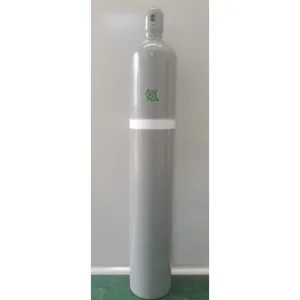
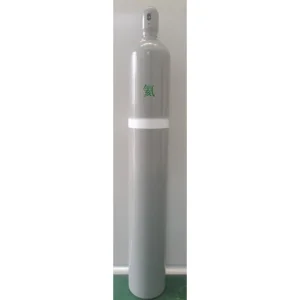
Krypton gas is generally categorized into High Purity Krypton (meeting GB/T5829-2006 specifications with purity levels of 99.999% and 99.9995%) and Ultrapure Krypton, which achieves a minimum purity of 99.9999%.
Ultrapure Krypton is primarily used in high-tech fields including the semiconductor industry, electric vacuum systems, advanced electric light sources, medical health applications, and specialized laser gas manufacturing.
The maximum allowable water (H2O) content is 2 ppm (10^-6) for 99.999% purity, 1 ppm for 99.9995% purity, and goes down to an extremely low 0.2 ppm for 99.9999% Ultrapure Krypton.
The GB/T5829-2006 standard governs the technical properties and impurity thresholds (such as Nitrogen, Oxygen, Argon, Carbon Monoxide, and Hydrogen limits) for high purity krypton gas to ensure stability and safety in demanding industrial setups.
For critical semiconductor applications, Fluoride (CF4) levels are strictly managed. The limit is 1 ppm in 99.999% purity gas, 0.2 ppm in 99.9995% purity, and kept below 0.05 ppm in Ultrapure Krypton.