Yanxatech System Industries Limited (hereinafter referred to as YANXA) is one of the premier growing suppliers in the field of specialty materials in China. Starting as a fledgling small business unit in 2008, YANXA has been driven by a passion to develop a broad international market in the areas of chemical and mechanical industries.
Thanks to our team’s enduring and persistent work and our business partners’ long-lasting support, YANXA has steadily and vigorously grown into a company with excellence in delivering premium-grade products and reliable services relating to specialty chemicals. We cooperate with leading manufacturers and renowned research institutes in China to supply high-performance liquid rubber, nitrates, and metal powders & metal alloyed powders.
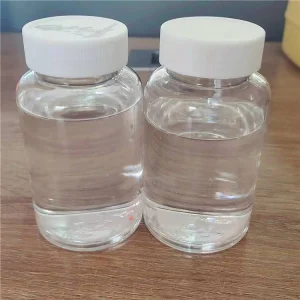
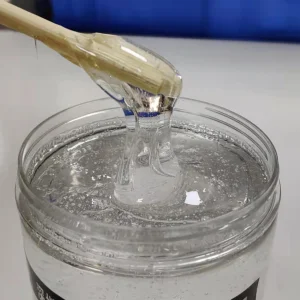
Polyethylene Glycol 200 (commonly abbreviated as PEG 200) is a low-molecular-weight oligomer of ethylene oxide. As a clear, colorless, and viscous liquid, it plays a vital role across multiple industries due to its excellent hydrophilic properties, minimal volatility, and superb chemical stability. Under CAS No. 25322-68-3, this dihydroxy polyether compound serves as a cornerstone solvent, humectant, and plasticizer.
| Property Parameter | Standard Technical Specifications (PEG 200) | Testing Methods & Compliance Standards |
|---|---|---|
| Appearance | Colorless, transparent, viscous liquid | Visual Inspection |
| Average Molecular Weight | 190 – 210 g/mol | Gel Permeation Chromatography (GPC) |
| Hydroxyl Value | 510 – 590 mg KOH/g | Ph. Eur. / USP Standard Titration |
| pH (5% Water Solution) | 5.0 – 7.0 | Potentiometric pH Metering |
| Water Content | ≤ 0.5% wt | Karl Fischer Titration |
| Viscosity (at 20°C) | 50 – 58 mPa·s | Rotational Viscometry |
The commercial synthesis of high-purity PEG 200 takes place in state-of-the-art ethoxylation reactors. The reaction initiates with the addition of ethylene oxide gas to monoethylene glycol or diethylene glycol under alkaline catalytic conditions (e.g., sodium hydroxide or potassium hydroxide) at elevated temperatures (typically 120°C–160°C) and pressure:
To ensure a narrow molecular weight distribution peaking at n ≈ 4, advanced batch monitoring and real-time gas chromatography are implemented. Modern factories filter, neutralize, and decolorize the crude PEG using active carbon and ion-exchange resins, eliminating residual alkalis, glycols, and catalyst traces to yield USP/NF grade material.
Globally, Polyethylene Glycol is witnessing robust compound annual growth rates (CAGR). The demand for low-viscosity grades like PEG 200 is driven by advancements in pharmaceutical delivery systems, eco-friendly agrochemicals, and green chemistry regulations.
With expanding downstream processing facilities in China, Japan, and South Korea, APAC stands as the primary hub for global PEG manufacturing, combining cost efficiency with integrated petrochemical clusters.
Transitioning away from coal-derived feedstocks, advanced chemical factories utilize bio-based ethylene glycol to manufacture carbon-neutral PEGs, answering the global shift toward sustainability.
Implementing ISO-tank systems and nitrogen-blanketed packaging preserves PEG 200's low moisture levels during trans-oceanic transit, ensuring material integrity at downstream entry points.
Because of its excellent solvency, high boiling point, hygroscopicity, and lack of toxicity, Polyethylene Glycol 200 is used across a diverse array of localized industrial and commercial scenarios.
Used extensively as a liquid solvent, co-solvent, and plasticizer for soft gelatin capsules. Due to its biocompatibility, it acts as a reliable carrier for poorly water-soluble active pharmaceutical ingredients (APIs), ensuring consistent drug release rates.
In creams, lotions, and toothpastes, PEG 200 acts as a non-volatile humectant, moisture regulator, and viscosity stabilizer. It has a smooth skin feel and is fully compatible with both aqueous and oily cream bases.
Serves as a vital reactant in esterification processes for producing PEG esters, which function as surfactants, emulsifiers, and dispersants. It is also used as a humectant and plasticizer in paper coatings and starch adhesives.
Entering the global market requires navigating strict regulatory landscapes. YANXA provides comprehensive compliance documentation to streamline customs clearances and factory audits.
We ensure all shipments comply with EU REACH registration protocols and maintain FDA-registered facility standards. This enables seamless supply chains for cosmetic and pharmaceutical manufacturers globally.
Safety Data Sheets (SDS) are provided in multiple languages, compliant with the Globally Harmonized System of Classification and Labelling of Chemicals (GHS). Proper toxicological, handling, and disposal parameters are fully documented.
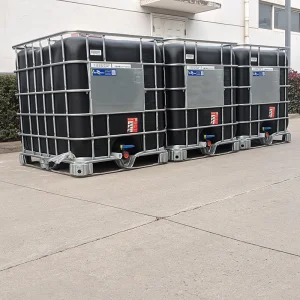
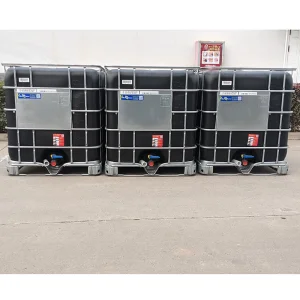
Available in 200 kg steel drums, 1000 kg IBC totes, or bulk ISO-tanks. Sealed under high-purity dry nitrogen gas to prevent atmospheric moisture pickup and auto-oxidation during extended storage.
In addition to our specialty polyether chemicals, YANXA's integrated factory operations manufacture and distribute key industrial intermediates:
Formaldehyde is a colorless liquid, easily polymerized, and readily soluble in water, alcohol, and ether. It is rapidly oxidized to formic acid in air, acting as a strong reducing agent. Its boiling point is -19°C, freezing point -118°C, and relative density to air is 1.067. Commercially, it is supplied in liquid form as formalin, a 37-50% formaldehyde solution with a small amount of methanol added as a polymerization inhibitor. The solution is milky white and has a foul odor. Formalin readily vaporizes, releasing formaldehyde gas. Its boiling point is 96°C, relative density is 0.815/-20°C, and flash point is 55°C.
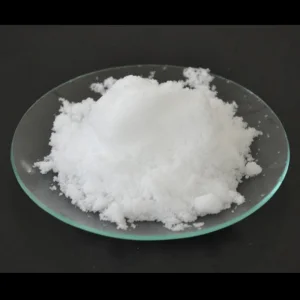
Hexamethylenetetramine, also known as hexamine or HMTA, is a white crystalline powder produced by the condensation reaction of formaldehyde and ammonia. It is a versatile organic chemical intermediate widely used in industrial manufacturing, pharmaceutical synthesis, rubber processing, and analytical chemistry.
· CAS No.: 100-97-0
· Molecular Formula: C₆H₁₂N₄
· Molecular Weight: 140.19 g/mol
A white powdery solid with a flammable odor of formaldehyde. It is a linear polymer of formaldehyde with no fixed melting point.
| Item | Specifications (≥96%) | Specifications (≥92%) |
|---|---|---|
| Appearance | White powder/solid | White powder/solid |
| Content | ≥96% | ≥92% |
| Solubility | ≤40 minutes | ≤40 minutes |
| Formic acid | ≤0.05% | ≤0.05% |
| pH | 5 - 7 | 5 - 7 |
As a forward-looking specialty material supplier, YANXA and its manufacturing partners are focused on developing sustainable chemicals. The technology roadmap for our polyether and liquid rubber divisions includes:
Developing synthesis routes utilizing agricultural waste-derived glycols, matching the physical properties of traditional petroleum-based PEG 200 while decreasing the carbon footprint by up to 40%.
Implementing advanced recycling loops for unreacted ethylene oxide gas, reducing manufacturing emissions and minimizing environmental impacts.
Researching non-hazardous organometallic catalysts to replace traditional alkaline catalysts, eliminating the need for extensive chemical neutralization.
 Yanxatech