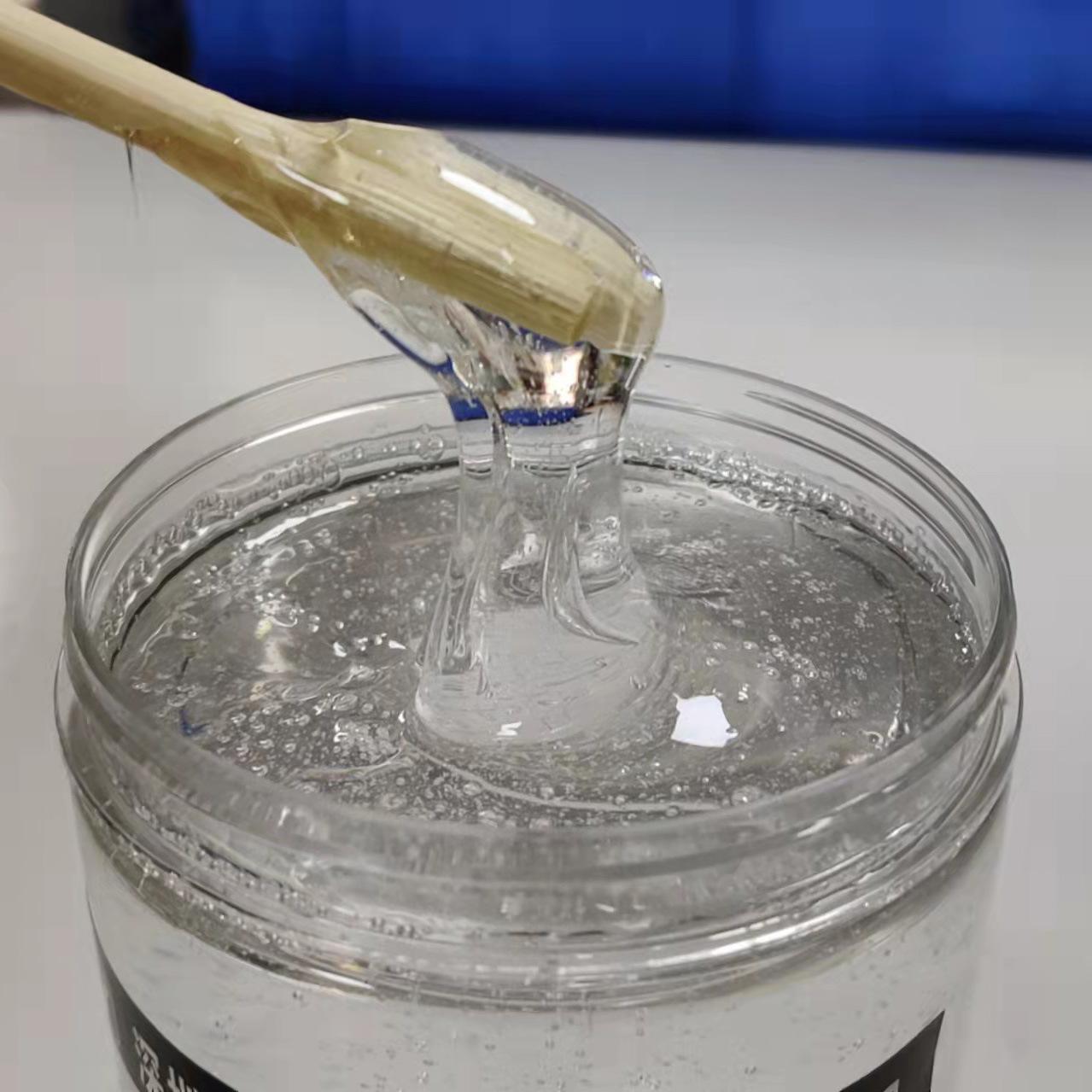
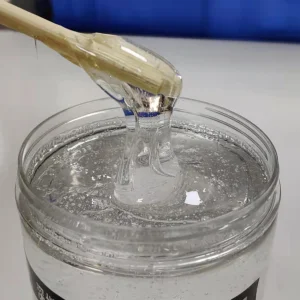
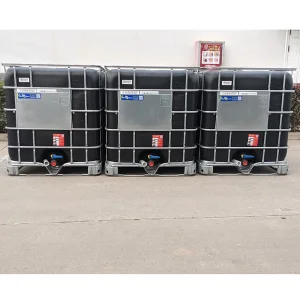
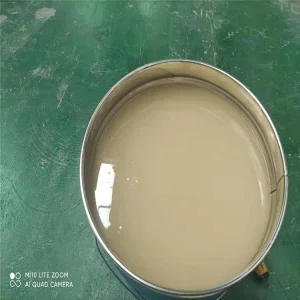
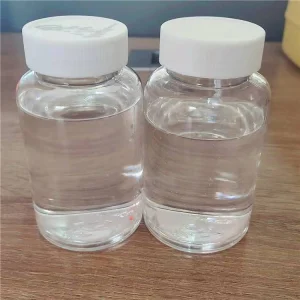
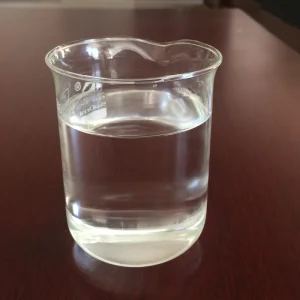
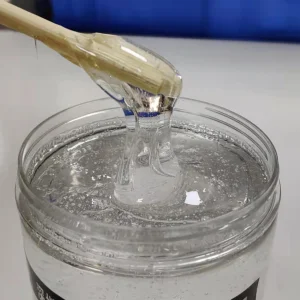
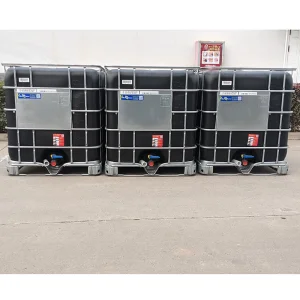
L-XNBR is a liquid rubber product containing nitrile and carboxyl groups in the main chain. The nitrile group can provide good solvent, heat, abrasion and adhesive properties, while the carboxyl group can react with epoxy and amino groups for curing.
Provides excellent performance characteristics, ensuring good solvent, heat, abrasion, and adhesive properties.
Enables active chemical reactions with epoxy and amino groups to facilitate efficient curing.
Applications & Modification Uses
- Toughening modifier for epoxy resins
- Toughening modifier for phenolic resins
- Softening agent for rubber plasticizing
- Printing rollers production
- Industrial seals manufacturing
- High-performance coatings
- Industrial adhesives
| Product Grade |
Combined with Acrylonitrile (%) |
Ash (%) |
Volatile Matter (%) |
Viscosity (40°C, Pa-s) |
Carboxylic Acid Content (mmol/g) |
| L-XNBR-Ⅰ type |
20-25 |
≤1 |
≤1 |
≤100 |
0.30-1.20 |
| L-XNBR-II type |
30-35 |
≤1 |
≤1 |
≤150 |
0.30-1.20 |
Q: What is L-XNBR?
L-XNBR is a liquid rubber product that contains nitrile and carboxyl groups in its main chain structure.
Q: What role does the carboxyl group play in L-XNBR?
The carboxyl group allows the product to react with epoxy and amino groups, which facilitates the curing process.
Q: In what industries or products is L-XNBR utilized?
It is used as a toughening modifier for epoxy and phenolic resins, a softening agent for rubber plasticizing, and is widely applied in printing rollers, seals, coatings, and adhesives.
Q: What are the technical differences between L-XNBR-Ⅰ and L-XNBR-II?
L-XNBR-Ⅰ type features a combined acrylonitrile content of 20-25% and a viscosity of ≤100 Pa-s at 40°C. L-XNBR-II type has a combined acrylonitrile content of 30-35% and a viscosity of ≤150 Pa-s at 40°C.
Q: Do L-XNBR-Ⅰ and L-XNBR-II have the same carboxylic acid content?
Yes, both L-XNBR-Ⅰ type and L-XNBR-II type share the same carboxylic acid content specification of 0.30-1.20 mmol/g.
Q: What are the limits for ash and volatile matter in L-XNBR grades?
Both L-XNBR-Ⅰ and L-XNBR-II types maintain strict limits of ≤1% for both ash content and volatile matter.
 Yanxatech