Premium specialized chemical materials, alloy powders, and industrial-grade compounds engineered for structural integrity, precision performance, and optimized manufacturing efficiency.
A global leader in specialty materials, partnering with top-tier research institutes to redefine chemical and mechanical component supply lines.
Established as a fledgling small business unit in 2008, Yanxatech System Industries Limited (YANXA) has grown steadily and vigorously into one company with excellence in delivering premium specialty chemicals. Driven by the passion to develop a broad international market in areas relating to chemical and mechanical industries, YANXA has built strong, enduring partnerships with leading manufacturers and renowned research institutes across China.
This allows us to leverage cutting-edge manufacturing protocols, from vacuum inert gas atomization to advanced chemical polymerization. By merging academic research with commercial manufacturing capabilities, YANXA ensures that all materials exceed structural and composition guidelines requested by global aerospace, automotive, defense, and electronics companies.
Our commitment to rigorous engineering processes means that every batch of metal alloy powder, liquid rubber, and nitrate conforms precisely to international standards, mitigating risks associated with material fatigue, degradation, and contamination.
Quality, safety, and efficiency prevail over all other values in our business. We systematically analyze our customers' direct project requirements as well as their unique and specific standards for newly developed applications. We adhere strictly to the engineering specifications and execute deliveries in perfect conformity.
The specialty chemical sector demands exceptional risk management. YANXA undertakes all operations involving chemicals, reactive metals, and pressurized media in a highly controlled environment. We implement comprehensive risk-mitigation measures to preserve both human health and local environmental ecology.
By complying with the ISO 9001:2008 quality management framework and maintaining safety certifications across all supply facilities, we protect our client partners against supply chain disruption and product failures.
An in-depth analysis of high-performance spherical and flake metal alloy powders in additive manufacturing, aerospace structural components, and high-durability coatings.
In modern industrial applications, the demands on component weight, thermal resistance, and mechanical strength are increasing rapidly. Standard subtractive manufacturing techniques struggle to process complex geometries or yield optimal material usage. Consequently, powder metallurgy, particularly metal 3D printing (Selective Laser Melting (SLM), Electron Beam Melting (EBM), and Direct Metal Laser Sintering (DMLS)), has emerged as a cornerstone technology.
For these advanced additive processes, the performance of the final component is directly correlated to the physical properties of the raw material: the alloy powder. Features such as spherical morphology, low oxygen content, high tap density, and excellent flowability determine how uniformly the powder spreads in the build chamber and how consistently it melts under the laser beam. Any structural irregularity or chemical impurity inside the powder particles can result in micro-cracks, porosity, or mechanical failure under dynamic load conditions.
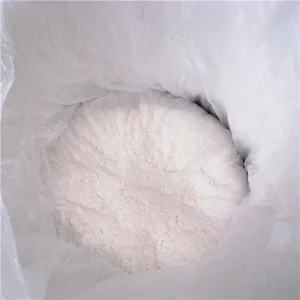
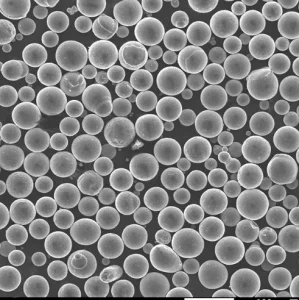
Aluminum-Magnesium (Al-Mg) and other Al-based alloy powders are highly valued in aerospace and automotive industries because of their high strength-to-weight ratio, exceptional structural integrity, and excellent corrosion resistance. Adding magnesium as an alloying element enhances the tensile strength and hardness of the aluminum matrix while keeping density low. YANXA's Atomized Spherical Aluminum Magnesium Alloy Powder is engineered to meet these demands, offering precise particle size distribution (PSD) tailored for additive manufacturing and thermal spraying.
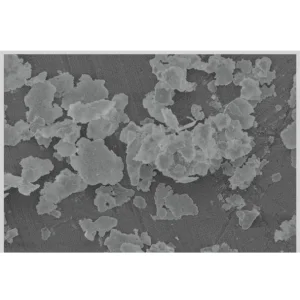
For corrosion-prone environments, traditional galvanization is often replaced with zinc flake coatings, which offer superior protection at a fraction of the coating thickness. The integration of aluminum into the flake structure creates a synergistic galvanic barrier. Our Flake Zn-Al Alloy Powder provides a tortuous path for corrosive agents like moisture, oxygen, and chloride ions, preventing them from reaching the substrate steel. This makes it an ideal solution for structural automotive fasteners, wind turbine assemblies, and marine infrastructure.
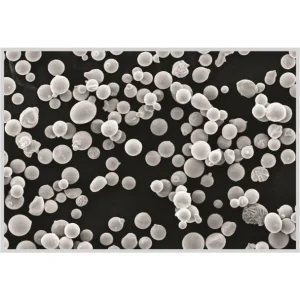
Our atomization process ensures excellent roundness and flowability, which are essential for uniform layer-by-layer deposition during additive manufacturing.
Low oxygen levels are maintained via inert gas shielding, ensuring clean grain structures and superior weldability during laser processing.
Custom screening profiles (e.g., 15-45µm for SLM, 45-105µm for LMD) are available to match different printing hardware specifications.
How Yanxatech balances chemical purity, physical characteristics, and material safety to deliver high-quality alloy powders.
High-purity raw metals (aluminum, magnesium, zinc, etc.) are selected to minimize trace elements like iron, lead, and copper. The charge is melted in an induction furnace under vacuum or a controlled inert gas atmosphere to prevent oxidation prior to atomization.
The molten metal is guided through a customized nozzle system where a high-velocity stream of pure nitrogen or argon gas breaks the liquid metal into tiny droplets. As these droplets fall through the atomization tower, surface tension shapes them into high-purity spheres.
The solidified powders undergo screening using high-precision sieves or air classifiers. This process separates the powders into narrow size cuts matching targeted industrial applications, such as 15–53μm for Laser Powder Bed Fusion (L-PBF) and 45–150μm for directed energy deposition (DED).
Every production batch is tested for flowability (using Hall Flow Meter / Carney tests), chemical composition (ICP-OES / XRF), oxygen/nitrogen levels, and particle morphology (SEM imaging). Certified batches are sealed in moisture-proof, inert-gas-purged containers to prevent degradation during transit.
Combining metal powders, liquid rubbers, and inorganic compounds to solve complex material challenges.
High-performance flight components require lightweight materials with high tensile strength. Our atomized Al-Mg alloy powders are optimized for 3D-printed brackets, internal structural frames, and lightweight housings, helping to reduce fuel burn and increase payload capacity.
Combining YANXA liquid rubbers (HTBS/CTBN/LSBR) with specialized structural binders produces highly durable polymers. These compounds are used for shock absorption, elastic structural components, and high-performance sealing systems in tactical machinery.
Using Zn-Al alloy flake powders in coating lines protects industrial equipment, automotive undercarriages, and fasteners from environmental wear. This system offers durable galvanic protection, extending the service life of steel components.
Detailed performance criteria, CAS parameters, and specifications for our formaldehyde derivative chemicals.
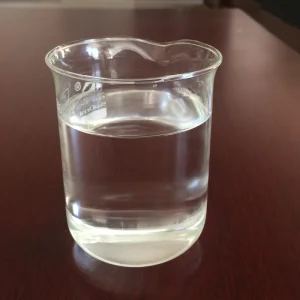
Formaldehyde is a colorless, highly reactive liquid that polymerizes easily and dissolves readily in water, alcohol, and ether. It is rapidly oxidized to formic acid in air and acts as a strong reducing agent. Its physical constants include a boiling point of -19°C, a freezing point of -118°C, and a relative density to air of 1.067.
Commercially, it is supplied as Formalin—a 37% to 50% formaldehyde solution with a small amount of methanol added as a stabilizer. The solution is milky-white to transparent with a sharp odor. It vaporizes easily, releasing formaldehyde gas. Its boiling point is 96°C, relative density is 0.815 at -20°C, and flash point is 55°C.
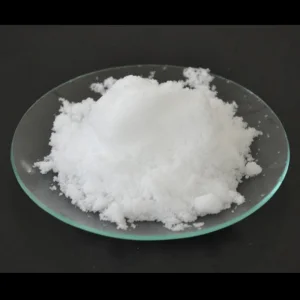
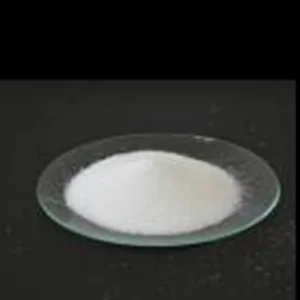
Hexamethylenetetramine, also known as hexamine or HMTA, is a white crystalline powder produced by the condensation of formaldehyde and ammonia. It is a versatile organic intermediate widely used in phenolic resin curing, rubber vulcanization, pharmaceutical synthesis, explosives production, and analytical chemistry.
Paraformaldehyde is a white, flammable, crystalline solid with a distinct odor of formaldehyde. As a linear polymer of formaldehyde, it does not have a fixed melting point. It is widely used in resin synthesis, agricultural chemicals, and general disinfectants.
Find answers to common questions about our technical specifications, ordering processes, and shipping procedures.
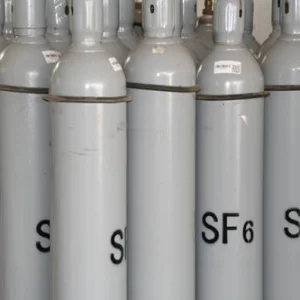
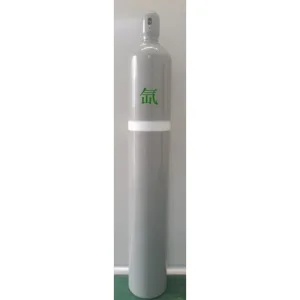
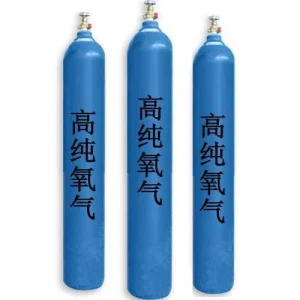
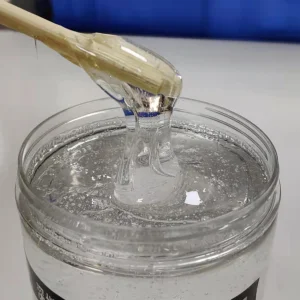
Specialty liquid rubbers, high-purity rare gases, electronic-grade reagents, and custom zinc flake alloys engineered for high-performance industrial applications.

 Yanxatech