 Yanxatech
1 / 1
| Item | ATBN-I | ATBN-II |
|---|---|---|
| Molecular weight | 2500-4000 | 3000-4000 |
| Amine value, mmol/g | 0.8-1.2 | 1.0-1.6 |
| Acrylonitrile content, % | 10-22 | 22-28 |
| Viscosity (40℃), Pa-s | ≤100 | ≤300 |
What is ATBN?
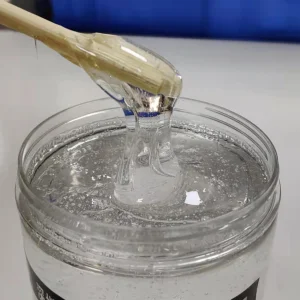
ATBN (Amine-Terminated Butadiene Acrylonitrile) is a liquid nitrile rubber containing amino functional groups at both ends of its molecular chain. It can be cured using isocyanate curing agents or reacted directly with epoxy groups.
What are the main performance benefits of ATBN?
ATBN provides outstanding oil resistance, heat resistance, and abrasion resistance. It also features strong adhesive force and can lower the gelatinization and curing temperatures of epoxy resins during toughening processes.
What are the primary applications for ATBN?
It is primarily used as an epoxy resin toughening agent to enhance the overall toughness, shear strength, and peel strength of composite materials. Additionally, it serves effectively as a standalone adhesive or sealant.
How do ATBN-I and ATBN-II differ in Acrylonitrile content?
ATBN-I has an Acrylonitrile content range of 10-22%, while ATBN-II features a higher range of 22-28%.
What are the viscosity limits for these two grades?
Measured at 40℃, the viscosity of ATBN-I is less than or equal to 100 Pa-s, whereas the viscosity of ATBN-II is less than or equal to 300 Pa-s.