Yanxatech System Industries Limited (hereinafter referred to as YANXA) is one of the growing suppliers in the field of specialty materials in China. Starting as a fledgling small business unit in 2008, YANXA has been driven with the passion for developing a broad international market in the areas relating to chemical and mechanical industries. Thanks to our team’s enduring and persistent work and our business partners’ long-lasting support, YANXA has steadily and vigorously grown into a company of excellence, delivering high-performance products and services relating to specialty chemicals.
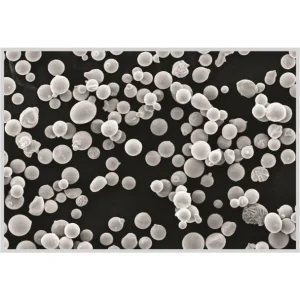
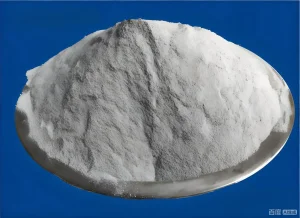
Cooperating with leading manufacturers and renowned research institutes in China's specialty chemical fields, YANXA is capable of supplying: liquid rubber, nitrates, and metal & metal alloyed powders. Our factory has grown into a premier ISO9001:2008 certified manufacturer of high-quality, cost-effective industrial materials.
Quality, safety, and efficiency prevail over all other values in our business. We listen carefully to what our customers need, matching general material requirements as well as addressing unique, highly specific specifications for newly developed applications in a timely manner. We adhere strictly to technical standards, ensuring delivery matches the design criteria of every order.
Chemical handling exposes supply chains to more safety concerns than almost any other industrial sector. We undertake all chemical transactions in a secure manner to protect human health and preserve the natural environment. We maintain stringent control over packaging standards, transportation routes, and emergency response management.
Carbon Tetrafluoride (CF4), also scientifically classified as tetrafluoromethane, is the simplest fluorocarbon (halocarbon). Understanding its molecular structures, raw material dynamics, and physical properties is vital for engineers seeking high reliability in sub-micron semiconductor etch processes, plasma applications, and high-voltage electrical insulation.
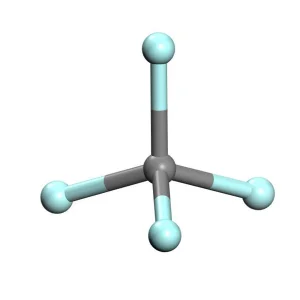
The chemical formula of Carbon Tetrafluoride is CF4. Structurally, it features a central carbon atom bonded to four fluorine atoms at the vertices of a regular tetrahedron. Due to the high electronegativity of fluorine, the carbon-fluorine bond possesses a strong dipole moment. However, the symmetrical tetrahedral configuration ensures the overall molecule is non-polar.
The C-F bond energy is exceptionally high at approximately 485 kJ/mol, making it one of the most stable single bonds in organic chemistry. Consequently, CF4 is highly resistant to thermal degradation and chemical attack, remaining inert under normal atmospheric conditions.
CF4 is a colorless, odorless, and non-flammable gas at room temperature and standard pressure. Under cryogenic storage conditions, it transforms into a liquid or solid.
| Property Type | Value / Details |
|---|---|
| Molecular Weight | 88.00 g/mol |
| Boiling Point | -128.1 °C (145 K) |
| Melting Point | -183.6 °C (89.5 K) |
| Gas Density (at 15 °C) | 3.72 kg/m³ |
Commercially, Carbon Tetrafluoride is synthesized through several high-yield fluorination reactions. The direct fluorination of carbon materials (such as graphite or activated charcoal) with gaseous fluorine is the primary synthetic route:
Alternative production pathways include the reaction of dichlorodifluoromethane (CFC-12) or chlorotrifluoromethane (CFC-13) with anhydrous hydrogen fluoride (HF) in the presence of metal catalysts. In semiconductor gas applications, achieving ultra-high purities (5N to 6N, i.e., 99.999% to 99.9999%) is critical. The raw gas must undergo rigorous treatment, including chemical scrubbers to remove trace acids, cryogenic fractional distillation to remove oxygen/nitrogen, and molecular sieves to extract trace moisture down to parts-per-billion (ppb) levels.
In sub-10nm chip fabrication nodes, CF4 functions as a primary source of fluorine radicals when excited in Radio Frequency (RF) plasma systems. These active fluorine species react selectively with silicon-based layers to form volatile silicon tetrafluoride (SiF4), which is then pumped away. This mechanism enables precise pattern transfer onto silicon dioxide (SiO2), silicon nitride (Si3N4), and metal silicides, laying the groundwork for microprocessors, DRAM, and 3D NAND flash memories.
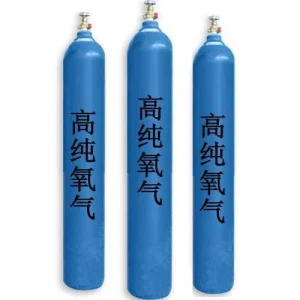
As thin films are deposited onto wafers, silica residues build up on the internal surfaces of reactor chambers. Introducing CF4 in combination with oxygen (O2) into the cleaning plasma generates reactive species that clean the chamber interior without requiring disassembly. This minimizes operational downtime and extends the service life of expensive CVD equipment.
In cryogenic applications, CF4 is used as a reliable refrigerant for deep-freezing applications (under ASHRAE designation R-14). Its low boiling point and high thermal stability allow it to operate safely in environments where typical chlorofluorocarbons fail, including satellite thermal control systems, astronomical sensors, and medical storage units.
As a leading supplier of Carbon Tetrafluoride, YANXA provides comprehensive local support tailored to regional regulatory frameworks across Europe, the Americas, and the Asia-Pacific region.
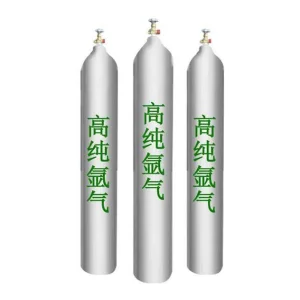
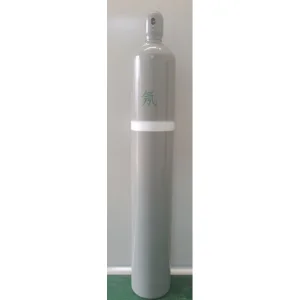
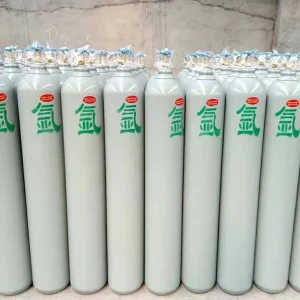
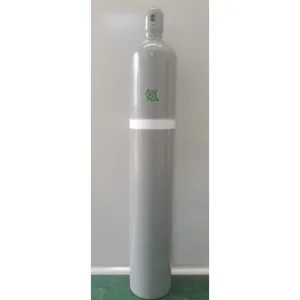
CF4 is classified under UN1982 as a non-flammable compressed gas (Class 2.2). YANXA adheres strictly to GHS labeling, DOT specifications, and TPED/DOT cylinder standards. Each shipment is accompanied by a Certificate of Analysis (COA) and a Safety Data Sheet (SDS) in the destination country's language.
Carbon Tetrafluoride is a fluorinated greenhouse gas with a high Global Warming Potential (GWP). YANXA supports emission reduction initiatives by offering returnable gas cylinders and advising clients on thermal oxidation or plasma abatement systems to destroy process effluents before they enter the atmosphere.
Formaldehyde is a colorless, highly reactive compound that is highly soluble in water, alcohol, and ether. It is supplied as formalin, a 37-50% solution stabilized with methanol to prevent polymerization. It is a key building block for synthetic resins, adhesives, and industrial intermediates.
Also known as HMTA or hexamine (CAS No. 100-97-0, formula C₆H₁₂N₄), this white crystalline powder is produced from formaldehyde and ammonia. It is widely used as a curing agent in phenolic resins, a fuel component in military applications, and an intermediate in organic synthesis.
A solid, polymerized form of formaldehyde, paraformaldehyde offers high concentrations of active formaldehyde with low water content. This makes it ideal for resin synthesis, coatings, and organic reactions that require anhydrous formaldehyde conditions.
In addition to CF4, YANXA provides high-purity Sulfur Hexafluoride (SF6), which serves as an outstanding dielectric medium for high-voltage electrical equipment and an etchant in semiconductor processing.
The global microelectronics market is transitioning towards sub-3nm nodes, introducing architectures such as Gate-All-Around (GAA) nanosheet transistors. These complex geometries demand higher etch selectivity and improved gas delivery consistency. In response, YANXA is refining its purification processes to achieve consistent 6N-grade CF4 while reducing trace metallic impurities below 10 ppt (parts-per-trillion).
Simultaneously, the industry is seeking to balance high-performance etching with environmental sustainability. YANXA is actively collaborating with academic institutions to explore low-GWP co-etchants and advanced gas reclamation technologies. These systems capture, purify, and reuse effluent CF4 from semiconductor exhaust streams, helping manufacturers minimize their carbon footprint.
 Yanxatech