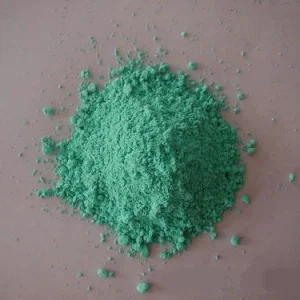
Basic Cupric Nitrate (chemical formula: Cu2(OH)3NO3), also known as Tribasic Copper Nitrate, stands as a pivotal inorganic compound with critical roles in modern safety engineering, metallurgy, and catalytic chemistry. Unlike standard copper nitrates, the basic structure offers superior thermal stability and lower water solubility, making it highly suitable for applications requiring controlled reactions, such as gas generators for automotive airbags and custom heterogeneous catalysts.
This industry whitepaper explores the technological routes, supply chain resilience, and global manufacturing capacity centered in China, illustrating how Yanxatech System Industries Limited (YANXA) manages compliance, quality control, and precision quotes to support international procurement needs.
The manufacturing process of Basic Cupric Nitrate has evolved significantly. Traditional methods relied on simple neutralization of copper salts with sodium hydroxide or ammonia under ambient conditions. However, high-tech application parameters require strict control over crystalline morphology, particle size distribution (PSD), and trace impurities.
Transitioning from traditional batch production to continuous microfluidic reactor paths allows for microsecond mixing times, narrowing particle size distribution. This results in basic copper nitrate that exhibits uniform thermal decomposition profiles, vital for airbag safety systems.
By pre-doping Basic Cupric Nitrate with trace elements like zinc, silica, or alumina during the crystallization phase, chemical engineers can synthesize highly active copper oxide catalysts. These are increasingly used in green synthesis and volatile organic compound (VOC) abatement.
Research is shifting toward nano-structured basic copper nitrate. Sub-micron crystallization yields materials with higher surface energy, improving kinetics and reducing ignition delays in propellant mixtures without requiring higher ignition energy.
Future Outlook: The industry is targeting green production methodologies that minimize waste water and recover nitrates. YANXA is actively collaborating with Chinese institutes to integrate membrane filtration systems in the production loops, ensuring a reduction in energy consumption and carbon footprint, aligning with global Net-Zero initiatives.
Basic Cupric Nitrate serves as a fundamental building block in various global industrial sectors:
| Industrial Sector | Primary Application Mode | Technical Functionality & Benefits |
|---|---|---|
| Automotive Safety | Gas Generator Propellant Oxidizer | Combines with fuels (e.g., Guanidine Nitrate) to release clean, non-toxic nitrogen gas rapidly. High thermal stability ensures a long storage life in harsh vehicular environments. |
| Petrochemical Catalysis | Precursor to Copper-based Catalysts | Decomposes to highly porous Copper Oxide (CuO) at lower temperatures, preserving high active surface area for hydrogenation and carbon monoxide oxidation. |
| Agriculture | Trace Micronutrients & Fungicides | Slow-release copper ions deliver durable protection against fungal diseases while serving as a copper supplement in soils with high leaching rates. |
| Pyrotechnics & Military | Combustion Modifier & Colorant | Produces a clean blue light emission and controls burning rates in solid-state propellants. |
The global specialty chemical supply chain demands high stability and competitive pricing. China's chemical infrastructure has transitioned toward automation and strict environmental regulations. At YANXA's cooperative manufacturing hubs, our facilities leverage automated control systems (DCS) for the feed rates, pH adjustments, and temperature control profiles of crystallization reactors.
This localized high-tech integration offers several distinct operational benefits:
To assist procurement managers, quality assurance leads, and engineering teams, the standard chemical and physical specification framework for premium grade Basic Cupric Nitrate is outlined below. We offer standard grades as well as customized particle size options to match your production process.
| Inspection Parameter | High-Purity Propellant Grade | Industrial/Catalyst Grade |
|---|---|---|
| Assay [Cu2(OH)3NO3] | ≥ 99.0% | ≥ 98.0% |
| Copper Content (Cu) | ≥ 53.0% | ≥ 52.2% |
| Water Insoluble Matter | ≤ 0.05% | ≤ 0.15% |
| Chloride (Cl) | ≤ 0.01% | ≤ 0.05% |
| Sulfate (SO4) | ≤ 0.02% | ≤ 0.05% |
| Iron (Fe) | ≤ 0.005% | ≤ 0.02% |
| Lead (Pb) | ≤ 0.002% | ≤ 0.01% |
| Average Particle Size (D50) | 5 - 15 μm (or customized) | 15 - 45 μm |
Note: Custom packaging options including 25kg vacuum-sealed bags, fiber drums, or 1000kg super sacks are available to meet regulatory shipping requirements.
Exporting specialty materials globally involves navigating complex regulatory terrains. As a designated Class 5.1 Oxidizer (UN Number 3218 or equivalent depends on composition), Basic Cupric Nitrate demands rigorous logistical expertise and compliance frameworks.
We supply REACH-compliant registration files, safety data sheets (SDS) in local languages, and GHS-compliant container labeling to facilitate smooth customs clearance in Europe, the Americas, and the APAC region.
Leveraging specialized sea freight logistics and certified hazardous packaging, we protect consignments from moisture and friction during long-distance transit, keeping product characteristics intact.
We work to monitor and minimize raw material waste and energy usage. Partnering with ISO14001 certified plants guarantees responsible waste water neutralization and a reduction in trace heavy metal discharge.
Yanxatech System Industries Limited (YANXA) is an established supplier of specialty materials in China. Starting as a fledgling business unit in 2008, YANXA has grown through a focus on international chemical and mechanical sectors. Backed by team commitment and long-term business partnerships, YANXA has developed a reliable track record in delivering high-quality specialty chemicals, liquid rubbers, and metal powders.
Cooperating with leading manufacturers and research institutes, YANXA provides a diverse array of advanced materials, including:
A colorless liquid that polymerizes readily and dissolves in water, alcohol, and ether. Rapidly oxidizing to formic acid in air, it acts as a strong reducing agent. Commercially supplied as formalin (a 37-50% solution) with methanol added as a polymerization inhibitor.
A white crystalline powder produced by condensing formaldehyde and ammonia. Widely utilized in industrial manufacturing, pharmaceutical synthesis, rubber processing, and analytical chemistry. (CAS No.: 100-97-0, C6H12N4, Molecular Weight: 140.19 g/mol).
A white powdery solid featuring a flammable odor of formaldehyde. Serving as a linear polymer of formaldehyde with no fixed melting point, it features a purity profile of ≥96% (or ≥92% depending on configuration), with solubility time ≤40 minutes, and formic acid level ≤0.05%.
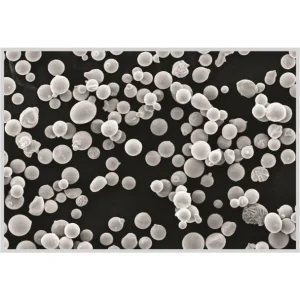
Engineered for pyrotechnics, energetic materials, and specialized metallurgical applications. Produced with state-of-the-art atomization techniques to ensure perfect spherical shape and reliable reaction behavior.
Quality, safety, and efficiency underpin our operations. We address our customers' standard product requirements as well as their unique, specific formulations for newly developed applications. We work to adhere to technical specifications to ensure consistent product delivery. Because chemical business activities carry inherent safety responsibilities, we run operations with a strong focus on protecting human health and the surrounding environment.
 Yanxatech