Discover our core range of custom industrial reagents, high-purity gases, polymer modifiers, and specialty salt formulations engineered to meet international compliance parameters.

Founded in 2008, Yanxatech System Industries Limited (hereinafter referred to as YANXA) has grown from a fledgling, specialized small business unit into one of China's most resilient and reliable suppliers of specialty materials, chemicals, and industrial metallic powders. Guided by an unwavering passion for high-tech industrial integration, YANXA leverages partnerships with premier Chinese scientific research academies and state-certified manufacturers to deliver next-generation chemical and mechanical components.
Operating with a primary focus on Quality, Safety, and Efficiency, YANXA provides comprehensive, multi-industry solutions encompassing three foundational product pillars:
"At YANXA, we understand that chemical operations require a higher ceiling of environmental, health, and risk-management compliance. That is why all our facilities adhere to ISO 9001 certified protocols, maintaining absolute transparency from material analysis (CoA/CoC) to hazardous goods maritime packaging."
Magnesium (Mg) represents the lightest structural metal available in modern engineering, possessing a density of just 1.74 g/cm³ (approximately 33% lighter than aluminum and 77% lighter than steel). When processed into particulate form, magnesium and its corresponding alloys present unique physical and chemical characteristics that demand highly precise manufacturing.
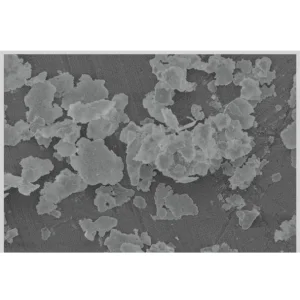
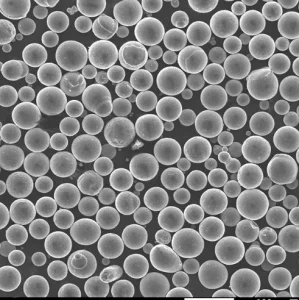
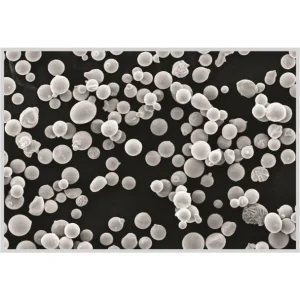
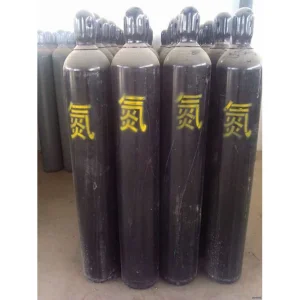
Magnesium powder morphology dictates its final processing behavior. Under mechanical crushing or milling, the particles remain irregular, flake-like, or angular, which presents high friction during dry flow and poses significant electrostatic hazards. To overcome these limitations, YANXA employs advanced inert gas atomization. By melting magnesium or aluminum-magnesium alloys in an oxygen-free, inert gas environment (typically using high-purity argon or nitrogen) and forcing the liquid metal through specialized nozzles under high pressure, we achieve near-perfect spherical geometry.
Spherical magnesium alloy powders possess superior bulk density, exceptional flowability (essential for additive manufacturing powder bed systems), and a smaller specific surface area relative to weight, which decreases the susceptibility of the powder to spontaneous oxidation and degradation.
| Powder Parameter | Irregular/Milled Powder | Gas-Atomized Spherical Powder | Industrial Relevance |
|---|---|---|---|
| Sphericity Factor | < 0.75 (Angular/Flake) | ≥ 0.92 (Spheroidized) | Affects powder packing density and flow rate |
| Hall Flow Rate (s/50g) | > 45 (Poor Flow) | ≤ 28 (High Flow) | Crucial for automated 3D printing and powder metallurgy |
| Oxygen Content | > 0.20% (High oxidation) | ≤ 0.08% (Ultra-low oxygen) | Determines component density and strength in sintering |
| Bulk Density (g/cm³) | 0.65 - 0.85 | 0.95 - 1.15 | Improves structural uniformity of compacted parts |
Mapping the evolution of magnesium alloys from pyrotechnic reagents to next-generation structural materials.
Development of specialized laser powder bed fusion (L-PBF) parameters for magnesium alloys. Spherical Al-Mg and Mg-RE (Rare Earth) alloy powders allow rapid prototyping of high-strength, lightweight aerospace manifolds and custom medical implants.
Magnesium-based powders exhibit excellent hydrogen absorption capacity (up to 7.6 wt%). Research focuses on tailoring nano-structured magnesium powders with transition metal catalysts to lower desorption temperatures and accelerate loading kinetics.
Synthesis of ultra-pure magnesium-calcium and magnesium-zinc alloy powders. Implants constructed from these materials dissolve harmlessly in the human body over time, eliminating the need for secondary removal surgeries.
From supply stability to structural compliance, we align our chemical output and metallurgical refining to resolve modern manufacturing bottleneck challenges.
Automotive weight reduction is a primary strategy for increasing EV range and reducing greenhouse gas emissions. Our aluminum-magnesium alloy powders are utilized to cast steering wheels, engine blocks, and gearbox casings, providing structural resilience with a lower weight penalty than steel or pure aluminum.
For specialized defense and signaling industries, magnesium's chemical activity is highly valued. The rapid oxidation of pure magnesium powder generates high-intensity light and high heat, making it an essential component in marine flares, signaling equipment, and structural defense payloads.
In steel manufacturing, magnesium powder serves as an efficient desulfurizing agent. Added to molten iron, magnesium reacts selectively with sulfur to form magnesium sulfide (MgS), which is easily separated in the slag layer, producing cleaner, stronger structural steels.
Managing reactive metallic powders requires strict process safety, which is why YANXA operates under modern industrial guidelines (Industry 4.0). Grounded in the principles of safety and consistent batch-to-batch quality, our partner manufacturing facilities utilize automated control feedback loops.
Our manufacturing resilience is defined by three key factors:
To mitigate dust explosion hazards (a key risk factor with fine reactive metals), magnesium powder is processed in nitrogen-purged chambers where oxygen content is continuously monitored and kept below 1.5%. Automated packaging lines seal the finished powders into metal drums containing moisture-absorbent desiccants.
Using laser diffraction particle size analyzers (such as Malvern Mastersizer), we ensure that the Particle Size Distribution (PSD) is tightly controlled. Whether clients require a broad distribution for pyrotechnic compaction or a narrow, uniform distribution (e.g., 15-45 microns) for additive manufacturing, our facilities provide standardized, repeatable product profiles.
From basic raw ingot inspection to post-atomization grading, each batch is tracked via a centralized ERP system. Every delivery is accompanied by verified Certificates of Analysis (CoA) confirming elemental purity (Fe, Si, Cu, and Ni trace levels) to prevent downstream galvanic corrosion in final alloys.
Pure magnesium and magnesium alloy powders are classified under the International Maritime Dangerous Goods (IMDG) Code as Class 4.3 (Substances which, in contact with water, emit flammable gases) or Class 4.1 (Flammable solids). Transporting these reactive metals globally requires rigorous compliance, specialized packaging, and legal authorization.
Detailed technical specification sheets representing core products available within the YANXA supply network.
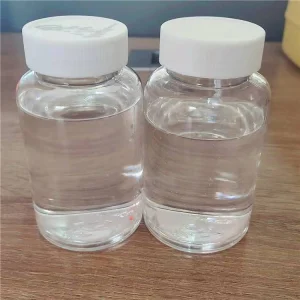
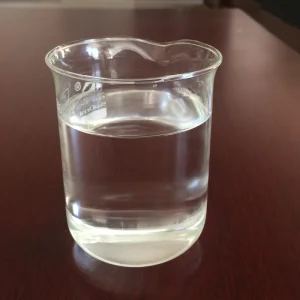
Physical State: Colorless liquid, highly volatile, prone to polymerization unless stabilized with a chemical inhibitor like methanol.
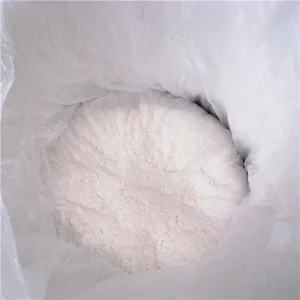
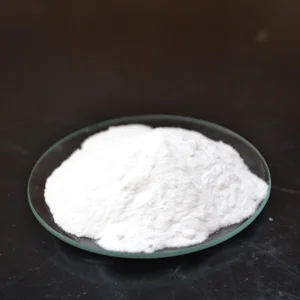
Product Overview: Also known as Hexamine or HMTA (CAS No. 100-97-0). A white crystalline powder created via the condensation of ammonia and formaldehyde.
Product Overview: A white solid polymer of formaldehyde with a flammable odor of formaldehyde. Solid form makes it easier to transport safely than liquid formaldehyde.
Product Overview: Co-melted aluminum and magnesium atomized into micro-spherical configurations. Used in refractories, advanced defense propulsion systems, and light alloy composites.
Find detailed answers regarding sourcing logistics, dynamic pricing, export documentation, safety protocols, and custom technical requirements.
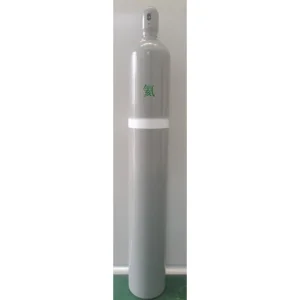
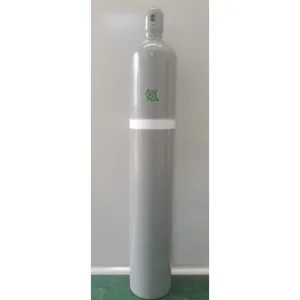
Explore our secondary collection of alloy powders, liquid rubbers, and high-purity noble gases selected for advanced industrial applications.
 Yanxatech