Inorganic nitrates stand as critical foundation stones in modern industrial synthesis, high-end metallurgy, catalyst fabrication, and electronic components manufacturing. In the contemporary globalized economy, the demand for metal nitrates has transitioned from standard agriculture-grade compounds to highly specialized, ultra-pure chemical agents. In particular, Aluminum Nitrate, Strontium Nitrate, and related custom salts are essential in synthesizing support media for catalysts, manufacturing automotive safety inflation devices, and processing structural components for high-tech equipment.
Modern applications require minimal trace impurities. High-purity metal nitrates must display extremely low moisture absorption coefficients and consistent chemical homogeneity to function efficiently in catalytic processes.
Aluminum Nitrate ($Al(NO_3)_3$) serves as the premium precursor for the synthesis of alumina-based catalyst supports, crucial for fluid catalytic cracking (FCC) in the petrochemical refinery sector.
The global transition to renewable resources leverages molten nitrate salts as phase-change materials (PCMs) for heat transfer and thermal storage in next-generation concentrated solar plants.
Yanxatech System Industries Limited (hereinafter referred to as YANXA) is a leading, rapidly expanding developer and global supplier of specialty chemical materials and metal compounds. Established in 2008 as an energetic, fledgling business unit, YANXA has dedicated the last 15 years to integrating domestic manufacturing superiority with international technical requirements.
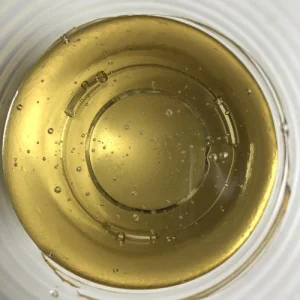
Through rigorous research partnership structures and strict quality control standards, YANXA has steadily grown into a trusted brand in specialized materials. Our core product solutions include high-grade liquid rubbers, metal & alloyed powders, and highly specialized nitrates.
By coordinating our supply lines with certified manufacturers and chemical research centers, we guarantee compliance with the most stringent industrial parameters, maintaining reliability from the laboratory scale to massive bulk ocean freight.
We operate on a triad of values that governs every single commercial operation: Quality, Safety, and Efficiency.
Industrial nitrate compounds serve specific regional requirements across major manufacturing sectors globally. Here, we outline the primary commercial utilization vectors for specialty nitrates, illustrating how they function in high-value manufacturing lines:
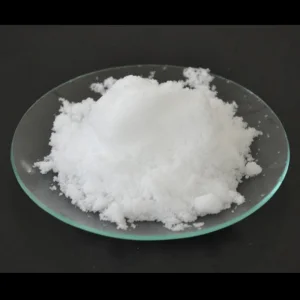
In North American and European petrochemical complexes, high-purity Aluminum Nitrate Nonahydrate is dissolved to impregnate silica or alumina bases. The resulting materials are fired to create active catalytic sites for hydrocarbon isomerization, hydrocracking, and environmental emissions abatement.
Technical requirement: Iron and sodium contents must be restricted to < 20 ppm to avoid catalyst degradation.
Airbag inflator formulations rely on gas-generating chemicals that release precise amounts of harmless gas in milliseconds. Strontium and potassium nitrates function as stable oxidizers that maintain high kinetic combustion control while minimizing the formation of solid particulate slag.
Technical requirement: Precise particle size distribution (D50) matching the formulation's burn rate.
In specialized metallurgic manufacturing, nitrates act as low-temperature oxidizing fluxes that remove carbon, sulfur, and phosphorus from melt surfaces. In metal finishing, nitrate-based passivation solutions prevent oxidation in aviation-grade alloy structures.
Technical requirement: Free acid levels must be strictly monitored to prevent substrate corrosion.
For premium optical lenses and display screens, nitrates act as clarifying and refining agents, removing bubbles and microscopic structural defects from the melt. In semiconductor manufacturing, nitrates serve as raw inputs in selective wet-etching chemicals.
Technical requirement: Analytical purity matching reagent-grade parameters (typically >99.9%).
Modern nitrate production requires meticulous chemical engineering. Our partner manufacturing complexes implement a structured technical roadmap designed to reduce waste, control crystallization, and limit hazardous emissions.
| Manufacturing Stage | Process Technologies Applied | Quality & Safety Control Points |
|---|---|---|
| Acid-Metal Digestion | Controlled dissolution of high-purity metal precursors in ultra-refined nitric acid ($HNO_3$). | Exothermic heat monitoring; nitrogen oxide ($NO_x$) absorption & recovery units. |
| Fractional Crystallization | Precision temperature crystallization in continuous cooling loops. | Isolates and removes trace metal impurities like $Fe$, $Cu$, and $Pb$ in mother liquors. |
| Fluidized Bed Drying | Drying via dehumidified, temperature-controlled air currents. | Prevents caking, agglomeration, and dehydration of crystal-bound water. |
| Cleanroom Packaging | Automated nitrogen-flushed filling in Class 100,000 cleanroom environments. | Prevents ambient moisture absorption and particulate contamination. |
Looking to the future, the manufacturing roadmap focuses on Green Chemistry Principles. This includes transitioning factories to use recovered hydrogen energy for heat production, incorporating closed-loop water recirculation systems, and using direct solar-assisted electricity to run crystallizers. This reduces the carbon footprint per ton of material, aligning with international Scope 3 emission targets.
Global industrial buyers prioritize supply chain reliability. Chinese chemical manufacturing zones offer distinct structural advantages, helping YANXA ensure stable supply lines even during global market shifts:
Our partner facilities operate near basic ammonia, nitric acid, and mineral processing hubs. This reduces transport delays and keeps raw material costs stable.
With quick access to deep-water ports like Shanghai, Ningbo, and Qingdao, we coordinate chemical logistics with direct routes to major global industrial hubs.
Our production facilities operate within national chemical parks that feature advanced environmental waste-treatment technologies, ensuring stable operations without unexpected closures.
Exporting specialty chemicals, especially classified oxidizers like metal nitrates, requires deep regulatory knowledge. YANXA provides comprehensive support to ensure compliant global delivery:
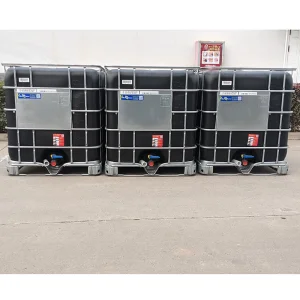
Most solid metal nitrates are classified as Class 5.1 oxidizing materials (UN classification) and require UN-approved packaging. We supply UN-certified, heavy-duty polypropylene woven bags with polyethylene liners, shipped in ocean containers with moisture-desiccant configurations.
We supply complete regulatory paperwork for every batch, including GHS-compliant Safety Data Sheets (SDS), Certificates of Analysis (COA) detailing purity down to ppm levels, and country-of-origin documentation. This ensures seamless customs clearance at destination ports.
In addition to our inorganic nitrate solutions, YANXA provides high-quality specialty chemicals, organic intermediates, and alloy powders. The profiles below detail their physical features, specifications, and primary applications.
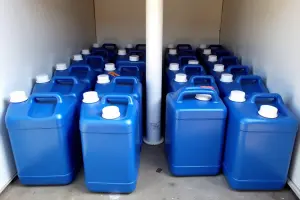
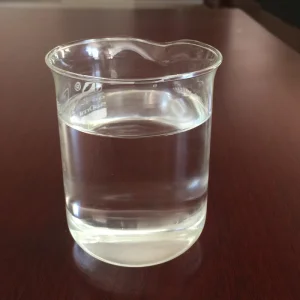
Product Characteristics: Formaldehyde is a colorless liquid, easily polymerized, and readily soluble in water, alcohol, and ether. It is rapidly oxidized to formic acid in air, acting as a strong reducing agent. Its boiling point is -19℃, freezing point -118℃, and relative density to air is 1.067.
Commercially, it is supplied in liquid form as formalin, a 37-50% formaldehyde solution with a small amount of methanol added as a polymerization inhibitor. The solution is milky white and has a foul odor. Formalin readily vaporizes, releasing formaldehyde gas. Its boiling point is 96℃, relative density is 0.815/-20℃, and flash point is 55℃.
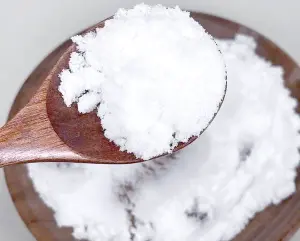
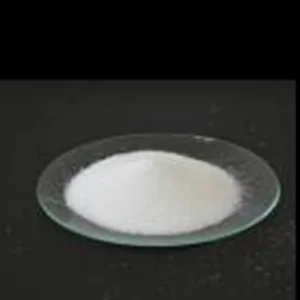
Product Overview: Hexamethylenetetramine, also known as hexamine or HMTA, is a white crystalline powder produced by the condensation reaction of formaldehyde and ammonia. It is a versatile organic chemical intermediate widely used in industrial manufacturing, pharmaceutical synthesis, rubber processing, and analytical chemistry.
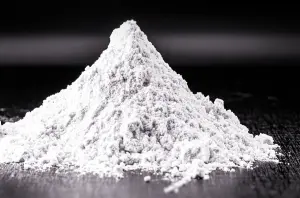
Product Features: A white powdery solid with a flammable odor of formaldehyde. It is a linear polymer of formaldehyde with no fixed melting point.
| Item Specifications | Premium Specification | Standard Specification |
|---|---|---|
| Appearance | White powder/solid | White powder/solid |
| Content | ≥96% | ≥92% |
| Solubility | ≤40 minutes | ≤40 minutes |
| Formic acid | ≤0.05% | ≤0.05% |
| pH Value | 5 - 7 | 5 - 7 |
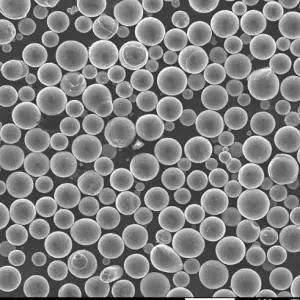
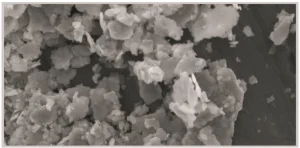
Manufactured through precise atomization processes, this alloy powder displays spherical particles with excellent flow properties. It is highly valued in metallurgy, specialized coatings, chemical synthesis, and defense applications.
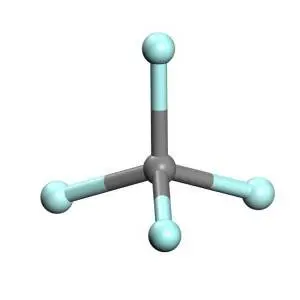
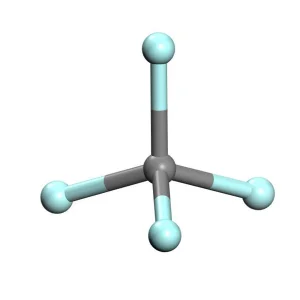
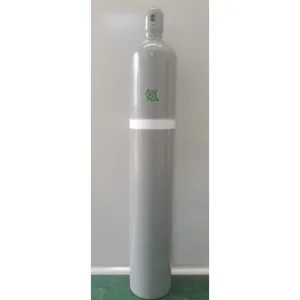
High purity electronic grade fluorinated gas used in semiconductor etching processes.
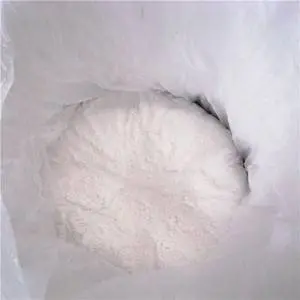
Premium grade calcium salt used in food processing, pharmaceuticals, and agricultural formulations.
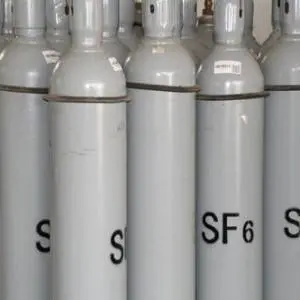
Inorganic dielectric gas offering high insulation properties for high-voltage power applications.
Here we answer key operational and chemical queries to assist procurement managers and technical directors in coordinating logistics, quality verification, and custom specifications:
 Yanxatech