High-purity liquid rubbers, inert gas formulations, and specialty polymers for advanced applications.

In modern industrial chemistry, inorganic salts act as fundamental building blocks for critical applications ranging from aerospace propellants to advanced optical glass manufacturing. Among these, Barium Nitrate [Ba(NO3)2] and Sodium Sulfate [Na2SO4] represent two distinct yet highly essential chemical materials. Driven by the evolution of global manufacturing specifications, the demand for ultra-high purity grades has surged, prompting a transition towards specialized synthesis routes that guarantee minimized chemical impurity tolerances.
As a leading supplier of specialty chemicals, Yanxatech System Industries Limited (YANXA) delivers robust solutions to global procurement teams. Our established partnerships with China's top manufacturers and research institutes enable the deployment of reliable supply pipelines that satisfy rigorous international compliance requirements and custom technical specifications.
Understanding the exact chemical and physical properties of Barium Nitrate and Sodium Sulfate is critical for safe industrial handling, storage optimization, and processing efficiency. Below are the key characteristics that dictate their industrial utility.
| Technical Parameter | Barium Nitrate [Ba(NO₃)₂] | Sodium Sulfate Anhydrous [Na₂SO₄] |
|---|---|---|
| CAS Registry Number | 10022-31-8 | 7757-82-6 |
| Standard Industrial Grade Purity | ≥99.5% (High-Pure Grade) | ≥99.0% (Industrial Grade) |
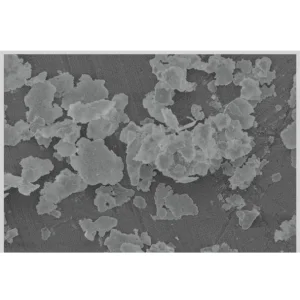
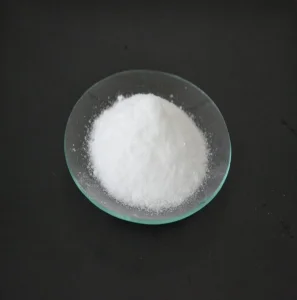
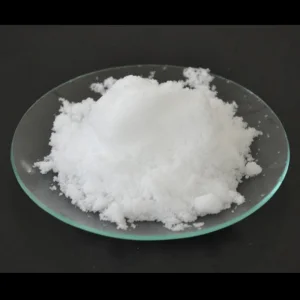
| Physical Appearance | White crystalline powder / Granular | White crystalline powder / Hydroscopic |
| Primary Industrial Function | Oxidizing agent, Green colorant | Fining agent, leveling agent, detergent filler |
| Moisture Content | ≤0.1% max | ≤0.2% max |
| Insoluble Matter in Water | ≤0.05% | ≤0.05% |
The acquisition of Barium Nitrate and Sodium Sulfate requires a granular assessment of the end-use process. Chemical purity variance can cause significant defect rates in highly sensitive manufacturing environments.
Barium Nitrate serves as a vital oxidant in military ammunition, signaling flares, and commercial fireworks. The green pyrotechnic emissions rely on clean barium chloride band emissions during combustion, requiring low sodium impurities to prevent yellow light contamination.
In glass manufacture, Barium Nitrate acts as an oxidizing agent, enhancing refractivity and clarity. Sodium Sulfate assists as a fining agent, removing tiny air bubbles from molten glass, critical in solar panels and optical lenses.
Anhydrous Sodium Sulfate is globally procured as a leveling agent in acid dyes, promoting uniform coloration. It also serves as an inert, free-flowing filler in powder detergents, preventing structural caking.
“Strategic procurement of chemical oxidizers must balance cost-efficiency with high consistency in particle size distribution. The presence of unauthorized trace metals can significantly alter thermal decomposition rates, compromising system reliability.” - Technical Advisory Panel, Yanxatech System Industries Limited.
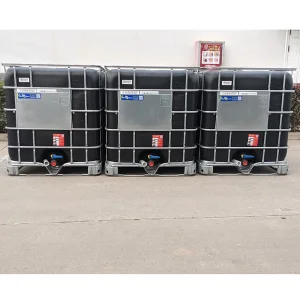
Barium Nitrate is classified under UN Class 5.1 (Oxidizing Substances) and UN Class 6.1 (Toxic Substances). As a result, its international shipment requires strict adherence to IMDG and IATA regulations. Standard packing protocols include double-layered, moisture-proof woven PP bags with PE liners, steel drums, or customized FIBC (Flexible Intermediate Bulk Containers) to minimize exposure to atmospheric humidity and static electricity.
For Sodium Sulfate, which is non-hazardous but highly hygroscopic, logistics plans focus on preventing caking and moisture absorption during sea transport. The shipping containers must be equipped with desiccant systems to maintain low relative humidity levels throughout the transit duration.
The price index for Barium Nitrate is heavily linked to the cost of raw Barium Carbonate ($BaCO_3$) and Nitric Acid ($HNO_3$). Fluctuations in natural gas costs and environmental regulations in major manufacturing zones also affect operational margins. In contrast, Sodium Sulfate pricing is driven by regional supply dynamics of natural Glauber's salt mines and the production yields of chemical industries that generate sodium sulfate as a secondary byproduct.
Yanxatech utilizes a robust supply model, partnering directly with primary synthesizers in China to offer custom price agreements, long-term contract pricing, and secured shipping space during peak seasonal demands.
Founded in 2008, Yanxatech System Industries Limited (YANXA) has grown from a specialized business unit into an international supplier of advanced specialty materials. Driven by the mission to bridge localized high-capacity production with strict international requirements, YANXA has built a reputation for excellence, reliability, and security in the specialty chemicals sector.
Our core capabilities focus on three high-demand fields:
Quality, safety, and efficiency prevail over all other values in our business. We address our customers' standard product requirements as well as their unique specifications for newly developed applications. We adhere strictly to technical parameters and make deliveries in perfect conformity. Given that chemical processing involves inherent safety risks, we manage all supply chain activities safely to protect human health and the environment.
Through close cooperation with leading research institutions and ISO-certified manufacturing hubs in China, Yanxatech integrates modern analytical testing methods into every batch. From raw material characterization using ICP-OES to laser diffraction particle sizing, our quality assurance systems verify that all materials conform to international standards prior to port clearance.
To provide context on our chemical synthesis capabilities, below are details on the core products manufactured and supplied through our partners:
Formaldehyde is a colorless, volatile liquid, easily polymerized, and highly soluble in water, alcohol, and ether. It is rapidly oxidized to formic acid in air, acting as a strong reducing agent. Commercially, it is supplied as formalin, a 37-50% formaldehyde solution with a small amount of methanol added as a polymerization inhibitor. The solution is milky white, features a characteristic pungent odor, and has a relative density of 0.815 at -20°C and a flashpoint of 55°C.
Produced via the condensation reaction of formaldehyde and ammonia, Hexamine (CAS No.: 100-97-0, Molecular Formula: C6H12N4, Molecular Weight: 140.19 g/mol) is a white crystalline powder. It is widely used as a cross-linking agent in phenolic resin synthesis, a curing agent in plastics, and an intermediate in organic chemical manufacturing.
Paraformaldehyde is a linear polymer of formaldehyde with no fixed melting point. It presents as a white powdery solid with a flammable odor of formaldehyde. Our production specifications are detailed below:
| Item Specification | Grade A (96%) | Grade B (92%) |
|---|---|---|
| Appearance | White powder/solid | White powder/solid |
| Content (%) | ≥96.0% | ≥92.0% |
| Solubility Time | ≤40 minutes | ≤40 minutes |
| Formic Acid (%) | ≤0.05% | ≤0.05% |
| PH Range | 5.0 - 7.0 | 5.0 - 7.0 |
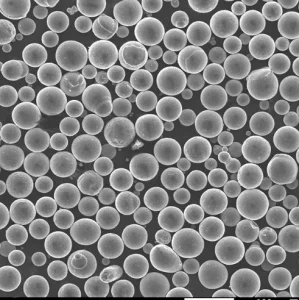
This product features high sphericity, low active oxygen loss, and narrow particle size distribution. It is widely used in refractory materials, solid rocket propellants, and metallurgical deoxidizers. We offer customized alloy ratios (e.g., Al-Mg 50:50) to meet target reaction kinetics.
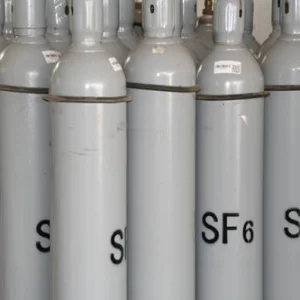
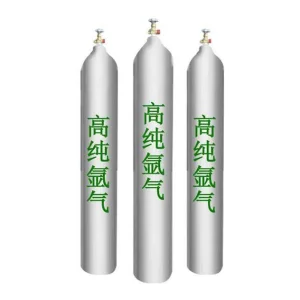
High-purity nitrates, specialty polyethers, and engineered carbon dioxide systems.
Technical, commercial, and logistical clarifications for global buyers.
Our prices are subject to change depending on supply and other market factors. We will send you an updated price list after your company contacts us for further information.
Yes, we require all international orders to have an ongoing minimum order quantity. If you are looking to resell but in much smaller quantities, we recommend you check out our website for local distributor contacts.
Yes, we can provide most documentation including Certificates of Analysis / Conformance; Insurance; Origin, and other export documents where required.
For samples, the lead time is about 7 days. For mass production, the lead time is 20-30 days after receiving the deposit payment. The lead times become effective when (1) we have received your deposit, and (2) we have your final approval for your products. If our proposed lead time do not work with your deadline, please talk to our sales manager for checking workable solutions. In all cases we will try to accommodate your needs.
You can make the payment to our bank account: 30% deposit in advance, 70% balance against the copy of B/L by T/T or L/C at sight.
We warranty our materials and workmanship. Our commitment is to make you satisfied with our products. Under warranty or not, it is the culture of our company to address and resolve all customers’ concerns and meet your satisfaction.
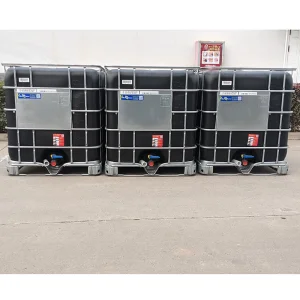
Yes, we always use high quality export packaging. We also use specialized hazard packing for dangerous goods and validated cold storage shippers for temperature-sensitive items. Specialist packaging and non-standard packing requirements may incur an additional charge.
The shipping cost depends on the way you choose to get the goods. Express is normally the quickest but also most expensive way. Sea transportation is the best solution for big size of order. Exact freight rates can be provided for your reference only if we know details of order amount, weight, means of transportation etc. Please contact us for further information.
Barium Nitrate decomposes at high temperatures, producing barium oxide and releasing free oxygen. In the presence of chlorine donors, it forms barium monochloride (BaCl+), which emits a bright green light spectrum. To achieve maximum purity of color, the sodium content in the raw material must be kept below 0.05% to avoid yellow emissions from interfering with the green hue.
Yes, our Sodium Sulfate is anhydrous (minimum 99.0% purity). Because it is hygroscopic, we package the material in hermetically sealed PE-lined woven bags. For long-term sea transit, we recommend shipping in full container loads (FCL) equipped with silica gel desiccants to prevent moisture absorption and subsequent caking.
 Yanxatech