Explore our certified range of chemical compounds, high-performance liquid rubbers, and atomized metallic powders engineered for global semiconductor and industrial manufacturing.
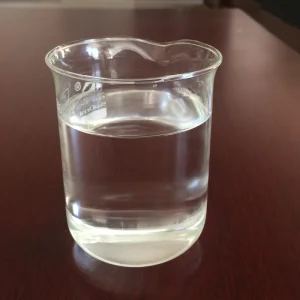
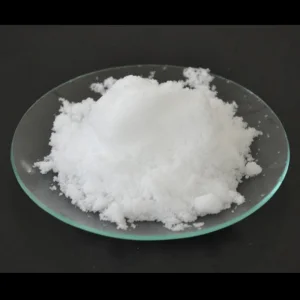
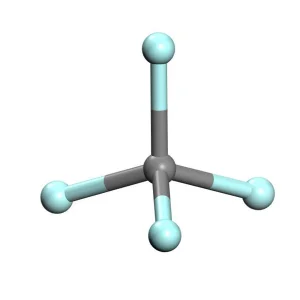
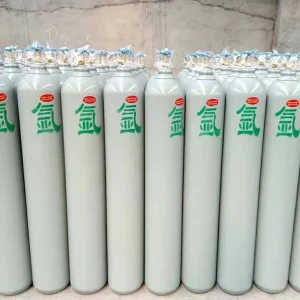
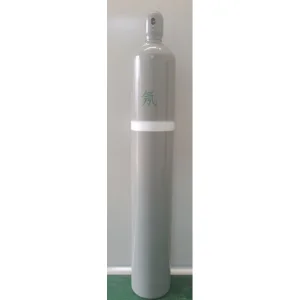
Carbon Tetrafluoride (CF4), also chemically designated as Tetrafluoromethane (CAS No. 75-73-0), represents the simplest halocarbon (fluorocarbon) in the alkane family. Characterized by its exceptional thermal stability, chemical inertness, and non-flammability under standard conditions, CF4 has transitioned from a specialized scientific refrigerant to the backbone of modern nanoscale microfabrication.
As semiconductor manufacturers globally scale nodes below 7nm, the demands placed upon dry plasma etching gases have intensified. Ultra-high-purity (≥99.999% or 5N) Carbon Tetrafluoride acts as the primary fluorine donor, yielding high-concentration fluorine radicals ($F\cdot$) inside radiofrequency (RF) plasma reactors. This process enables critical anisotropic etching of dielectric layers, such as silicon dioxide ($SiO_2$) and silicon nitride ($Si_3N_4$).
In advanced sub-14nm fabrication facilities, trace impurities in etchant gases can lead to catastrophic wafer defects. Metal ions, moisture ($H_2O$), and trace halocarbons can alter the selectivity profile of the plasma, inducing undercutting or grid erosion. High-precision sourcing must ensure total metallic contaminants remain below parts-per-billion (ppb) levels.
Carbon Tetrafluoride is not merely an etchant; it is a structural facilitator for multiple industrial systems:
Within Integrated Circuit (IC) fabrication, the primary objective is to replicate sub-micron mask layouts onto target thin-film layers. CF4 is introduced into reactive-ion etching (RIE) or inductively coupled plasma (ICP) chambers alongside oxygen ($O_2$), argon ($Ar$), or hydrogen ($H_2$) diluents. Under electric fields, it dissociates:
CF4 + e⁻ → CF3⁺ + F· + 2e⁻
The fluorine radicals react with exposed silicon-based surfaces to form volatile silicon tetrafluoride ($SiF_4$), which is promptly evacuated by turbomolecular vacuum systems:
SiO2 + 4F· (plasma) → SiF4↑ + O2↑
During Plasma-Enhanced Chemical Vapor Deposition (PECVD), sacrificial residues of silicon dioxide or silicon nitride deposit on the chamber walls and electrode shields. Cumulative coating leads to particle flaking, compromising thin-film integrity. Flowing CF4 mixed with oxygen removes these residues rapidly, reducing equipment downtime without physically damaging the chamber chambers.
Due to its low boiling point and excellent thermodynamic properties, CF4 (classified as refrigerant R-14) is utilized in deep cryogenic setups. It is critical for environmental simulation chambers, specialized medical preservation equipment, and low-temperature scientific instrumentation.
In polymer engineering, carbon tetrafluoride plasma modifies surface energy properties. Exposing materials like polyethylene, polypropylene, and polytetrafluoroethylene (PTFE) to CF4 plasma replaces outer-layer hydrogen atoms with fluorine. This structural modification enhances chemical resistance, increases hydrophobicity, and significantly improves adhesive bonding capabilities for subsequent processing.
| Physical / Chemical Property | Value / Detail | Industrial Relevance |
|---|---|---|
| CAS Registry Number | 75-73-0 | Official identifier for safety and compliance reporting. |
| Molecular Formula | CF4 | Tetrahedral carbon-fluorine coordinate arrangement. |
| Purity Grades Offered | 99.9% (Industrial), 99.999% (Electronic 5N) | Determines applications from refrigeration to ultra-clean fabs. |
| Critical Temperature | -45.6°C | Requires high-pressure cylinder/vessel configurations. |
| Global Warming Potential (GWP) | 7,390 (100-year horizon) | Mandates strict emission control and abatement systems. |
The global B2B procurement of Carbon Tetrafluoride is subject to several key variables that dictate market pricing. Raw material costs, specifically the price of anhydrous hydrofluoric acid (AHF) derived from fluorite reserves, act as the baseline cost indicator. Additionally, the purification infrastructure required to transition standard industrial-grade CF4 to ultra-high-purity electronic-grade represents a major pricing differentiator.
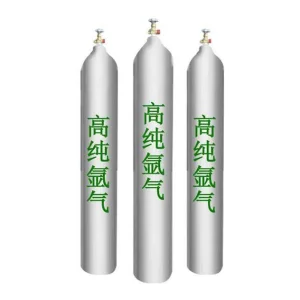
Safe operation and reliable supply chain integration are central to our commercial philosophy. Standard gas cylinders containing Carbon Tetrafluoride must undergo hydrostatic pressure testing in compliance with DOT (Department of Transportation) or TPED (Transportable Pressure Equipment Directive) guidelines.
Although chemically inert and non-toxic, CF4 acts as an asphyxiant in confined spaces by displacing oxygen. Therefore, warehousing facilities must feature continuous oxygen depletion alarms and forced-air exhaust ducting.
Yanxatech System Industries Limited (hereinafter referred to as YANXA) is one of the growing suppliers in the field of specialty materials in China. Starting from a fledgling small business unit in 2008, YANXA is driven with the passion of developing a broad international market in the area relating to the chemical and mechanical industries. Thanks to our team’s enduring and persistent work and our business partners’ long-lasting support, YANXA has steadily and vigorously grown into a company with excellence in delivering products and services relating to specialty chemicals.
Cooperating with leading manufacturers and renowned research institutes in the field of specialty chemicals in China, YANXA is highly capable of supplying:
Quality, safety, and efficiency prevail over all other values in our business. We care about what our customers need regarding general products, as well as their unique and specific requirements for newly developed applications, in a timely manner. We adhere strictly to technical requirements and ensure deliveries in near-perfect conformity.
The chemical business carries more safety risks than other industrial sectors. We conduct all activities involving chemicals safely to protect human health and the environment.
Our most in-demand products, manufactured under strict ISO 9001:2008 quality control protocols.
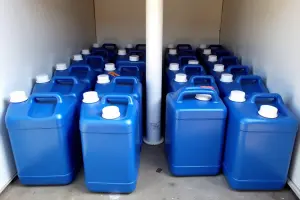
Colorless liquid, easily polymerized, readily soluble in water. Boiling point is -19℃, freezing point -118℃. Supplied as formalin (37-50% solution).
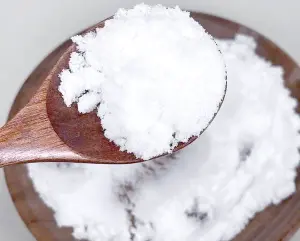
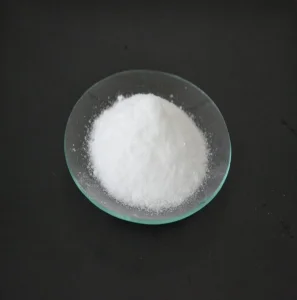
White crystalline powder produced by the condensation of formaldehyde and ammonia. CAS No.: 100-97-0. Ideal organic chemical intermediate.
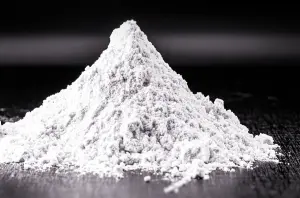
White powdery solid with a flammable odor of formaldehyde. Linear polymer of formaldehyde with no fixed melting point. Active content ≥96%.
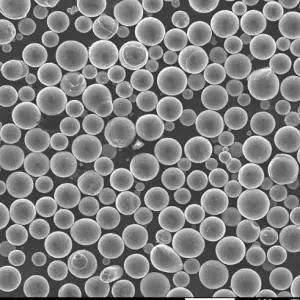
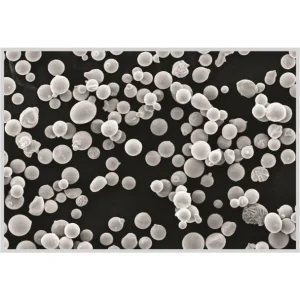
Spherical morphology designed for energetic formulations, aerospace components, and metal matrix composites.
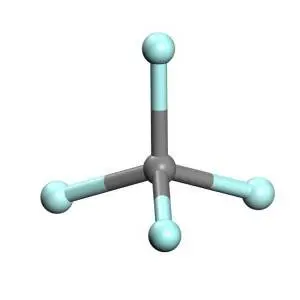
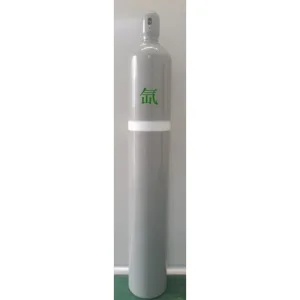
Ultra-high-purity gaseous chemical used as a primary etchant in semiconductor manufacture and microelectronics.
High-quality powder utilized across food enrichment, pharmaceutical binders, and industrial ceramics applications.
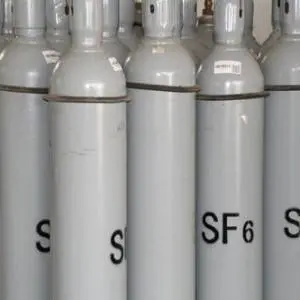
Gaseous dielectric medium with superior electrical insulation performance for high-voltage switchgears and transformers.
Get authoritative answers regarding chemical properties, quality assurance, logistics, and transactional configurations.
Reliable supply, tested performance, and global shipping capabilities for industrial and chemical formulations.
 Yanxatech