Explore our highly-demanded specialty chemicals, metal powders, and high-purity industrial compounds.
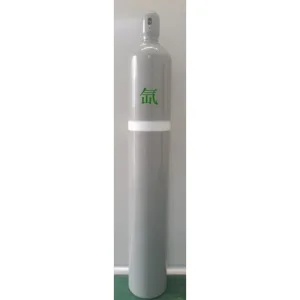
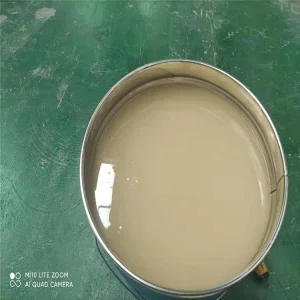
A comprehensive analysis of composition, synthesis, stability matrices, and applications in advanced industrial engineering.
Gold(III) nitrate, scientifically expressed as Au(NO₃)₃ (or in its complex form, hydrogen tetranitratoaurate(III), H[Au(NO₃)₄]), represents a highly specialized, chlorine-free gold source of immense importance to advanced material manufacturing. Historically, most high-purity gold precursors utilized chloride-based structures like gold trichloride (AuCl₃) or chloroauric acid (HAuCl₄). However, the presence of trace chloride ions in these formulations causes severe corrosion and catalyst poisoning in microelectronic circuits and clean chemical synthesis loops. Gold(III) Nitrate provides an ideal, clean alternative, decomposing thermal-catalytically to leave only ultra-pure metallic gold, with nitrogen oxides and oxygen as clean byproducts.
Pure auric nitrate is highly hygroscopic and chemically reactive. In industrial environments, it is frequently synthesized and shipped either as an aqueous solution with a stabilized concentration of nitric acid or as a crystalline complex powder. It serves as an essential precursor for the synthesis of homogeneous catalysts, nanostructured heterogeneous gold catalysts, and ultra-thin organometallic gold coatings.
| Parameter Name | Standard Specifications (Typical Value) | Testing Protocol / Compliance |
|---|---|---|
| Chemical Formula | Au(NO₃)₃ or HAu(NO₃)₄ | Stoichiometric Verification |
| Gold (Au) Content | ≥ 45.5% (Solid Crystal Equivalent) | ICP-OES / Gravimetric Analysis |
| Purity Levels | 99.9% (3N) to 99.999% (5N) semiconductor grade | Trace Metals Analysis (ICP-MS) |
| Chloride (Cl⁻) Content | < 50 ppm (Ultra-pure grades < 5 ppm) | Ion Chromatography (IC) |
| Appearance | Golden yellow to reddish-orange solution / crystal | Visual Quality Control |
| Storage Stability | Refrigerated (2°C - 8°C) in hermetically sealed vessels | Thermal Stability Matrix Testing |
Why international enterprises partner with Chinese chemical giants for high-purity precious metal precursors.
China's comprehensive chemical industry provides raw material stability. Direct access to primary precious metals refineries allows manufacturers like YANXA to secure gold spot materials with minimal hedging friction, ensuring stable production cycles and lower costs.
Equipped with state-of-the-art Inductively Coupled Plasma Mass Spectrometry (ICP-MS), Chinese manufacturing sites monitor impurities at the parts-per-billion (ppb) scale. We target critical metal impurities like Fe, Cu, Ni, and Pb to maintain maximum catalytic conversion efficiency.
Our collaborative production units operate under stringent environmental and safety guidelines. With wastewater treatment centers and automated reactor setups, we assure global buyers of supply chain continuity, free from regulatory interruptions.
Developing robust precious metal pathways for futuristic technology applications across diverse industrial platforms.
In modern chemical processing, gold catalysts have emerged as game-changers for reactions like the hydrochlorination of acetylene, selective oxidation of hydrocarbons, and carbon monoxide (CO) oxidation in life-support breathing apparatuses. Traditional chloroauric acid-based catalysts leave residual chlorine, which poisons the catalyst carrier (e.g., active carbon, titanium dioxide) and induces agglomeration of gold active sites. By utilizing chlorine-free Gold(III) nitrate, manufacturers produce highly dispersed gold nanoparticles on metal-oxide supports, extending the lifetime of industrial catalysts by up to 300%.
As microchip architectures shrink below the 3nm threshold, even trace chloride corrosion is a major risk. Gold(III) nitrate acts as a high-performance gold precursor in metalorganic chemical vapor deposition (MOCVD) and atomic layer deposition (ALD) systems. This delivers highly uniform gold thin-films that function as premium conductivity barriers in micro-processors, high-frequency telecommunications equipment, and optoelectronic transceivers.
In extreme aerospace environments, parts undergo high-temperature thermal cycling and UV radiation. Gold thin-film layers serve as radiation shielding and heat-reflection boundaries. Incorporating Gold(III) nitrate ensures a pristine, pure gold coat free of halide contaminants, preventing oxidation or peeling under extreme thermal loads.
Navigating price changes, environmental regulations, and technical demands in precious metal precursors.
Because the cost of gold precursor compounds is directly tied to the London Bullion Market Association (LBMA) gold spot price, pricing exhibits daily volatility. To protect global buyers from sudden market moves, YANXA provides flexible pricing models:
Worldwide, chemical synthesis is shifting toward green engineering. Eliminating chlorinated chemical intermediates reduces toxic emissions and lowers municipal water purification costs. Integrating Gold(III) nitrate into chemical manufacturing helps enterprises achieve ISO 14001 environmental targets and satisfy strict ESG criteria demanded by institutional investors.
Direct answers to questions regarding parameters, packaging, safety, and delivery terms.
A trusted global supplier of specialized high-purity chemical materials since 2008.
Yanxatech System Industries Limited (hereinafter referred to as YANXA) is a growing supplier in the field of specialty materials in China. Starting as a small business unit in 2008, YANXA has been driven by a passion to expand into international markets for the chemical and mechanical industries. Through our team’s dedicated work and the support of our business partners, YANXA has grown into a reliable company delivering high-quality specialty chemicals.
Cooperating with leading manufacturers and chemical research institutes in China, YANXA supplies three primary material portfolios:
Quality, safety, and efficiency guide all of our business decisions. We address both standard chemical requirements and custom product development for new client applications. We maintain strict compliance with technical specifications to ensure precise deliveries. Because chemical operations carry inherent safety risks, we conduct all warehousing, packaging, and logistics operations under strict safety guidelines to protect both human health and the environment.
Our manufacturing facilities operate as ISO 9001:2008 Certified facilities, designed to supply high-quality, cost-effective industrial materials to global markets.
Detailed technical specifications of our core organic intermediates and alloy powder compounds.
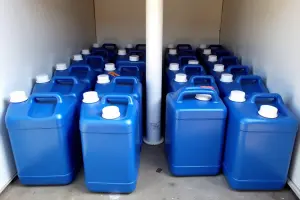
Characteristics: Colorless liquid, easily polymerized, soluble in water, alcohol, and ether. Rapidly oxidizes to formic acid in air. Supplied as formalin (37-50% solution) with methanol added as a polymerization inhibitor. Boiling Point: 96°C, Flash Point: 55°C.

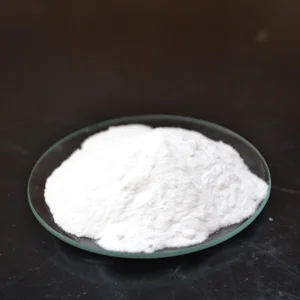
Overview: White crystalline powder (HMTA) formed by condensing formaldehyde and ammonia. Used in industrial manufacturing, plastics, rubber processing, and chemical synthesis.
CAS No: 100-97-0 | Formula: C₆H₁₂N₄ | Mol Weight: 140.19 g/mol
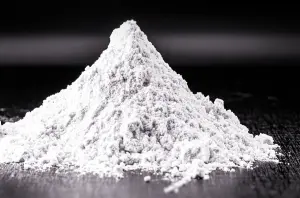
Features: White powder solid with a distinct formaldehyde odor. Flammable linear polymer of formaldehyde without a fixed melting point.
Specs: Content ≥ 96% / 92% | Solubility ≤ 40 mins | Formic Acid ≤ 0.05% | pH: 5-7
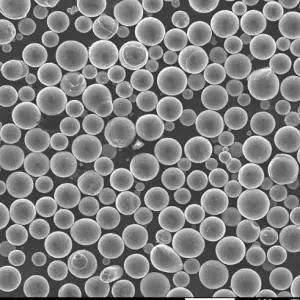
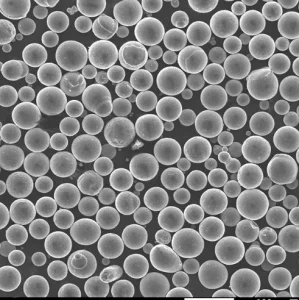
A high-performance alloy metal powder developed for aerospace components, chemical reactions, and specialized coatings. Features high sphericity, low oxygen content, and uniform particle size distribution. Manufactured under strict inert gas protection for consistent, stable performance.
Review our supplementary high-purity gases, liquid rubbers, and chemical intermediates.
 Yanxatech