Explore our diverse catalog of high-purity industrial gases, raw materials, and precision metal powders engineered for international quality systems.
Tri-Calcium Phosphate (TCP), chemically identified as Ca3(PO4)2, represents a critical cornerstone in modern food formulation, pharmacopoeias, and polymer technology. As a highly functional, bio-compatible, and insolubly stable calcium salt of phosphoric acid, its micro-structural properties dictate its performance in high-stakes manufacturing lines. When refined down to the ultrafine spectrum (where the D50 particle size distribution measures below 5 micrometers), Tri-Calcium Phosphate transitions from a standard calcium source to a highly reactive, high-surface-area material modifier.
In the global arena of bulk ingredient sourcing, procurement officers demand an experienced, authoritative manufacturer who understands that particle engineering is just as vital as chemical purity. At YANXA (Yanxatech System Industries Limited), our alignment with state-of-the-art Chinese refinement facilities permits the distribution of ultrafine TCP variants that display exceptional flowability, optimized specific surface areas (SSA), and custom-tailored bulk densities designed to combat severe agglomeration issues in demanding environments.
Bridging the gap between micro-particle engineering and sustainable global production metrics.
The global pharmaceutical and medical device markets are experiencing a significant pivot toward synthetic bio-ceramics. Bone tissue regeneration, dental restoration cements, and controlled-release active pharmaceutical ingredients (APIs) now rely heavily on the osteoconductive matrix provided by ultrafine Tri-Calcium Phosphate. Its high surface-area-to-volume ratio accelerates osteoblast adhesion compared to traditional micro-sized particles.
Global regulatory bodies, including EFSA (European Food Safety Authority) and the US FDA, have tightened regulations surrounding particle sizes and heavy metal toxicity limits (arsenic, lead, mercury). Reliable manufacturers must supply detailed trace chemical analysis profiles alongside standard COAs, proving the safety and non-nanomaterial compliance parameters of their ultrafine TCP grades.
In high-speed polyolefin blown film processes, ultrafine Tri-Calcium Phosphate functions as an exceptionally effective anti-blocking agent. By creating microscopic surface relief without sacrificing optical clarity, TCP prevents film adhesion during packaging. Its high thermal stability (>1300°C) outperforms organic alternatives, making it the preferred choice for technical masterbatch producers.
In localized manufacturing clusters around the globe, from the powdered milk processing facilities in New Zealand and Western Europe to the medical implant manufacturers in North America, ultrafine Tri-Calcium Phosphate acts as a silent enabler of product performance:
The Chinese chemical manufacturing landscape is undergoing a digital transformation. Moving beyond basic labor and energy-cost advantages, Chinese factory operations are implementing Factory 4.0 initiatives. These smart ecosystems integrate Internet of Things (IoT) sensors, automated fluidic regulation, and real-time crystalline growth feedback loops to synthesize Tri-Calcium Phosphate of unparalleled consistency.
Through automated continuous crystallization and fluid energy jet-milling, the particle size distribution (PSD) is controlled within tight standard deviations. This level of control is crucial because erratic particle distributions lead to clogged nozzles, density variations, and quality failures down the production line.
At YANXA, our deep partnerships with ISO9001:2008 and FSSC 22000 certified production hubs ensure that geopolitically resilient supply chains, raw material safety buffers, and environmental management compliance (ISO 14001) are in place. We guarantee a continuous supply of specialty materials to our international partners, even during global freight disruptions.
Established in 2008: A Decade and a Half of Engineering Specialty Chemical Supply Lines
Yanxatech System Industries Limited (hereinafter referred to as YANXA) is one of the growing suppliers in the field of specialty materials in China. Starting from a fledgling small business unit in 2008, YANXA is driven with the passion of developing a broad international market in the area relating to the chemical and mechanical industries. Thanks to our team’s enduring and persistent work and our business partners’ long-lasting support, YANXA has steadily and vigorously grown into a company with excellence in delivering products and services relating to specialty chemicals.
Cooperating with leading manufacturers and the renowned research institutes in the field of specialty chemicals in China, YANXA is capable of supplying:
Business Philosophy: Quality, safety, and efficiency prevail over all other values in our business. We care about what our customers need for general product classes, as well as their unique and specific requirements for newly developed applications, in a timely manner. We adhere strictly to technical requirements and make deliveries in almost perfect conformity. The chemical business exposes more safety concerns than any other industrial sector. We undertake all activities involving chemicals in a safe way to ensure the safety of human health and the environment.
In addition to our specialty Ultrafine Tri-Calcium Phosphate, YANXA supplies the following high-demand chemical compounds to global partners under strict ISO9001 guidelines:
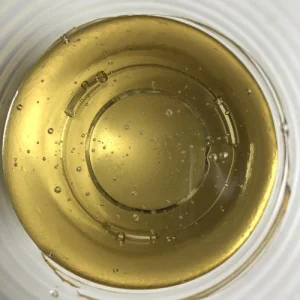
Formaldehyde is a colorless, volatile chemical intermediate that easily polymerizes. Rapidly oxidized to formic acid in air, it functions as a strong reducing agent. It is supplied commercially as formalin with methanol as a polymerization inhibitor.
| Property | Specification |
|---|---|
| Boiling Point | -19℃ (Gas), 96℃ (Formalin) |
| Freezing Point | -118℃ |
| Relative Density | 0.815 (-20℃) |
| Flash Point | 55℃ (Formalin) |
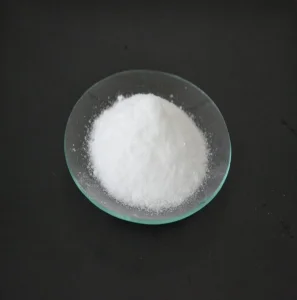
Hexamethylenetetramine is a crystalline organic powder generated by the condensation of formaldehyde and ammonia. Crucial for thermosetting resins, rubber vulcanization accelerator, and solid fuel tablets.
| Parameter | Target Range |
|---|---|
| Molecular Formula | C₆H₁₂N₄ |
| Molecular Weight | 140.19 g/mol |
| Appearance | White crystalline powder |
| Core Application | Polymer Resin Intermediate |
A linear, high-concentration polymer of formaldehyde. Offers lower water content and faster dissolution times than standard liquid formalin solutions. Ideal for organic synthesis, coatings, and disinfectant formulations.
| Specification Item | Grade 96% | Grade 92% |
|---|---|---|
| Appearance | White powder | White powder |
| Assay (Content) | ≥96.0% | ≥92.0% |
| Solubility | ≤40 minutes | ≤40 minutes |
| Formic Acid | ≤0.05% | ≤0.05% |
Technical, Commercial, and Logistical Sourcing Guidelines for Procurement Professionals
Our prices are subject to change depending on chemical feedstock supply, energy costs, and other market factors. We will send you an updated price list after your company contacts us with details regarding desired purity levels, particle size specifications, and annual volume requirements.
Yes, we require all international orders to have an ongoing minimum order quantity. This ensures optimization of container utilization and transport efficiency. If you are looking to purchase smaller volumes for R&D or initial validation trials, please contact our sales office to request custom sample batches.
Yes. YANXA delivers robust documentation packages including Certificates of Analysis (COA), Certificates of Conformance (COC), Safety Data Sheets (SDS), Origin certificates, marine insurance policies, and custom export declaration documentation to ensure smooth customs processing.
For custom laboratory samples, the average lead time is approximately 7 days. For mass production shipments, the standard lead time is 20-30 days after receipt of the deposit payment and technical specification sign-off. If our standard timeline conflicts with your operational deadlines, please discuss acceleration options with our sales manager.
We accept bank wire transfers (T/T) and letters of credit (L/C) at sight. Our standard terms are a 30% deposit paid in advance to initiate production, with the remaining 70% balance settled against the copy of the Bill of Lading (B/L).
We warrant our materials to be free of defects and compliant with the technical specifications outlined in the agreed COA. If a quality discrepancy is found upon arrival, we initiate a quick resolution process: retaining control samples, conducting laboratory analysis, and replacing or refunding non-conforming lots to ensure customer satisfaction.
We use UN-approved export packaging, moisture-resistant barrier bags, and heavy-duty outer pallets. For temperature-sensitive items or specialty gases requiring hazard-compliant transport, we utilize validated cold chain or gas cylinder transport systems that meet ADR, IATA, and IMDG safety rules.
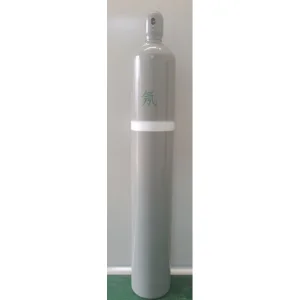
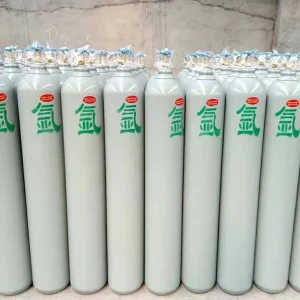
Select premium specialty rubber products, noble gases, and chemical salts from our production lines.


 Yanxatech