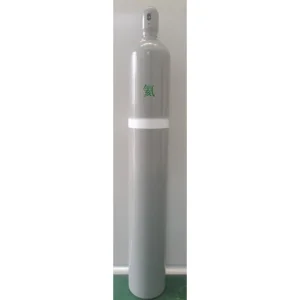
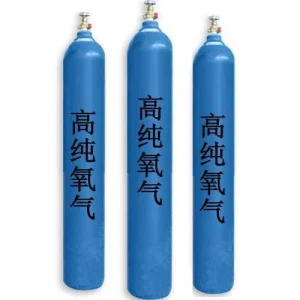
Explore our core selection of industrial gases, nitrates, and specialty chemical compounds manufactured to international standards.
In modern industrial synthesis, metal nitrates act as fundamental chemical foundations. Specifically, Copper Nitrate [Cu(NO3)2] and Silver Nitrate [AgNO3] represent two critical inorganic compounds essential to high-value industrial sectors, including semiconductor manufacturing, automotive catalyst formulation, chemical synthesis, and electronics fabrication. As global supply chains demand absolute purity, consistent molecular crystallization, and reliable hazard-compliant transport, China-based manufacturers like YANXA (Yanxatech System Industries Limited) have evolved to meet this global demand.
This industry report outlines the thermodynamic behaviors, synthesis criteria, purification techniques, and distribution parameters associated with industrial-grade metal nitrates. We evaluate how specialized manufacturing methods optimize output characteristics, minimize trace impurities, and ensure long-term structural reliability under varied application scenarios.
"High-purity chemical manufacturing is no longer defined strictly by output capacity, but by trace-element control at the parts-per-billion (ppb) level, ensuring total process alignment with the strict parameters of global electronics and chemical applications."
Copper nitrate exists primarily in its hydrated forms, most commonly Copper Nitrate Trihydrate [Cu(NO3)2·3H2O] and Copper Nitrate Hexahydrate [Cu(NO3)2·6H2O]. It is highly soluble in water and ethanol, exhibiting deep blue monoclinic crystals. The primary synthesis path involves the reaction of high-purity metallic copper with nitric acid under precise temperature controls:
3 Cu + 8 HNO3 → 3 Cu(NO3)2 + 2 NO ↑ + 4 H2O
To eliminate nitrogen oxide emissions and maximize yield, modern Chinese manufacturing processes deploy closed-loop catalytic oxidation, scrubbing the emitted NOx gases and recycling them back into nitric acid feedstocks. This reduces environmental impacts while optimizing raw material efficiency.
Silver nitrate remains a critical chemical compound due to its high solubility, photo-sensitivity, and chemical reactivity. Its manufacturing processes demand extreme precision because of the inherent cost of silver bullion. The reaction of elemental silver with concentrated nitric acid produces a crude solution that must undergo multiple crystallization stages to eliminate trace impurities like iron, lead, copper, and bismuth.
In electronics fabrication, silver nitrate is the base precursor for silver powder and silver flake pastes, which form the conductive pathways on silicon solar cells, automotive defoggers, and touch screens. Any trace metallic impurities within the silver nitrate precursor can degrade electrical conductivity or alter the sintering behavior of the paste during firing. Thus, manufacturers utilize multi-stage crystallization systems to isolate silver crystals under cleanroom environments, ensuring purity levels exceed 99.99%.
| Characteristic / Spec | Copper Nitrate Trihydrate [Cu(NO3)2·3H2O] | Silver Nitrate [AgNO3] (Industrial Grade) | Silver Nitrate [AgNO3] (Analytical Grade) |
|---|---|---|---|
| Purity (Assay) | ≥ 99.0% | ≥ 99.8% | ≥ 99.99% |
| Appearance | Blue Monoclinic Crystals | White Crystalline Powder | Colorless Orthorhombic Crystals |
| Water Insoluble Matter | ≤ 0.01% | ≤ 0.02% | ≤ 0.005% |
| Chloride (Cl) | ≤ 0.002% | ≤ 0.001% | ≤ 0.0005% |
| Sulfate (SO4) | ≤ 0.005% | ≤ 0.002% | ≤ 0.001% |
| Iron (Fe) | ≤ 0.002% | ≤ 0.001% | ≤ 0.0002% |
YANXA partners with downstream manufacturing entities to supply custom chemical formulations and specialty raw materials. The applications of these materials span across diverse fields:
Utilizing high-purity silver nitrate to synthesize sub-micron silver powders for conductive inks. These inks form the electrical contacts on photovoltaic panels and high-reliability multilayer ceramic capacitors (MLCCs).
Copper nitrate serves as a precursor in manufacturing copper-silica and copper-zinc-alumina catalysts, which are crucial for methanol synthesis, hydrogenation processes, and gas purification systems.
Providing specialized bath chemicals for electroplating copper onto micro-circuits. Copper nitrate ensures excellent bath stability, minimizing anode polarization and ensuring uniform copper deposit layers.
Procuring metal nitrates globally introduces logistics challenges. Both Copper Nitrate and Silver Nitrate are categorized as Class 5.1 Oxidizing Substances under the United Nations Recommendations on the Transport of Dangerous Goods (UN Number 3077 for copper compounds, UN Number 1493 for silver nitrate). Improper handling or storage can result in rapid thermal reactions, requiring strict compliance with all international shipping and packaging protocols.
Industrial buyers must navigate the following compliance parameters:
YANXA maintains robust quality assurance networks to assist clients throughout the export process. Our systems ensure compliance with European REACH specifications, United States TSCA rules, and international GHS labeling guidelines. By utilizing specialized manufacturing and logistics protocols, we manage documentation, customs clearance, and dangerous goods transport requirements, mitigating supply chain risks for international importers.
The manufacturing of copper and silver nitrate is transitioning toward clean production methodologies. Key research focus areas include:
By capturing NOx process emissions, modern facilities convert gas stream components back into nitric acid. This setup cuts material inputs, reduces waste, and stabilizes production costs against raw material price fluctuations.
Continuous crystallizers produce uniform crystal sizes. This eliminates grinding stages, reduces airborne dust hazards, and increases dissolution rates for downstream users.
Yanxatech System Industries Limited (YANXA) is an established supplier of specialty materials based in China. Founded in 2008, YANXA focuses on chemical and mechanical industry materials, offering customized support for international clients.
Through partnerships with chemical manufacturers and research centers in China, YANXA provides:
1) Liquid rubber compounds;
2) Nitrates;
3) Metal and alloyed powders.
Business Philosophy: Quality, safety, and operational efficiency are key values for YANXA. We support standard raw material requirements as well as custom specifications for developing technologies, emphasizing compliance with delivery schedules and strict product quality standards. Our chemical operations are designed with strict safety protocols to help protect human health and minimize environmental impacts.
Product Characteristics: Formaldehyde is a colorless, reactive liquid that is soluble in water, alcohol, and ether. It oxidizes to formic acid upon exposure to air, serving as a reducing agent. Its boiling point is -19°C, freezing point is -118°C, and it has a relative vapor density of 1.067. It is supplied commercially as formalin, an aqueous solution containing 37-50% formaldehyde, with methanol added to inhibit polymerization. This solution is milky white, features a strong odor, and vaporizes to release formaldehyde gas. Formalin has a boiling point of 96°C, a relative density of 0.815 at -20°C, and a flash point of 55°C.
Product Overview: Hexamethylenetetramine, also known as hexamine or HMTA, is a white crystalline powder produced by the condensation reaction of formaldehyde and ammonia. It is a versatile organic chemical intermediate widely used in industrial manufacturing, pharmaceutical synthesis, rubber processing, and analytical chemistry.
• Molecular Formula: C6H12N4
• Molecular Weight: 140.19 g/mol
Product Features: A white powder/solid with a characteristic formaldehyde odor. It is a linear polymer of formaldehyde without a sharp melting point.
| Item Specification | Standard Grade | High Purity Grade |
|---|---|---|
| Appearance | White powder/solid | White powder/solid |
| Content | ≥ 92% | ≥ 96% |
| Solubility | ≤ 40 minutes | ≤ 40 minutes |
| Formic Acid | ≤ 0.05% | ≤ 0.05% |
| pH | 5 - 7 | 5 - 7 |
Produced using atomization technology to yield high spherical particle consistency, this alloy powder is used in pyrotechnics, propellant chemistry, metallurgy, and specialty chemical reactions requiring precise combustion rates.
Technical answers to common sourcing, regulatory, and application questions.
Explore our additional industrial gases, polymer additives, and specialty chemical grades.
 Yanxatech