Featured primary products and specialty chemical materials engineered under strict international standards.
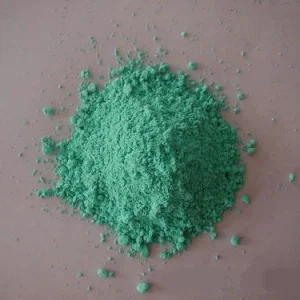
Iron(II) Nitrate, or ferrous nitrate ($\text{Fe(NO}_3)_2$), is a highly specialized transition metal salt recognized for its crucial role in oxidation-reduction processes, catalyst synthesis, and advanced surface chemical processing. Unlike its more common sibling Iron(III) Nitrate, ferrous nitrate represents distinct thermodynamic stability profiles that necessitate highly precise manufacturing and storage controls.
For global buyers targeting China Iron II Nitrate factories, understanding the distinction in purity levels, crystallization pathways, and environmental compliance has become critical. In recent years, China's specialty chemical manufacturing sector has shifted towards highly integrated, green-energy-aligned processes. This has enabled the production of stabilization-controlled ferrous nitrate solutions and hexahydrate crystals that fulfill high-end semiconductor, energy storage, and catalyst requirements.
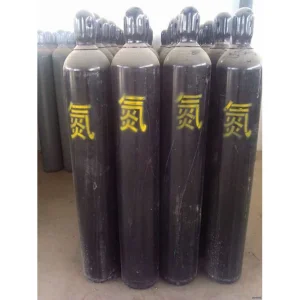
Ferrous nitrate is prone to rapid oxidation when exposed to atmospheric oxygen or elevated temperatures, converting into basic ferric nitrates. Leading Chinese manufacturers leverage low-temperature vacuum crystallization and inert atmosphere storage (usually under nitrogen blankets) to prevent this phase transition.
Analyzing the macroeconomic and micro-industrial shifts reshaping the global request for ferrous nitrate.
As global energy markets shift toward hydrogen synthesis and carbon capture utilization, the demand for high-efficiency iron catalysts has surged. Iron(II) Nitrate serves as a preferred precursor due to its clean decomposition profile, leaving no halogenated or sulfurous byproducts that could poison active catalyst sites.
In electronic components manufacturing, ultra-high-purity chemical formulations are essential for selective etching and plating processes. Ferrous nitrate solutions are integrated into chemical mechanical planarization (CMP) slurries and as redox pairs in organic electronics, driving rigorous quality demands on trace-metal contamination levels.
Industrial wastewater treatment, particularly targeting refractory organic contaminants (such as dyes, phenol compounds, and active pharmaceuticals), relies heavily on Fenton's reagent chemistry. Iron(II) Nitrate provides the optimal source of soluble $Fe^{2+}$ ions to trigger high-rate hydroxyl radical generation.
How YANXA cooperates with leading Chinese laboratories to overcome synthesis issues and secure stable molecular structures.
The traditional production of iron(II) nitrate involves reacting high-purity iron scrap or iron powders with dilute nitric acid under cooling conditions to suppress the heat-generating oxidation reaction:
However, this reaction path is highly volatile. If temperatures rise above 25°C, or the acid concentration fluctuates, the solution shifts rapidly towards ferric nitrate:
To combat this, Chinese factories have introduced automatic temperature feedback loops, precise acid dosers, and vacuum crystallization units that isolate the heptahydrate ($\text{Fe(NO}_3)_2 \cdot 6\text{H}_2\text{O}$) without causing localized overheating.
| Parameters | Standard Grade | Electronic Grade |
|---|---|---|
| Fe(NO₃)₂ Assay | ≥ 98.0% | ≥ 99.5% |
| Insolubles in Water | ≤ 0.05% | ≤ 0.005% |
| Sulfate (SO₄²⁻) | ≤ 0.01% | ≤ 0.002% |
| Chloride (Cl⁻) | ≤ 0.005% | ≤ 0.001% |
| Heavy Metals (as Pb) | ≤ 0.002% | ≤ 0.0005% |
| PH Value (5% Solution) | 2.0 - 4.0 | 2.5 - 3.5 |
Tracing our growth from a small local business unit in 2008 into a premier global specialty materials supplier.
We always put quality at the first place and strictly supervise the product quality of every single process. Our products comply with strict ISO9001 quality guidelines.
We care about our customers' needs regarding standard specifications as well as their unique requirements for newly developed applications in a timely manner.
Chemical businesses expose more safety concerns than other sectors. We conduct all activities involving chemicals safely to ensure the health of humans and protection of the environment.
Understand the underlying components that determine your chemical pricing quote when procurement managers request lists from factories.
The price index of iron powder and concentrated nitric acid directly impacts the baseline manufacturing cost. When mineral iron markets fluctuate, the price per metric ton changes correspondingly.
Modern chemical hubs in China have implemented unified environmental standards. Nitrogen discharge fees, wastewater processing costs, and hazard safety compliance taxes now constitute approximately 8-15% of the total pricelist quote.
Because ferrous nitrate is a Class 5.1 oxidizing agent, standard drums are insufficient. Sourcing agents must include heavy-duty composite fiber drums or double-walled moisture-proof bags with vacuum extraction to prevent decomposition, adding a packaging premium.
| Order Quantity (MOQ Basis) | Typical Industrial Price Range (USD/MT) | Purity Threshold | Lead-Time (Weeks) |
|---|---|---|---|
| 1 - 5 Metric Tons | $1,800 - $2,200 | Standard Industrial Grade (98%) | 2 - 3 Weeks |
| 5 - 15 Metric Tons | $1,550 - $1,800 | Catalytic / Refined Grade (99%) | 3 - 4 Weeks |
| 15+ Metric Tons (FCL Cargo) | Negotiable via RFQ | High Purity / Customized | 4 - 5 Weeks |
Note: The pricing ranges listed above are indicative averages based on recent market raw material indices. Active quotes are subject to dynamic changes. Please contact YANXA directly for formal, customized pricelists.
Detailed specifications of partner products, showcasing YANXA’s technical capability and material expertise.
Product Characteristics: Formaldehyde is a colorless liquid, easily polymerized, and readily soluble in water, alcohol, and ether. It is rapidly oxidized to formic acid in air, acting as a strong reducing agent. Its boiling point is -19℃, freezing point -118℃, and relative density to air is 1.067. Commercially, it is supplied in liquid form as formalin, a 37-50% formaldehyde solution with a small amount of methanol added as a polymerization inhibitor. The solution is milky white and has a foul odor. Formalin readily vaporizes, releasing formaldehyde gas. Its boiling point is 96℃, relative density is 0.815/-20℃, and flash point is 55℃.
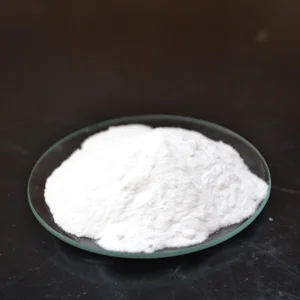
Product Overview: Hexamethylenetetramine, also known as hexamine or HMTA, is a white crystalline powder produced by the condensation reaction of formaldehyde and ammonia. It is a versatile organic chemical intermediate widely used in industrial manufacturing, pharmaceutical synthesis, rubber processing, and analytical chemistry.
Product Features: A white powdery solid with a flammable odor of formaldehyde. It is a linear polymer of formaldehyde with no fixed melting point.
| Item | Specification (Grade A) | Specification (Grade B) |
|---|---|---|
| Appearance | White powder/solid | White powder/solid |
| Content | ≥ 96% | ≥ 92% |
| Solubility | ≤ 40 minutes | ≤ 40 minutes |
| Formic Acid | ≤ 0.05% | ≤ 0.05% |
| pH | 5 - 7 | 5 - 7 |
Clarifying technical capabilities, export policies, pricing terms, and shipment protocols for international buyers.
Browse our certified metal powders, nitrates, and specialty chemical materials.
 Yanxatech