Explore our integrated chemical range, engineered to meet precise industrial specifications.
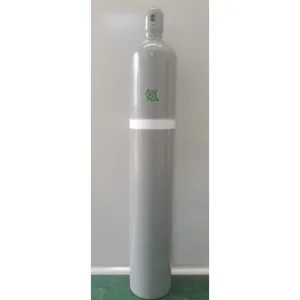
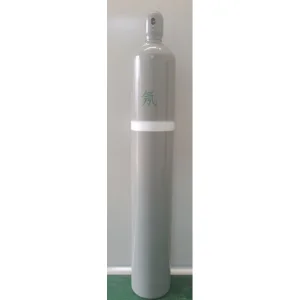
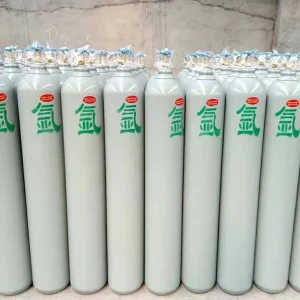
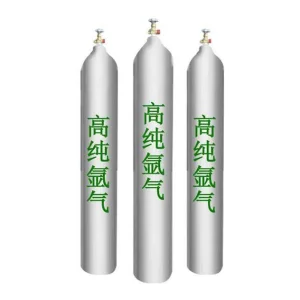
Carbon Tetrafluoride ($CF_4$), historically classified under trade classifications as Freon-14 or Halocarbon-14, represents the most thermodynamically stable binary fluorocarbon. Characterized by high dielectric strength, exceptional thermal stability, and low chemical reactivity under ambient conditions, Freon-14 serves as a critical process gas in sub-10nm semiconductor lithography, silicon wafer fabrication, and cryogenic refrigeration systems.
This report presents the technical specifications, global supply profiles, safety procedures, and factory sourcing standards maintained by Yanxatech System Industries Limited (YANXA) alongside China's leading synthesis centers.
The operational performance of Freon-14 depends heavily on molecular purity. Trace atmospheric contaminants, including moisture, nitrous oxide, and carbon monoxide, can compromise sub-micron etching geometries in microchip production. The table below outlines our standardized analytical specifications for electronic and industrial grades of CF4.
| Analytical Parameter | Industrial Grade | Electronic Grade (5N) | Ultra-Pure Grade (6N) |
|---|---|---|---|
| Purity ($CF_4$) | ≥ 99.9% | ≥ 99.999% | ≥ 99.9999% |
| Moisture ($H_2O$) | ≤ 10 ppm | ≤ 1.0 ppm | ≤ 0.1 ppm |
| Oxygen + Nitrogen ($O_2 + N_2$) | ≤ 80 ppm | ≤ 4.0 ppm | ≤ 0.4 ppm |
| Carbon Monoxide ($CO$) | ≤ 5 ppm | ≤ 0.5 ppm | ≤ 0.05 ppm |
| Sulfur Hexafluoride ($SF_6$) | ≤ 20 ppm | ≤ 1.0 ppm | ≤ 0.1 ppm |
The supply chain for Freon-14 has shifted from basic industrial refrigeration to advanced electronic-grade production. Key growth areas include:
Direct fluorination of elemental carbon or hydrofluorocarbon ($HFC$) precursor reactions. Early systems focused on bulk refrigerant output with higher impurity allowances.
Development of multi-stage cryogenic separation processes designed to remove trace fluorinated impurities and air gases down to <1 ppm levels.
Integration of point-of-use scrubbers and thermal decomposition technologies to process waste fluorocarbon streams, reducing the global warming footprint in line with modern sustainability standards.
Yanxatech System Industries Limited (YANXA) has operated as an established supplier of specialty materials in China since 2008. YANXA began as a small business unit and has grown to serve the international chemical and industrial markets, supported by long-term business partnerships and a focused team.
YANXA specializes in supplying advanced specialty chemicals, including liquid rubbers, nitrates, and metal powders, and coordinates with key domestic research institutes to support chemical distribution networks.
We prioritize quality control, monitoring raw materials and final configurations across all logistics chains.
Our operations comply with global safety regulations, and we employ specialized packaging for hazardous material transport.
We work closely with customers to support unique specifications for newly developed applications.
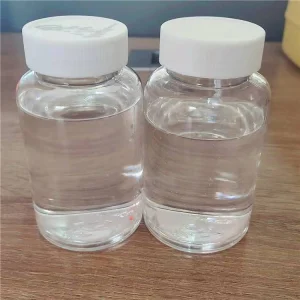
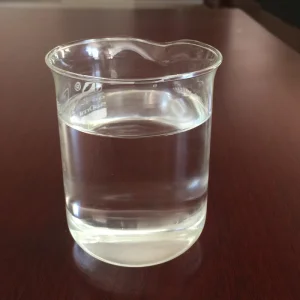
Product Characteristics: Formaldehyde is a colorless liquid under standard delivery formulations, easily polymerized, and highly soluble in water, alcohol, and ether. It rapidly oxidizes to formic acid in ambient air, serving as a strong reducing agent. The compound features a boiling point of -19°C, a freezing point of -118°C, and a relative density to air of 1.067.
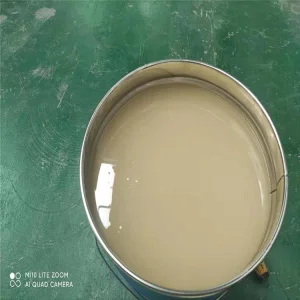
Commercially, it is supplied as formalin, a 37-50% formaldehyde solution containing a small percentage of methanol added as a polymerization inhibitor. This solution presents as a milky white liquid with a strong odor, and it vaporizes readily to release formaldehyde gas. The solution has a boiling point of 96°C, a relative density of 0.815 at -20°C, and a flash point of 55°C.
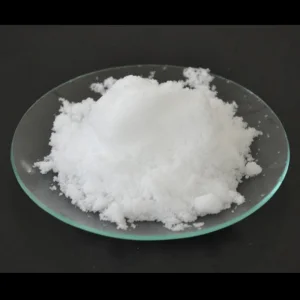
Product Overview: Hexamethylenetetramine, commonly referred to as hexamine or HMTA (CAS No. 100-97-0), is a white crystalline powder synthesized via the condensation reaction of formaldehyde and ammonia. This organic chemical intermediate is widely used in industrial resin manufacturing, pharmaceutical synthesis, rubber vulcanization processing, and analytical chemistry.
Its molecular formula is $C_6H_{12}N_4$, with a molecular weight of 140.19 g/mol. It exhibits high solubility in water and organic solvents, acting as a key structural component in phenol-formaldehyde resins.
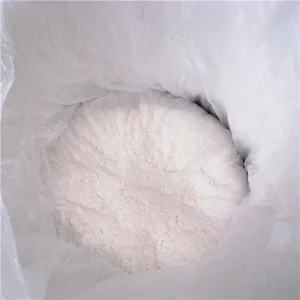
Product Features: Paraformaldehyde is a white, solid, flammable polymer with a characteristic formaldehyde odor. As a linear polymer of formaldehyde, it does not possess a fixed melting point.
| Item / Specification Group | High-Grade Specification | Standard Specification |
|---|---|---|
| Appearance | White powder/solid | White powder/solid |
| Content | ≥ 96% | ≥ 92% |
| Solubility | ≤ 40 minutes | ≤ 40 minutes |
| Formic Acid | ≤ 0.05% | ≤ 0.05% |
| pH Value | 5 - 7 | 5 - 7 |
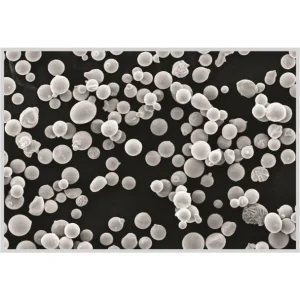
This product consists of atomized, highly spherical aluminum-magnesium alloy particles. It is primarily used in pyrotechnics, chemical catalysts, additive manufacturing, and aerospace applications requiring controlled oxidation rates and consistent grain size distributions.
Common questions regarding regulatory compliance, pricing, lead times, and global shipping policies.
Access our high-purity noble gases, specialty oxides, and chemical intermediates.
 Yanxatech