Optimized functional copolymers and liquid rubbers manufactured to meet Japan's rigorous automotive, electronics, and structural engineering benchmarks.
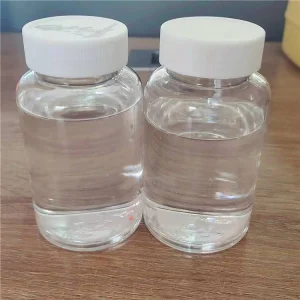
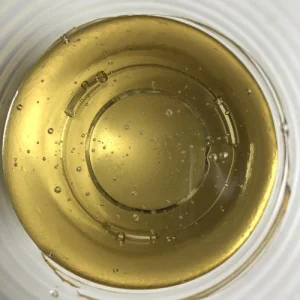
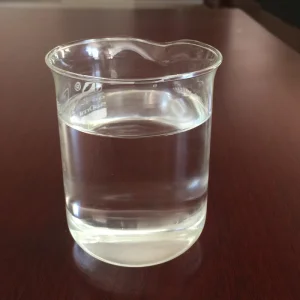
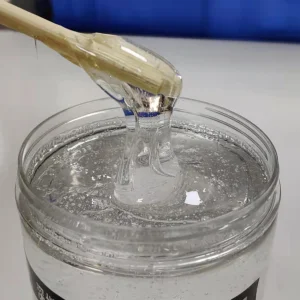
Japan's high-tech manufacturing sector stands as a global icon of quality, precision, and longevity. As the automotive, electronics, aerospace, and construction industries transition toward lighter, more durable, and environmentally sound raw inputs, functionalized liquid rubbers have emerged as critical polymer modifiers. These compounds—ranging from carboxyl-terminated nitrile butadiene rubbers (CTBN) to epoxy-modified options (EPB)—serve to resolve the fundamental engineering trade-off: achieving maximum impact resistance and elongation without degrading thermal properties or dimensional stability.
Historically, structural resins like epoxies were characterized by high tensile strength but suffered from micro-cracking and brittleness under dynamic loads. Today, Japanese chemical designers integrate precisely calculated weight percentages of reactive elastomer precursors directly into the thermoset matrix. Yanxatech System Industries Limited (YANXA) bridges the supply gap for high-purity liquid rubber systems, ensuring that Japanese compounders, adhesives producers, and automotive tier-one suppliers receive batch-consistent raw polymers backed by strict regulatory compliance (including METI registry under the Chemical Substances Control Law, REACH, and RoHS protocols).
“The synthesis of next-generation elastomer modifiers demands precise control over end-group functionality and molecular weight distribution. For the Japanese industrial sector, where tolerance thresholds are measured at the micron level, supply integrity is a necessity for long-term project viability.”
The Japanese manufacturing ecosystem possesses unique operational paradigms. First, the rapid electrification of the automotive sector (HEVs, PHEVs, and BEVs) requires structural adhesives capable of withstanding the high thermal stress of dense battery packs while offering vibration isolation. Second, the electronics sector, centered around key hubs in Kyushu (often called "Silicon Island") and Tohoku, demands encapsulants and sealants with exceptionally low outgassing characteristics to avoid contaminating sensitive semiconductor components.
Furthermore, Japan's geographic profile exposes its civil infrastructure—highways, bullet train (Shinkansen) networks, bridges, and maritime facilities—to persistent seismic activity and marine salinity. Traditional asphalt and polyurethane membrane sealants fail prematurely due to high fatigue. Liquid rubber coatings, formulated with carboxyl or hydroxyl terminated backbones, form a highly elastic, hydrophobic barrier that accommodates thermal cycling and structural displacement.
To select the ideal liquid rubber modifier, engineers must analyze the reactive end-groups, copolymer composition, and viscosity parameters. Below, we examine the molecular structural advantages of the primary functional groups supplied by YANXA for the Japanese market:
| Polymer Variant | Reactive Functional Group | Typical Viscosity (mPa·s @ 25°C) | Glass Transition (Tg °C) | Primary Application in Japan |
|---|---|---|---|---|
| EPB (Epoxy Modified Polybutadiene) | Oxirane (Epoxy) ring on butadiene backbone | 10,000 – 25,000 | -55 to -45 | Aqueous automotive primers, electronic potting resins, high-dielectric insulators. |
| HTBN (Hydroxyl-Terminated Butyronitrile) | Primary/Secondary Hydroxyl (-OH) | 30,000 – 60,000 | -60 to -50 | Polyurethane modifications, aerospace solid rocket motor binders, vibration dampers. |
| CTBN (Carboxyl-Terminated Nitrile Butadiene) | Carboxyl (-COOH) | 40,000 – 70,000 | -55 to -40 | Epoxy toughening, structural film adhesives for automotive chassis, prepregs. |
| ATBN (Amino-Terminated Nitrile Butadiene) | Amine (-NH or -NH2) | 60,000 – 100,000 | -50 to -35 | Fast-curing industrial sealants, concrete repair, extreme-pressure joint sealants. |
| LSBR (Liquid Styrene Butadiene Rubber) | Unsaturated vinyl / styrene copolymer | 5,000 – 15,000 | -75 to -60 | Tire compound plasticizer, processing aids, high-grip industrial conveyor belts. |
When carboxyl-terminated liquid rubber (CTBN) is blended with an epoxy resin matrix, a reaction occurs between the carboxyl groups of the rubber and the oxirane groups of the epoxy. Initially, the mixture is homogeneous. However, during the curing cycle, as the molecular weight of the epoxy matrix increases, the rubber phase becomes incompatible and separates out, forming spherical, micro-dispersed elastomer particles (typically 1 to 5 microns in diameter) anchored chemically to the epoxy matrix.
When an external mechanical load initiates a crack, these micro-dispersed rubber particles act as stress concentrators. They promote localized shear yielding of the epoxy matrix and plastic deformation around the rubber domains, absorbing mechanical energy and stopping crack propagation. This process increases the fracture toughness ($K_{1c}$) of the adhesive matrix by up to 5-10 times without compromising thermal resistance.
Our formulations resist continuous exposure to salt spray, thermal cycling, and UV radiation, which is essential for marine infrastructure along the coastlines of Honshu and Hokkaido.
Every shipment undergoes analytical chromatography and Rheometer validation to ensure the molecular weight distribution and viscosity match the target specification.
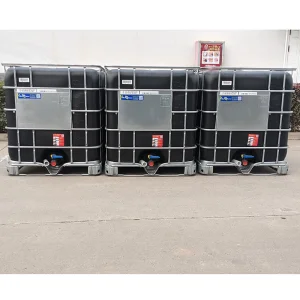
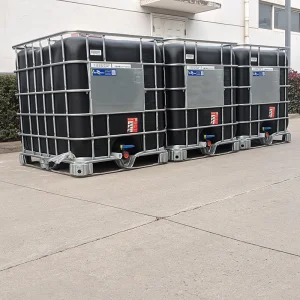
Full support for METI registrations, chemical safety data sheets (SDS) in Japanese, and compliant hazardous materials packaging for domestic maritime shipping.
Founded in 2008 as a focused material science firm, Yanxatech System Industries Limited (YANXA) has grown into a major supplier of specialty polymers, metal powders, and high-purity inorganic agents in China. With a commercial philosophy centered on Quality, Safety, and Operational Efficiency, YANXA has built partnerships with chemical research institutes and multi-national corporations.
Our development is based on a practical understanding of our customers' specific challenges. We recognize that in advanced fields like aviation, micro-electronics, and specialized coatings, off-the-shelf chemicals rarely suffice. That is why we provide custom modification services, offering liquid rubbers with targeted functionalization degrees, custom molecular weights, and modified viscosity profiles. This technical approach has established YANXA as a reliable supply partner for Japanese importers, compounding houses, and manufacturing centers.
“At YANXA, we view chemical safety as a core operational standard. Handling chemicals requires complete responsibility toward the environment and public health. We design every stage of our supply chain—from initial synthesis to packaging and overseas logistics—to meet international safety standards.”
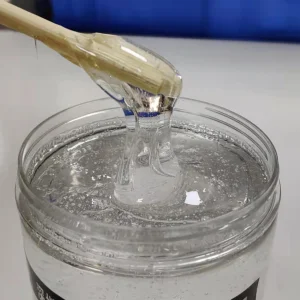
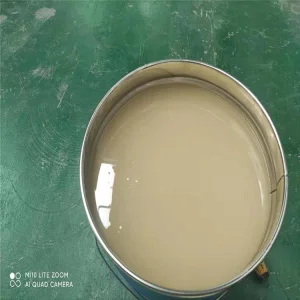
Explore our comprehensive product lines of functionalized polybutadienes, liquid rubbers, and specialty polyethers designed to meet diverse physical performance criteria.
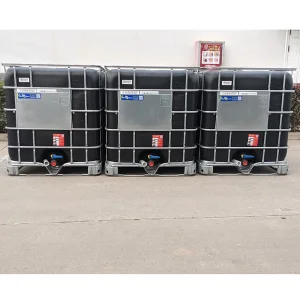
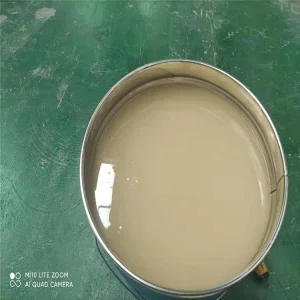
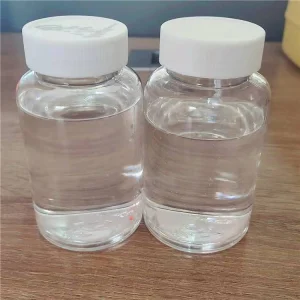
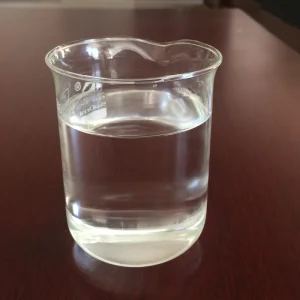
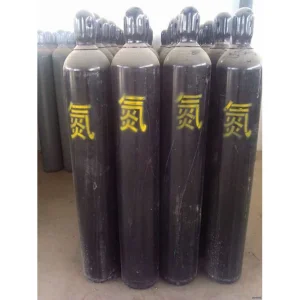
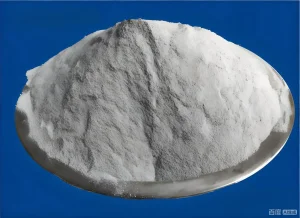
High-purity gases and metal flake powders designed to complement our liquid rubbers in heavy corrosion mitigation and aerospace manufacturing.
The performance requirements of liquid rubber variants correlate with their deployment environments. Below are three critical industrial scenarios where YANXA’s liquid rubber systems provide solutions:
Challenge: Electric vehicle battery modules undergo thermal expansion and contraction during fast charging and discharge cycles. Typical rigid adhesives experience fatigue crack failure under these conditions.
Solution: Formulators use YANXA's CTBN copolymer (10-15 wt%) as a modifier in structural epoxy adhesives. This establishes a multiphase block structure that absorbs vibrations and preserves joint integrity from -40°C up to 150°C.
Challenge: 5G/6G communication infrastructure requires encapsulation materials with a low dielectric constant ($D_k$) and low dissipation factor ($D_f$) that can resist moisture absorption.
Solution: Epoxy-modified liquid rubbers (EPB) are used as curing modifiers. The non-polar butadiene backbone keeps dielectric losses low, while the hydrophobic structure prevents humidity from degrading high-frequency signal propagation.
Challenge: Shinkansen track beds require elastomer baseplates that absorb high-frequency vibrational energy over multi-decade operational lifespans without structural sagging.
Solution: Polyurethane formulations containing medium-vinyl hydroxy-terminated polybutadiene liquid rubbers yield dense, highly crosslinked network systems with low creep, providing stable damping performance over long service periods.
The requirements for functionalized polymers continue to evolve. Research initiatives at YANXA are designed to support the technological transition of our Japanese partners:
“Reducing volatile organic content while maintaining mechanical properties is a primary design goal. Our technical team works to help partners achieve environmental compliance without compromising performance.”
Common questions regarding logistics, technical modification, quality control, and regulatory compliance for our Japanese industrial partners.
Partner with Yanxatech to secure reliable, high-purity liquid rubber grades optimized for your manufacturing processes. Contact our engineering division for technical support or to request samples.
Send Inquiry Now Yanxatech