Premium chemical precursors, advanced functional alloys, and high-performance metallic components supplied globally.
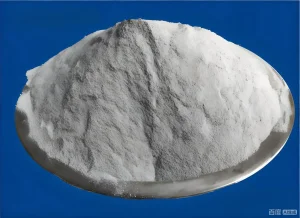
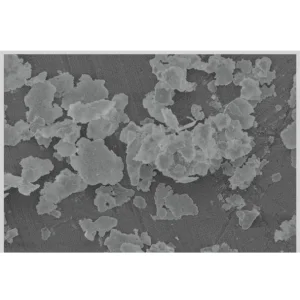
Alumina powder (Aluminum Oxide, Al₂O₃) stands as a foundational cornerstone in modern advanced materials science. As global industries push the limits of performance in thermal management, electronics, semiconductor manufacturing, and structural ceramics, the demands for high-purity, structurally precise alumina powders have escalated exponentially. China, leveraging its deep mining infrastructure, robust chemical manufacturing complexes, and highly integrated technological partnerships, has emerged as the premier global node for custom alumina supply chains.
This industry report acts as a technical whitepaper for procurement executives, quality assurance directors, and materials research scientists looking to establish stable, highly optimized supply partnerships. Understanding the chemical profiles, calcination grades, and distribution semantics of alumina powder is crucial for achieving cost optimization without sacrificing performance integrity.
EEAT Sourcing Directives: Sourcing engineered alumina requires strict adherence to particle size distribution (PSD) metrics, Na₂O concentration metrics, and specific surface area (BET) tolerances. Standard commercial grades are insufficient for high-reliability systems.
Depending on the final industrial application, the morphology and purity level of alumina must be meticulously controlled. Sourcing departments must differentiate between the following primary classification structures:
Understanding the engineering capabilities, purity benchmarks, and scale metrics of the domestic Chinese manufacturing sector.
The global demand matrix for alumina powder is shifting from structural ceramics to electronic and thermal management interfaces. This transformation is driven by several macroeconomic and technological transitions:
In high-capacity lithium batteries, high-purity alumina is coated onto polyethylene or polypropylene separators. This ceramic barrier layer enhances safety by preventing dendritic short circuits under thermal stress. As the automotive industry pivots toward solid-state and high-energy-density configurations, demands on powder consistency and low-sodium parameters have become absolute.
During the Chemical Mechanical Planarization (CMP) process in chip fabrication, ultra-fine colloidal alumina acts as the primary abrasive. In packaging, spherical alumina serves as the critical functional filler in Epoxy Molding Compounds (EMC) to dissipate heat away from the silicon die. Here, D50 control (median diameter) and spherical morphology are vital to ensure maximum filler packing density without increasing the viscosity of the composite paste.
| Application Sector | Primary Property Demanded | Critical Chemical Metric | Key Sourcing Benchmark |
|---|---|---|---|
| Battery Separator Coating | Thermal stability, mechanical strength | Na₂O < 0.1%, Fe < 10ppm | D50: 0.3 - 0.7 μm |
| Thermal Interface Materials (TIMs) | Thermal conductivity, electrical isolation | High sphericity, surface dry treatment | D50: 5 - 45 μm (bimodal) |
| Precision Abrasives (CMP) | Scratch-free removal rate | Alpha-Al₂O₃ phase control > 98% | Tight D90 particle distribution limit |
| Structural Engineering Ceramics | Mechanical toughness, wear resistance | Optimized binder compatibility | High green density compaction |
Forging excellence in advanced specialty chemicals, metal powders, and high-purity industrial compounds since 2008.
Yanxatech System Industries Limited (YANXA) is one of the growing suppliers in the field of specialty materials in China. Starting from a fledgling small business unit in 2008, YANXA is driven with the passion of developing a broad international market in the area relating to chemical and mechanical industries.
Thanks to our team’s enduring and persistent work and our business partners’ long-lasting support, YANXA has steadily and vigorously grown into a company of excellence in delivering products and services relating to specialty chemicals. Cooperating with leading manufacturers and the renowned research institutes in the field of specialty chemicals in China, we ensure high quality, safety, and operational efficiency across all client integrations.
Our commitment is simple: Quality, safety, and efficiency prevail over all values in our business. We care about our customers' need for general product consistency, as well as their unique, specific requirements for newly developed applications in a timely manner. We adhere strictly to technical requirements and make deliveries in almost perfect conformity with customer specifications.
Our collaborative production lines operate under strict, audited quality assurance methodologies to ensure trace-ability.
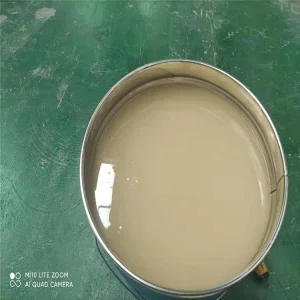
Direct supply capability across liquid rubbers (HTBN/ATBN), advanced metal powders, specialty gas compounds, and structural nitrates.
Expedited processing with robust cargo agents to maintain safe shipping configurations globally.
Collaborative research links with domestic science institutes to develop specific morphological variants.
Advanced industries do not simply purchase chemical products; they purchase integrated industrial solutions. The formulation of alumina powder must match the mechanical, electrical, and thermal properties of the matrix systems in which they reside. YANXA provides guidance on the engineering integration of various material classes:
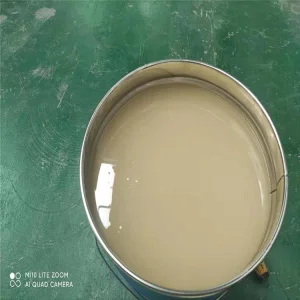
When blending alumina with liquid rubber configurations such as HTBN (Hydroxyl-Terminated Butyronitrile) or EPB (Epoxidized Polybutadiene), surface moisture control is critical. High levels of absorbed moisture on the alumina particles can disrupt the curing mechanism of epoxy or polyurethane systems, leading to void formation. We recommend silane surface treatment and deep thermal drying to facilitate optimal compounding viscosity and maximize filler loading levels.
In refractory manufacturing, structural stability under high mechanical stress is achieved via tabular alumina integration. Tabular crystals lock together during thermal processing to form a self-reinforcing ceramic structure. Because our materials are sourced and audited under strict standards, our suppliers limit trace impurities (specifically alkali metals like Na₂O and K₂O) that would otherwise catalyze early glass-phase formulation and compromise structural strength at elevated temperatures.
A B2B procurement contract for industrial quantities of alumina or specialty chemical compounds should balance technical compliance with commercial feasibility. When negotiating quotes with China-based suppliers, consider the following technical variables:
Procurement Insight: Working directly with integrated specialty material platforms allows buyers to combine shipping profiles. For example, matching metal powder acquisitions with specialized liquid rubbers and gas formulations can reduce logistical costs and simplify import custom procedures.
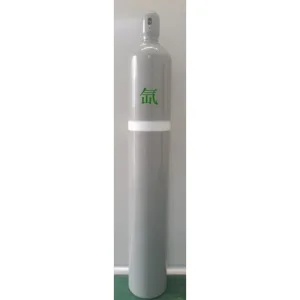
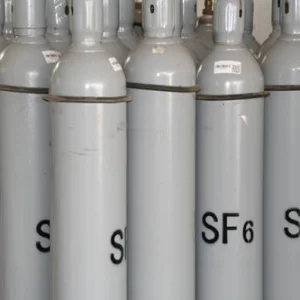
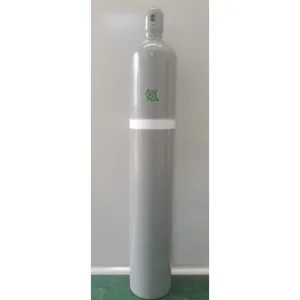
Premium high-purity noble gases, specialized polymers, and alloyed components to streamline integrated sourcing strategies.
To establish credible authority, industrial procurers should understand the chemical profiles, synthesis routes, and raw material safety guidelines for key products in the YANXA supply chain:
Formaldehyde is supplied as a colorless liquid that easily polymerizes. It is soluble in water, alcohol, and ether. It oxidizes to formic acid in the presence of air, acting as a strong reducing agent. Commercially, it is supplied as Formalin, containing 37-50% formaldehyde with a small concentration of methanol added as a polymerization inhibitor. The solution is milky white, carries a pungent odor, and vaporizes readily.
Key Specifications: Boiling Point is 96°C, relative density is 0.815 at -20°C, and flash point is 55°C.
Hexamine is a white crystalline powder synthesized by reacting formaldehyde with ammonia. It is an organic chemical intermediate used in rubber vulcanization accelerators, pharmaceutical synthesis, phenolic resin production, and explosives formulation.
Identifiers: CAS No.: 100-97-0, Molecular Formula: C₆H₁₂N₄, Molecular Weight: 140.19 g/mol.
Paraformaldehyde is a solid, white linear polymer of formaldehyde with a characteristic pungent odor. Unlike formaldehyde solutions, it has no fixed melting point and depolymerizes upon heating to release gaseous formaldehyde, making it highly effective for dry-process synthesis applications.
Technical Specifications Table:
| Specification Parameter | High-Grade Standard | Technical-Grade Standard |
|---|---|---|
| Appearance | White powder/solid | White powder/solid |
| Active Content | ≥ 96.0% | ≥ 92.0% |
| Solubility Time | ≤ 40 minutes | ≤ 40 minutes |
| Formic Acid Content | ≤ 0.05% | ≤ 0.05% |
| pH Value Range | 5.0 - 7.0 | 5.0 - 7.0 |
This alloy powder is processed via high-pressure gas atomization, yielding a spherical morphology with uniform element distribution. It is widely used in metal additive manufacturing (3D printing), energetic pyrotechnics, and anti-corrosive industrial coatings.
Technical details, shipping logistics, payment options, and warranty policies for global buyers.
 Yanxatech