Carbon Tetrafluoride ($CF_4$), chemically known as Tetrafluoromethane (CAS No. 75-73-0), represents the simplest fluorocarbon structure (perfluorocarbon, PFC). Characterized by its exceptional chemical stability, non-flammability, and thermal resilience, CF₄ gas exists as a colorless, odorless gas under ambient conditions. The covalent bond strength between Carbon and Fluorine ($515 \text{ kJ/mol}$) is one of the strongest in organic chemistry, imparting the molecule with high resistance to chemical degradation, acids, bases, and oxidizing agents.
In high-density plasma environments, $CF_4$ dissociates to release active fluorine radicals ($F^*$). These reactive species volatilely etch target substrates, notably Silicon Dioxide ($SiO_2$) and Silicon Nitride ($Si_3N_4$), converting them to volatile Silicon Tetrafluoride ($SiF_4$) gas, which is subsequently evacuated from vacuum process chambers.
-128 °C (-198.4 °F)
88.004 g/mol
99.99% to 99.9999%
7,390
The industrial production and wholesale supply chains of Carbon Tetrafluoride have transitioned from centralized regional clusters to a highly diversified global network. The expansion is driven by the rapid growth of fabrication plants (Fabs) across East Asia, North America, and Europe. Today, China, Japan, and the United States serve as the primary hubs for synthesis and ultra-high purification.
As global nations scale up domestic semiconductor initiatives (such as the US CHIPS Act and European Chips Act), the security of supply for key electronic specialty gases (ESGs) like CF₄ has become a national interest. The wholesale market relies heavily on bulk transport modes, using Y-cylinders, tube trailers, and ISO tank containers to maintain stability and cost-efficiency over long distances.
Fluorine source availability, environmental regulations regarding perfluorinated compounds, and shipping logistics represent the main pressure points in the global CF₄ market. Prominent factories are mitigating these risks by implementing closed-loop recycling mechanisms, enabling the reclamation and purification of spent etching effluents directly on-site or via centralized chemical reprocessing stations.
Carbon Tetrafluoride is utilized across several advanced engineering sectors. Each application demands tailored purity, packaging configurations, and chemical specifications:
During plasma-enhanced chemical vapor deposition (PECVD) and reactive ion etching (RIE) cycles, CF₄ acts as a precise atomic scalpel. In localized semiconductor clusters—such as Hsinchu (Taiwan), Seoul (South Korea), and Austin (Texas)—ultra-pure CF₄ mixed with Oxygen ($O_2$) or Hydrogen ($H_2$) is utilized to etch fine contact holes, vias, and trenches into thin dielectric films.
Due to its chemical stability and boiling point of -128 °C, CF₄ is used as a component in mixed-refrigerant gases for ultra-low temperature freezers. These systems are critical for medical vaccine storage, deep-space simulation chambers, and metallurgy conditioning.
In switchgears and electrical substations, CF₄ combined with Sulfur Hexafluoride ($SF_6$) serves as a dielectric gas barrier, preventing high-voltage arc discharges under severe environmental conditions.
Because of its inert nature and low background concentrations in Earth's troposphere, trace quantities of CF₄ are used as reliable markers for tracking air currents, deep ocean water movements, and atmospheric diffusion models.
The commercial synthesis of Carbon Tetrafluoride is achieved through three primary chemical pathways, each presenting specific yield profiles, impurity matrixes, and purification requirements:
Achieving Electronic Grade (5N5/6N) quality requires removing trace atmospheric gases (Oxygen, Nitrogen, Carbon Monoxide, Carbon Dioxide), moisture ($H_2O$), and acid species ($HF$, $SiF_4$) through a combination of low-temperature distillation, chemical scrubbing, and molecular sieve adsorption bed matrices.
Since CF₄ has a high global warming potential and atmospheric lifetime exceeding 50,000 years, the microelectronics sector is actively researching replacement chemistries with lower environmental impact. Alternative compounds, such as Hexafluorobutadiene ($C_4F_6$) and Octafluorocyclobutane ($C_4F_8$), offer higher etch selectivity and decompose faster in the atmosphere. Concurrently, advanced thermal and plasma burn box systems are deployed in fab sub-fab areas to decompose CF₄ into neutral compounds prior to vent exhaust.
Yanxatech System Industries Limited (hereinafter referred to as YANXA) is a growing supplier of specialty materials in China. Starting as a small business unit in 2008, YANXA is driven by a focus on international chemical and mechanical markets.
Through close cooperation with leading Chinese manufacturers and research institutes, YANXA has expanded its portfolio to deliver high-performance materials for advanced industrial applications globally.
Quality, safety, and efficiency guide our business operations. YANXA adapts to customer requirements for both standard chemicals and custom applications, ensuring safe handling and distribution of chemical products in compliance with environmental and transport regulations.
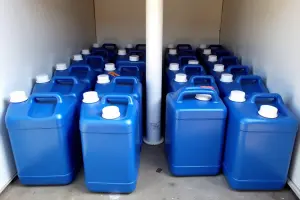
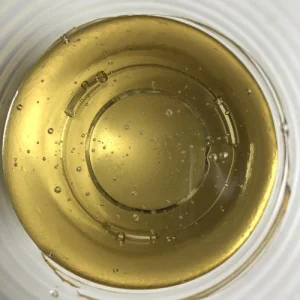
Description: Colorless liquid, easily polymerized, soluble in water, alcohol, and ether. Supplied as formalin (37-50% solution with methanol stabilizer). Boiling point: 96°C, Flash point: 55°C.
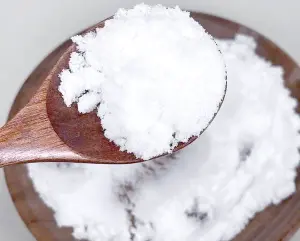
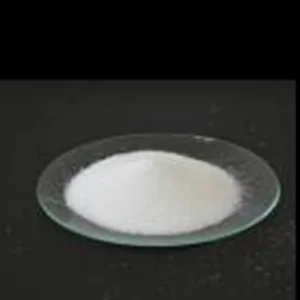
Overview: White crystalline powder (CAS 100-97-0) synthesized from formaldehyde and ammonia. Used as an intermediate in resin manufacturing, plastics, rubber processing, and pharmaceuticals.
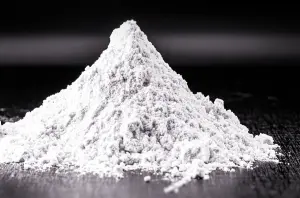
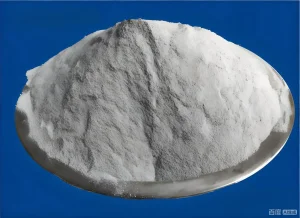
Overview: Solid linear polymer of formaldehyde with a content ≥96% or ≥92%. Formic acid ≤0.05%, pH 5-7. Suitable for resin synthesis, agricultural formulations, and disinfectants.
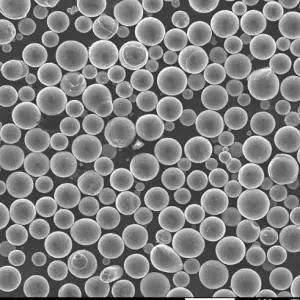
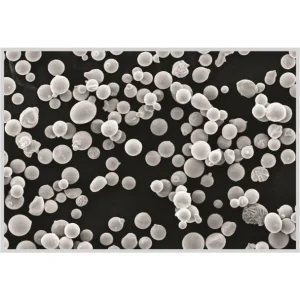
Overview: Spherical alloy powder processed for uniform particle distribution. Used in aerospace propellants, pyrotechnics, and metallurgy.
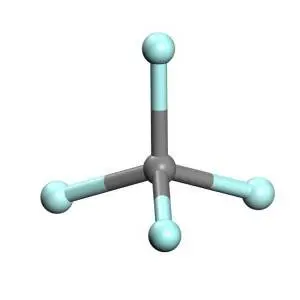
Overview: High-grade Tetrafluoromethane gas used for semiconductor oxide layer dry etching and ultra-low temperature refrigeration systems.
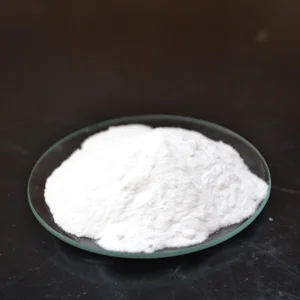
Overview: White powder used as an anticaking agent in food products, calcium supplement, and raw material for ceramic and fertilizer manufacturing.
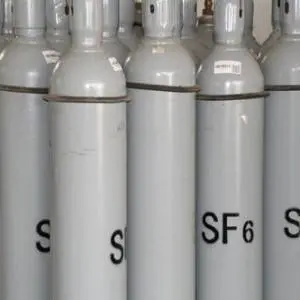
Overview: Inert gaseous dielectric with high insulation performance, widely used in high-voltage circuit breakers and gas-insulated substations (GIS).
 Yanxatech