Access our verified product lines manufactured in premium domestic plants. Instant pricing, custom quotes, and worldwide logistics deployment.
Analytical insights into standard manufacturing processes, demand triggers, and global market distributions.
Iron powder is an essential component of modern industrial engineering. It is used as the base raw material for manufacturing highly complex precision parts through powder metallurgy (PM), as well as in chemical synthesis, magnetic core fabrication, and structural welding. With the rising global demand for resource optimization and emission control, industrial consumption of iron powder is undergoing massive structural shifts.
Traditionally dominated by automotive parts manufacturing, the demand for high-purity iron powders is expanding rapidly into newer domains. The emergence of electromagnetic shielding applications, metal 3D printing (additive manufacturing), and energy storage technologies (such as iron-air flow batteries) has created new pipelines for specialty suppliers. Companies today require raw materials that satisfy strict particulate geometries, specific flow properties, and highly controlled chemical purity profiles.
From a geological and manufacturing perspective, the production centers are heavily concentrated where energy cost is balanced by raw iron ore accessibility. The industry relies on two primary methodologies: physical reduction processes (producing Reduced Iron Powder) and liquid metal atomization (yielding Atomized Iron Powder). Each offers specific microstructural characteristics suitable for diverse performance environments.
Industrial buyers must navigate variables like Apparent Density (AD), hydrogen-loss parameters, and particle size distribution (PSD) to secure consistent batches. Minor structural anomalies can cause failures in sintered density, reducing the mechanical strength of critical automotive components.
Detailed physical-chemical specifications required for accurate commercial sourcing decisions.
| Iron Powder Grade | Production Methodology | Typical Apparent Density (g/cm³) | Key Industrial Applications | Purity Range (Fe %) |
|---|---|---|---|---|
| Reduced Iron Powder | Solid-state chemical reduction of iron oxide with carbon or hydrogen. | 2.0 – 2.8 | Friction materials, chemical reduction agents, welding electrodes, soft magnetic cores. | ≥ 98.0% – 99.2% |
| Water Atomized Iron Powder | High-pressure water jet disintegration of molten iron stream. | 2.8 – 3.3 | High-density powder metallurgy parts, sintered structural components, surface coating. | ≥ 99.0% – 99.5% |
| Gas Atomized Iron Powder | High-purity inert gas jet disintegration of molten iron. | 3.8 – 4.5 | Metal Injection Molding (MIM), Additive Manufacturing (3D Printing), Thermal Spraying. | ≥ 99.5% – 99.8% |
| Carbonyl Iron Powder (CIP) | Thermal decomposition of liquid iron pentacarbonyl Fe(CO)₅. | 3.5 – 4.0 (Sub-micron particles) | Inductors, electronic components, electromagnetic shielding, nutritional fortification. | ≥ 99.8% – 99.99% |
Engine components, transmission gears, and shock absorber parts require precise densities. Using water-atomized powders ensures excellent compactability, green strength, and sintering properties, cutting down secondary machining costs.
Designed for electromagnetic devices, inductors, and high-frequency motors. Spherically optimized carbonyl and alloy powders provide high permeability, low core loss, and high saturation flux density under fluctuating magnetic fields.
Zero-valent iron (ZVI) powders serve as reduction agents to treat chlorinated solvents, toxic heavy metals, and organochlorine pesticides in industrial wastewater systems and groundwater reserves.
Why sourcing from specialized Chinese manufacturing hubs optimizes total cost of ownership (TCO).
China's chemical and metallurgy infrastructure offers structural advantages that directly lower wholesale prices. Modern operations utilize highly integrated processing clusters, combining steel manufacturing, reduction gas production, and automated screening systems in close geographic proximity. This minimizes internal logistics and energy loss.
At YANXA, we work with domestic manufacturing partners using advanced air-classification and magnetic separation techniques. This combination achieves high consistency across batches, meeting standard industrial demands for flowability and particle morphology.
The global iron powder industry is shifting toward high-precision applications. Additive manufacturing (AM) requires extremely spherical gas-atomized powders with strict particle size boundaries (typically 15-45 μm) and minimal internal porosity. Suppliers are investing in vacuum induction melting gas atomizers (VIGA) to prevent oxidation.
Simultaneously, environmental regulations are pushing manufacturers to adopt low-emission reduction processes. Transitioning from coal-based sponge iron reduction to natural gas or hydrogen reduction pathways aligns production with modern ESG standards.
Yanxatech System Industries Limited (hereinafter referred to as YANXA) is one of the growing suppliers in the field of specialty materials in China. Starting from fledgling small business unit in 2008, YANXA is driven with the passion of developing broad international market in the area relating to chemical and mechanical industry.
Thanks to our team’s enduring and persistent work and our business partners’ long-lasting support, YANXA has steadily and vigorously grown into one company with excellence in delivering products and services relating to specialty chemicals. Quality, safety and efficiency prevail all the values in our business.
Cooperating with leading manufacturers and the renowned research institutes in the field of specialty chemicals in China, YANXA is capable of supplying: 1) liquid rubber; 2) nitrate; 3) metal powder & metal alloyed powders.
We care what our customers’ need on the general product as well as their unique and specific requirement for the newly developed application in a timely manner. We adhere strictly to the technical requirement and make delivery in almost perfect conformity. Chemical business exposes more safety concerns than any other industrial sectors. We undertake all activities involving chemicals in a safe way to ensure safety of human health and the environment.
Detailed physical-chemical profiles of our top-demand specialty chemical compounds and metallic formulations.
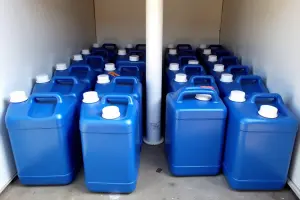
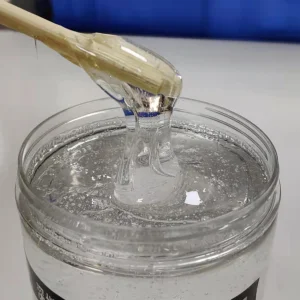
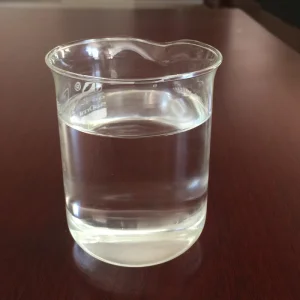
Product Characteristics: Formaldehyde is a colorless liquid, easily polymerized, and readily soluble in water, alcohol, and ether. It is rapidly oxidized to formic acid in air, acting as a strong reducing agent. Its boiling point is -19℃, freezing point -118℃, and relative density to air is 1.067.
Commercially, it is supplied in liquid form as formalin, a 37-50% formaldehyde solution with a small amount of methanol added as a polymerization inhibitor. The solution is milky white and has a foul odor. Formalin readily vaporizes, releasing formaldehyde gas. Its boiling point is 96℃, relative density is 0.815/-20℃, and flash point is 55℃.
View Specifications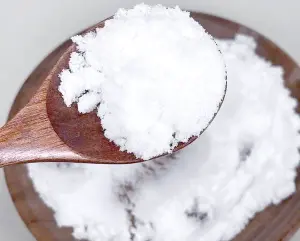
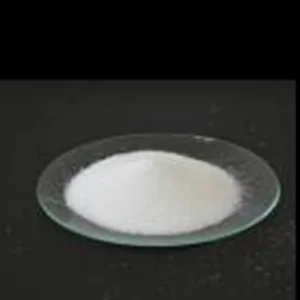
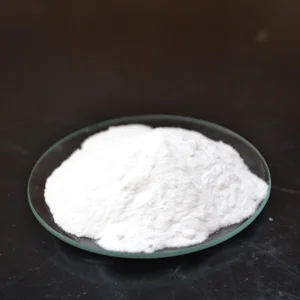
Product Overview: Hexamethylenetetramine, also known as hexamine or HMTA, is a white crystalline powder produced by the condensation reaction of formaldehyde and ammonia. It is a versatile organic chemical intermediate widely used in industrial manufacturing, pharmaceutical synthesis, rubber processing, and analytical chemistry.
· CAS No.: 100-97-0 | · Molecular Formula: C₆H₁₂N₄ | · Molecular Weight: 140.19 g/mol
Request Quote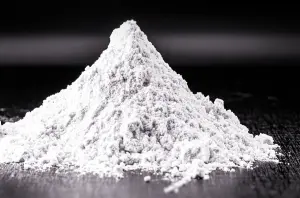
Product Features: A white powdery solid with a flammable odor of formaldehyde. It is a linear polymer of formaldehyde with no fixed melting point. This compound acts as a high-purity formaldehyde source for synthetic resins, adhesives, and organic synthesis industries.
Specifications: Content ≥96% (also available ≥92%) | Solubility ≤40 minutes | Formic acid ≤0.05% | PH 5-7. Optimized for rapid dissolution rates under controlled temperature processing.
View Details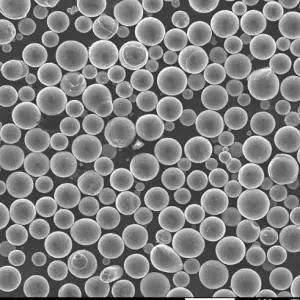
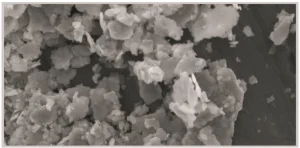
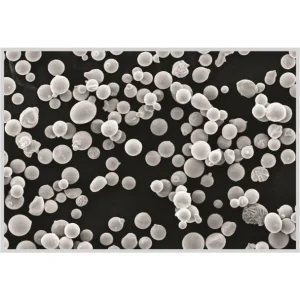
Product Profile: Produced using state-of-the-art inert gas atomization processes to ensure perfect spherical morphology, minimal satellite particles, and exceptional flowability. These physical features make it ideal for energetic propellant formulations, pyrotechnics, chemical catalysts, and aerospace structural components.
High purity controls ensure predictable combustion profiles, consistent sintering density, and zero volatile outgassing during high-pressure thermal compaction processes.
Download Datasheet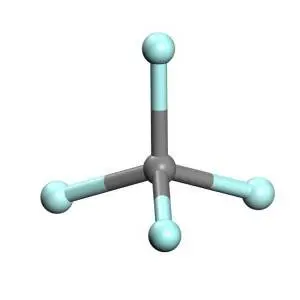
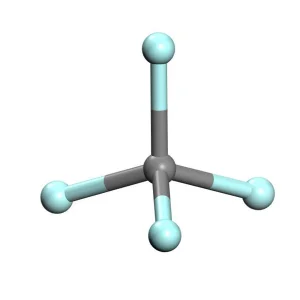
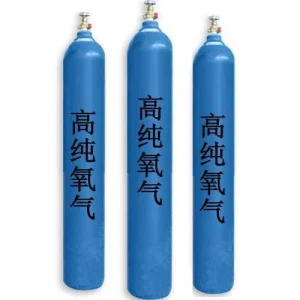
Short Description: Highly pure specialty fluorinated gas used primarily in plasma etching for semiconductor device fabrication, flat panel displays, and electronic circuitry design. Guarantees extremely low impurity profiles, preventing microscopic defect creation in sub-nanometer fabrication processes.
Inquire Price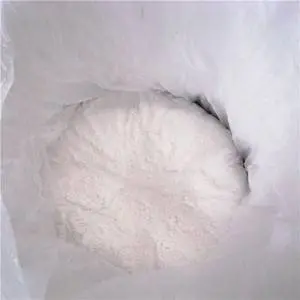
Short Description: Food, pharmaceutical, and industrial-grade tricalcium phosphate. Principally acts as an anti-caking agent, nutritional supplement, and buffering agent in processing facilities. Produced under strict sanitary and quality guidelines to meet global regulations.
Request COA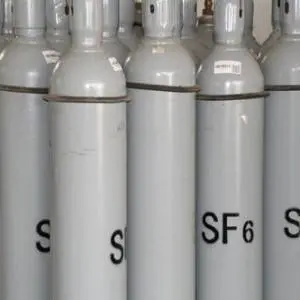
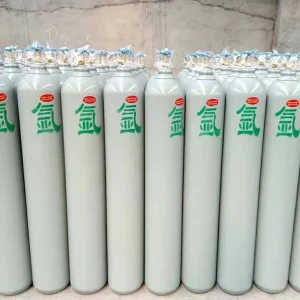
Short Description: Premium dielectric gas utilized within high-voltage circuit breakers, electrical substations, gas-insulated switchgear (GIS), and semiconductor processing. Offers high dielectric strength and chemical stability under thermal stress conditions.
Contact SalesTransparent insights on pricing structure, lead times, order criteria, quality standards, and logistics policies.
Our prices are subject to change depending on supply and other market factors. We will send you an updated price list after your company contacts us with specific material requirements, desired purity grades, packaging types, and shipping conditions.
Yes, we require all international orders to have an ongoing minimum order quantity. If you are looking to purchase smaller or experimental volumes for evaluation or custom research, please contact our support desk directly through our main platform options.
Yes, we can provide the majority of requested industrial documentation. This includes Certificates of Analysis (COA) / Conformance, detailed MSDS (Material Safety Datasheets), custom export declarations, origin certificates, and relevant marine insurance documentation where contractually specified.
For samples, the lead time is about 7 days. For mass production orders, the standard lead time is 20-30 days after receiving deposit confirmation. Lead times are calculated from (1) receipt of deposit payment and (2) final technical specification approval. If standard lead times conflict with your schedule, contact our regional manager to explore expedited logistics options.
Payment can be made to our designated bank account via wire transfer. Standard terms are 30% deposit in advance and 70% balance against the copy of B/L by T/T, or L/C at sight.
We warrant our materials and workmanship. Our commitment is to ensure satisfaction with our products. Regardless of whether an issue falls under formal warranty parameters, it is our company policy to address and resolve all client concerns to reach a mutually satisfactory resolution.
Yes, we always use high-quality export packaging. We use specialized hazard packing for dangerous goods and validated cold-storage containers for temperature-sensitive items. Specialty packaging or non-standard custom requests may incur additional charges.
Shipping costs depend on the delivery method. Express delivery is the fastest but most expensive option. Sea transportation is generally the most cost-effective solution for bulk industrial orders. Final freight rates can be calculated once order volume, total weight, delivery point, and transport modes are finalized.
Explore additional specialized chemical derivatives, liquid rubbers, and metallic powders available for global dispatch.
 Yanxatech