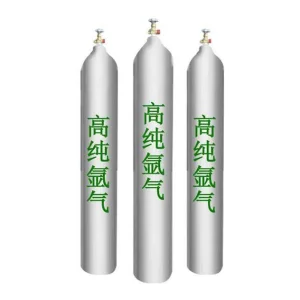
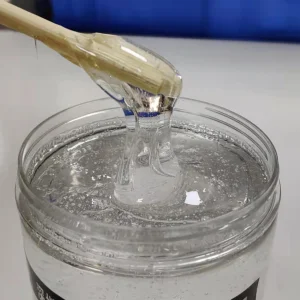
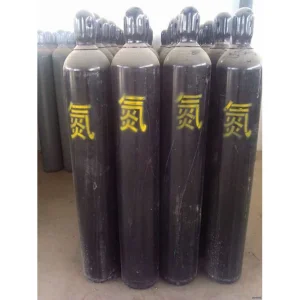
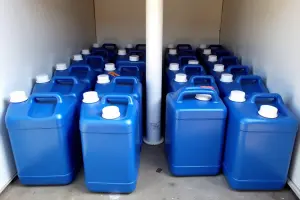
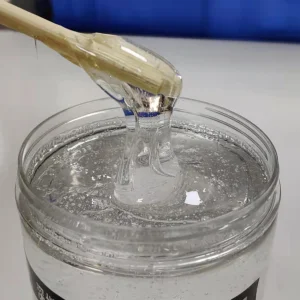
Explore YANXA’s premium selection of industrial compounds, specialty gases, and advanced liquid rubbers engineered to elevate manufacturing precision.
Establishment Year
Certified Quality Management
Export Compliance & Documentation
Global Industrial Partners
In modern industrial manufacturing and civil engineering, the demand for highly durable, seamless, and elastomeric protective barriers has surged. The traditional reliance on solid rubber membranes or sheet-based sealants has systematically given way to liquid spray rubber systems. This structural transition is driven by the material’s superior flexibility, ease of application over complex geometries, and outstanding resistance to thermal expansion, UV degradation, and chemical exposure.
Liquid spray rubber—principally composed of modified asphalt emulsions, polyurethane hybrids, or specialty nitrile butadiene rubbers like Carboxyl Terminated Nitrile Butadiene Rubber (CTBN) and Random Carboxy Nitrile Butadiene Rubber (L-XNBR)—cures rapidly at ambient temperature to form an impermeable, elastomeric monolithic membrane. This makes it a crucial material for global infrastructure projects, automotive sound dampening, aerospace resin modification, and high-performance commercial roofing.
How wholesale liquid spray rubber manufacturers are scaling operations to meet the rigorous demands of global supply chains and mega-construction projects.
From subway tunnels and bridge decks to municipal water treatment reservoirs, liquid rubber spray coatings act as the primary defense against water ingress and concrete carbonation. Their ability to crack-bridge dynamically ensures long-term structural integrity in seismically active zones.
Liquid nitrile rubbers (L-XNBR & CTBN) act as critical impact modifiers for structural adhesives. By dispersing microscopic rubber domains within brittle epoxy matrices, manufacturers achieve high fracture toughness and shear strength in vehicles and aircraft fuselage assemblies.
Chemical processing plants and marine facilities utilize specialty spray rubbers to line storage tanks, containment bunds, and offshore steel structures. The chemical resistance of modified butadiene linkages provides defense against acid, alkali, and salt spray.
A deeper look into the molecular engineering behind the liquid rubber family and related compounding agents supplied by YANXA.
At the center of high-performance industrial coatings and structural modifications are CTBN (Carboxyl Terminated Nitrile Butadiene Rubber) and L-XNBR (Random Carboxy Nitrile Butadiene Rubber). These are liquid, low-molecular-weight polymers that combine the oil, fuel, and chemical resistance of butadiene-acrylonitrile backbones with functional carboxylic acid end-groups or random functional positions.
When formulated into epoxies, acrylics, or polyurethanes, these functional groups chemically react with the host resin matrix. This reaction forms micro-phase separated rubbery domains during curing, which absorb mechanical energy and arrest micro-cracks before they propagate. This process is essential for structural composites and protective paints subjected to extreme thermal cycles and mechanical stress.
Typically used for epoxy toughening in structural adhesives, electrical encapsulants, and carbon-fiber composites. Enhances peel adhesion and thermal shock resistance without sacrificing heat deflection temperatures (HDT).
Features multiple reactive carboxyl groups distributed along the polymer chain, providing higher cross-linking density. Ideal for high-temperature adhesives, specialty coatings, and elastomer vulcanizates.
To optimize the viscosity, cure rate, and physical performance of liquid spray rubbers, manufacturers rely on complex polyol chemistry and key chemical synthesis intermediates:
YANXA coordinates with leading Chinese research institutes and certified production plants to supply these raw chemicals. This integration ensures that downstream liquid rubber and resin producers receive components that match strict purity, molecular weight distribution, and functional group density standards.
Founded in 2008 as a focused business unit, Yanxatech System Industries Limited (YANXA) has grown into a leading supplier of specialty materials and industrial chemical compounds in China. Driven by a passion to serve the international chemical and mechanical manufacturing sectors, YANXA provides supply-chain stability for advanced industrial materials.
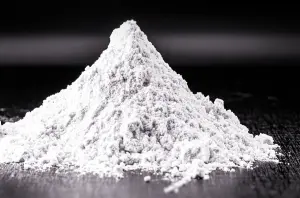
Through close technical collaborations with state-run research institutes and ISO-certified manufacturing centers across China, YANXA supplies a comprehensive portfolio of specialty chemicals, liquid rubbers, nitrates, and atomized metallic alloy powders.
At YANXA, we believe that Quality, Safety, and Operational Efficiency must lead all business operations. We prioritize understanding and addressing the technical specifications of our global clientele—whether it is a standard bulk order or a tailored molecular weight distribution for a specialized application.
Chemical logistics involves complex safety challenges. We commit to executing all chemical handlings, packaging configurations, and international freight transport in strict alignment with regional environmental regulations and global GHS standards to protect human health and the environment.
Learn More About Our Team →Ensuring cross-border compliance, chemical safety, and localized logistical integration for international supply chains.
We ensure that our liquid rubber formulations, polyethers, and gas compounds conform with major international regulatory systems. This includes EU REACH pre-registration, US EPA TSCA listings, and localized hazardous chemical inventories, assuring hassle-free customs clearance and processing.
For sensitive liquid rubbers like CTBN and L-XNBR, temperature fluctuations and moisture exposure can compromise shelf life. We design specialized drum configurations, nitrogen-purged packaging, and temperature-controlled shipping to preserve chemical properties from factory to plant.
Our production facilities operate under ISO 9001:2008 quality control guidelines. Each production lot undergoes extensive analysis, including gel permeation chromatography (GPC) for polyols, carboxyl content titration for liquid rubbers, and gas chromatography for industrial gases, backed by detailed Certificates of Analysis (COA).
From industrial manufacturing hubs in Europe to civil infrastructure projects in Southeast Asia, our materials are designed for diverse environments.
Liquid spray rubber emulsions are applied over aging metal roof panels, providing a seamless waterproofing barrier that accommodates intense thermal movement.
CTBN-modified epoxy adhesives bond carbon-fiber panels to aluminum structures, reducing vehicular weight while maintaining crash safety standards.
Specially formulated liquid rubber coatings line concrete water desalination conduits, preventing salt-water permeation and chemical erosion.
Ultra-pure liquid nitrile rubber compounds act as electrical potting agents, shielding delicate silicon microchips from humidity, physical shocks, and chemical contaminants.
Spray-applied elastomeric barriers protect ballast tanks and hulls from corrosion and mechanical wear caused by constant exposure to saltwater and sea debris.
The next decade of liquid rubber research is defined by three key goals: decarbonization, smart functionality, and application automation. YANXA is actively collaborating with research institutes to transition from petroleum-derived butadiene monomers to bio-based alternatives, reducing the overall carbon footprint of liquid rubber systems.
Concurrently, smart self-healing elastomeric systems are transition from laboratory trials to pilot production. These coatings utilize micro-encapsulated monomer systems that rupture and seal micro-cracks automatically when stressed. Furthermore, the development of high-pressure plural component spray systems equipped with IoT monitoring ensures precise control over layer thickness and curing metrics in the field.
A reference guide containing product details, chemical characteristics, and specifications for YANXA's primary chemical offerings.
Formaldehyde is a colorless, highly reactive liquid intermediate easily polymerized and soluble in water, alcohol, and ether. Rapidly oxidizing to formic acid in ambient air, it serves as a robust reducing agent. Commercially distributed as Formalin (37-50% formaldehyde solution with methanol inhibitor to prevent crystallization), it features a boiling point of 96°C and relative density of 0.815.
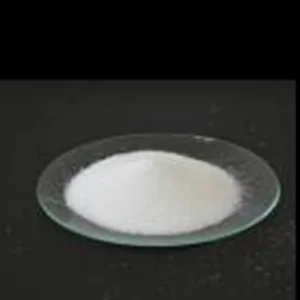
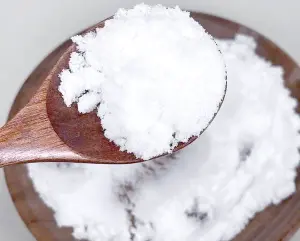
Hexamine (HMTA, CAS No: 100-97-0) is a white crystalline powder derived from the condensation reaction of formaldehyde and ammonia. Holding a molecular formula of C₆H₁₂N₄ and molecular weight of 140.19 g/mol, it is widely used as a curing catalyst for phenolic resins and as a cross-linking agent in rubber vulcanization.
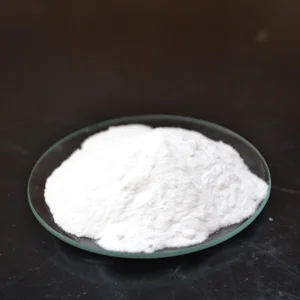
A white crystalline solid polymer of formaldehyde featuring low toxicity compared to liquid monomer setups. Specifications include: Content ≥ 96% or ≥ 92%, fast solubility ≤ 40 minutes, free formic acid content ≤ 0.05%, and stable pH values between 5.0 and 7.0. It acts as an easy-to-handle formaldehyde donor for synthetic resins.
Technical and commercial answers addressing key purchasing concerns, logistics, and quality validation processes.
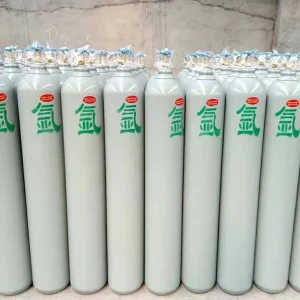
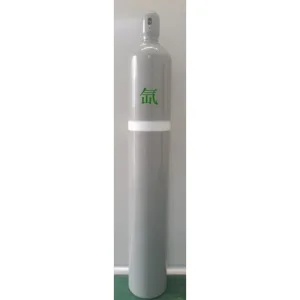
Explore the remainder of our specialized chemical line, gas supply options, and industrial cracking equipment.
 Yanxatech