Direct supply paths from certified manufacturing assets
Yanxatech System Industries Limited (hereinafter referred to as YANXA) stands as a prominent and rapidly expanding supplier in the field of specialty materials in China. Starting as a fledgling small business unit in 2008, YANXA has been driven by a relentless passion for developing robust international partnerships across the chemical and mechanical industries.
Through decades of dedicated research, cross-border supply chain integration, and rigorous quality control protocols, YANXA has transitioned into an industry leader. Our corporate matrix focuses on delivering high-grade chemical materials that fulfill complex industrial processes, from custom synthesis to wholesale supply chains.
Cooperating with leading manufacturers and renowned research institutes in China, YANXA utilizes high-capacity refineries and synthesis loops to offer specialty agents including:
We adhere strictly to safety data dynamics, ensuring all volatile and reactive raw materials are managed with eco-friendly frameworks.
Technical classification, synthesis pathways, and molecular dynamics of Polyethylene Glycol & Propylene Glycol
Polyethylene Glycol (PEG), represented by the general chemical formula H(OCH₂CH₂)ₙOH, is a polyether compound prepared through the ring-opening polymerization of ethylene oxide (EO) under alkaline or acid catalysts. The molecular weight of PEG determines its physical characteristics, shifting from a low-viscosity liquid (PEG 200, PEG 400) to semi-solids (PEG 1000, PEG 1500) and ultimately hard, waxy solids (PEG 4000, PEG 6000, PEG 8000).
As an industry-leading manufacturer, our factory enforces narrow polydispersity indices (PDI). Lower polydispersity yields consistent viscosity profiles and predictable dissolution rates, which are parameters required in pharmaceutical formulation (where PEG serves as an excipient and covalent conjugation agent via PEGylation) and industrial lubricants.
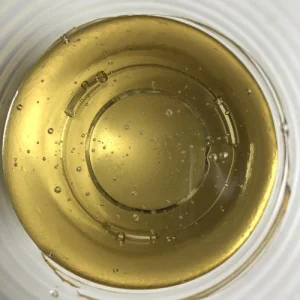
Propylene Glycol (PG), chemically identified as propane-1,2-diol (C₃H₈O₂), is a clear, colorless, viscous liquid that exhibits strong hygroscopic characteristics. Industrial production of PG predominantly proceeds through the non-catalytic high-temperature hydration of propylene oxide (PO) at high pressure. Our facilities utilize advanced separation columns to partition three critical fractions:
| Chemical Grade / Variant | Molecular Weight Range (g/mol) | Viscosity @ 25°C (cSt) | Core Industrial Function | Standard Compliance |
|---|---|---|---|---|
| PEG 200 / 400 | 190 – 420 | 60 – 110 | Plasticizers, humectants, solvent systems | USP, EP, FCC |
| PEG 1500 / 4000 | 1350 – 4400 | Semisolid – Solid (Wax) | Ointment bases, binder matrices, lubricant additives | USP, EP, JP |
| PEG 8000 | 7000 – 9000 | Solid Flakes / Powder | Tablet coatings, diagnostic assays, wood preservation | USP, EP |
| Propylene Glycol (USP) | 76.09 | 45 – 50 | Excipient, food additive, humectant, heat transfer | FDA, USP, FCC, REACH |
| Propylene Glycol (Tech) | 76.09 | 45 – 50 | Antifreeze fluids, unsaturated polyester resins (UPR) | ASTM D5164, REACH |
The intersection of global supply networks and high-precision chemical synthesis requires manufacturers to offer both scale and stability. From a macro industrial perspective, PEG and PG function as foundational solvents, heat transfer agents, and structural blocks. Under current industry frameworks, demand has surged for bio-based Propylene Glycol (obtained via glycerol hydrogenolysis) to meet eco-responsibility mandates.
YANXA partners with downstream manufacturing plants to ensure a steady supply of these glycols. By optimizing synthesis runtimes, raw material pricing strategies, and storage solutions, we help mitigate volatile pricing spikes commonly caused by fluctuations in upstream ethylene and propylene markets.
Direct-from-factory volume routing structures ensure optimal cost performance for major industrial chemical buyers.
Strict trace-metal and organic impurity analysis via GC-MS and HPLC ensures compliance with USP and Food Codex criteria.
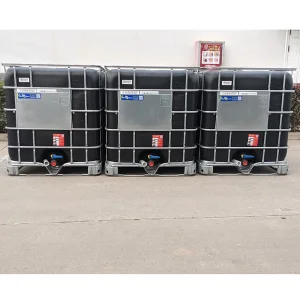
Shipped in bulk iso-tanks, IBC totes, or drum configurations under inert gas blanketing to prevent oxidative degradation.
Standard industrial synthesis of Polyethylene Glycol involves adding calculated ethylene oxide feeds into an anhydrous catalyst environment (often sodium methoxide or potassium hydroxide). Careful control of reaction temperature (between 120°C and 160°C) and pressure parameters is required to prevent runaway exothermic polymerization.
For Propylene Glycol, the manufacturing process uses high-pressure, high-temperature thermal hydrolysis (without external catalyst intervention) at temperatures ranging from 150°C to 220°C. This converts propylene oxide in an aqueous medium to monopropylene glycol alongside lesser yields of higher glycol oligomers (DPG, TPG).
YANXA actively monitors biological pathways to synthesize bio-PG from bio-glycerol, reducing the overall carbon footprint by up to 60% compared to fossil fuel alternatives.
Different territories demand specific compliance frameworks for chemical imports:
YANXA provides end-to-end documentation packages including Certificates of Analysis (COA), ISO 9001 certifications, and full GHS-compliant SDS paperwork.
Technical parameters of our main products and core materials
Formaldehyde is a colorless, highly reactive gas supplied as a stabilized liquid solution (formalin, 37% to 50% concentrations) with methanol added to prevent polymerization. It has a boiling point of 96°C, relative density of 0.815 at -20°C, and flash point of 55°C.
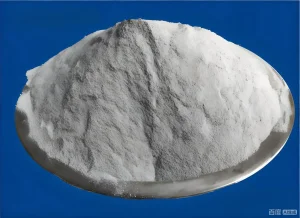
Produced by the condensation reaction of formaldehyde and ammonia (CAS No. 100-97-0, Molecular Formula: C₆H₁₂N₄). HMTA is a white crystalline powder widely utilized in plastics, thermosetting resins, rubber vulcanization, and explosives.
A high-concentration linear polymer of formaldehyde with a characteristic pungent odor. Specifications: Formaldehyde content ≥96%, formic acid ≤0.05%, pH range 5.0–7.0. It offers rapid depolymerization for synthesis reactions.
Frequently asked questions about procurement, specifications, logistics, and technical support
Specialty alloyed powders, liquid rubbers, and organic fluorides
 Yanxatech